Table of Contents
Tree Care in Hasbrouck Heights, NJ
Hasbrouck Heights is a borough in Bergen County. According to Wikipedia, it was incorporated on August 2, 1894, from portions of Lodi Township after a referendum held on July 31, 1894. It covers 1.53 square miles, counted 12,125 residents in the 2020 census and borders Hackensack, Lodi, Moonachie and Teterboro, with Route 17 and Route 46 passing through it. The area was once called Corona, and the present name was chosen in 1889 to honor Jacob Dillon Hasbrouck, a railroad general manager. In a borough this compact, every yard tree is a visible part of the street, and tree maintenance in Hasbrouck Heights is mostly a matter of looking after what is already growing.
Maintenance here has a legal side that many homeowners have not read. The borough adopted Ordinance 2555 on June 11, 2024, and its tree removal section defines removal far more broadly than a chainsaw. The ordinance text counts excessive pruning, over mulching or improper mulching, and improper grading or soil compaction within the critical root radius as tree removal when they lead to the decline or death of a tree. In other words, the routine chores of a yard can be regulated the same way as taking a tree down.
This guide covers what that definition means in practice, how to protect the root zone, how to mulch correctly and what a yearly inspection should look for. We read the ordinance and the sources linked below on November 4, 2026. Rules change, so confirm the current requirement with the borough before any work starts. Reliable Tree Service has been family owned since 1960 and works across Hudson and Bergen counties from Cliffside Park.
Our approach to maintenance starts at the base of the tree rather than the top. We walk the yard, look at the soil around each trunk, note whether mulch is piled against the bark, check for dead wood and weak unions in the crown, and ask what has changed near the roots in recent seasons. A new patio, a regraded lawn or a trench for a utility line can matter more to a tree than any pruning cut.
The full service is described on our tree maintenance page, and the cutting side of the work is covered under tree trimming and pruning. Other nearby boroughs have their own rules, as our guides to storm proofing in Saddle Brook and tree removal in Dumont show.
The Critical Root Radius and What Counts as Tree Removal
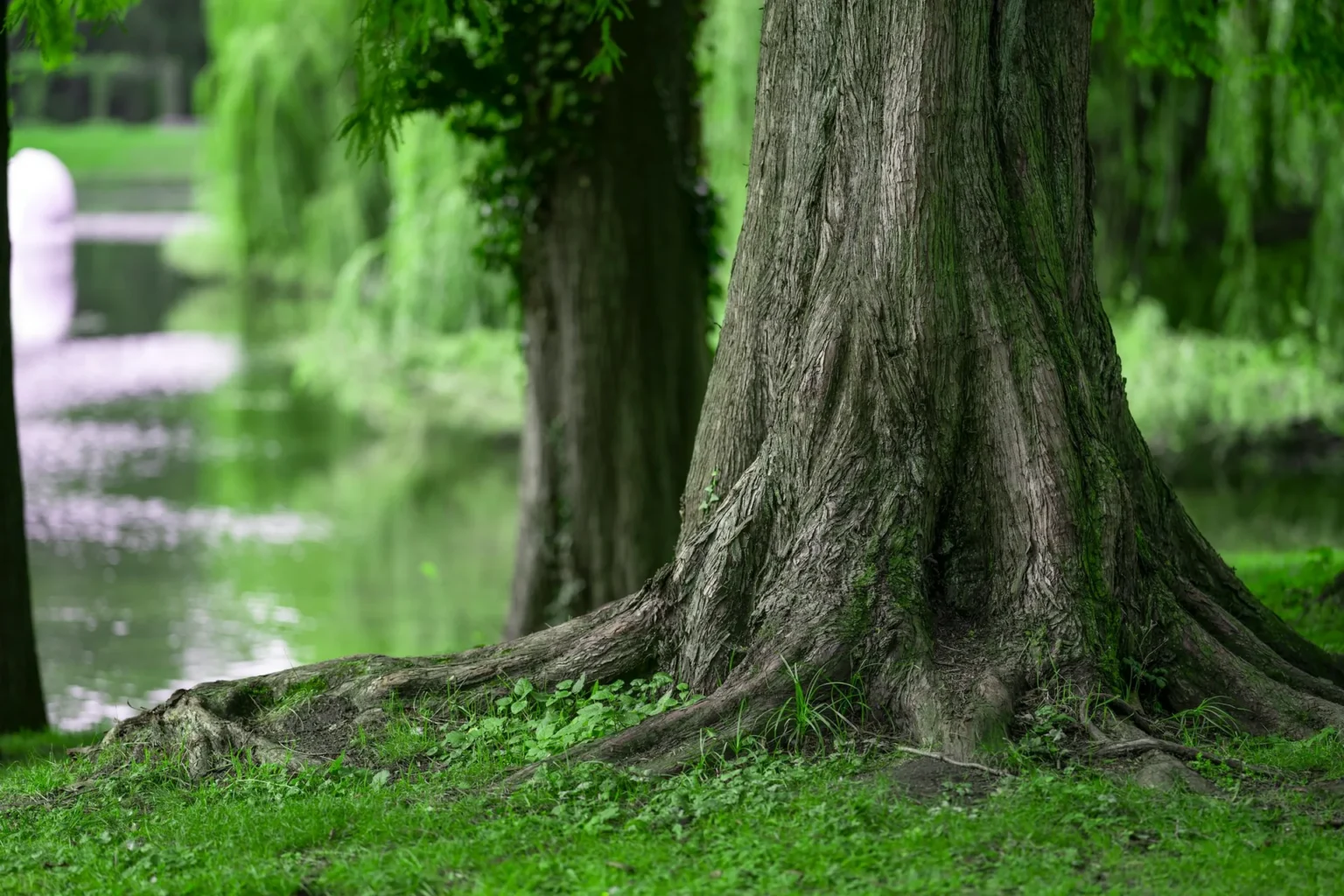
The ordinance gives the root zone a number. It defines the critical root radius as the zone around the base of a tree where most of the root system is found, and it calculates that zone by multiplying the trunk diameter at breast height by 1.5 feet. The ordinance offers an example: a tree with a six inch trunk diameter has a critical root radius of nine feet. A mature tree with a much thicker trunk has a root zone that reaches well across the lawn and into the driveway edge.
That radius is where most maintenance damage happens, and it is rarely visible from the house. Roots do not hang straight down. They spread wide and stay close to the surface where air and water reach them, which is why a trench, a regrade or a pile of fill can hurt a tree without touching the trunk. The ISA brochure on mature tree care says that trenching or earthmoving within the root zone may cause more harm than good, and that compacted soil can be loosened to encourage root growth, work best planned with an arborist.
Compaction is the quiet version of the same problem. Parked trucks, stacked materials, a path that everyone cuts across and repeated foot traffic press the soil until air and water cannot move through it. The borough definition lists soil compaction within the critical root radius among the acts that count as removal when it leads to decline. Most homeowners would call it a stressed tree, but the ordinance treats the cause as the problem.
The practical rule is to treat the root zone as a protected area. Keep vehicles, storage and digging outside the radius where possible, and ask before changing the grade near a large trunk. Tree maintenance in Hasbrouck Heights works best when the question about the ground comes before the question about the branches. The soil is also where our tree feeding work begins, because a soil test should come before any fertilizer.
Tree maintenance in Hasbrouck Heights: protecting the root zone
- Measure the trunk and work out the root radius
- Keep vehicles and stored materials off the soil
- Ask before regrading or trenching near a trunk
- Test the soil before adding fertilizer
Edward Hufnagel, who owns Reliable Tree Service, puts it this way: “Most of the trouble we find at the base of a tree started long before anyone noticed. The roots do their work out of sight, so you have to protect the ground as carefully as you protect the trunk.”
Mulch Depth and the Volcano Problem
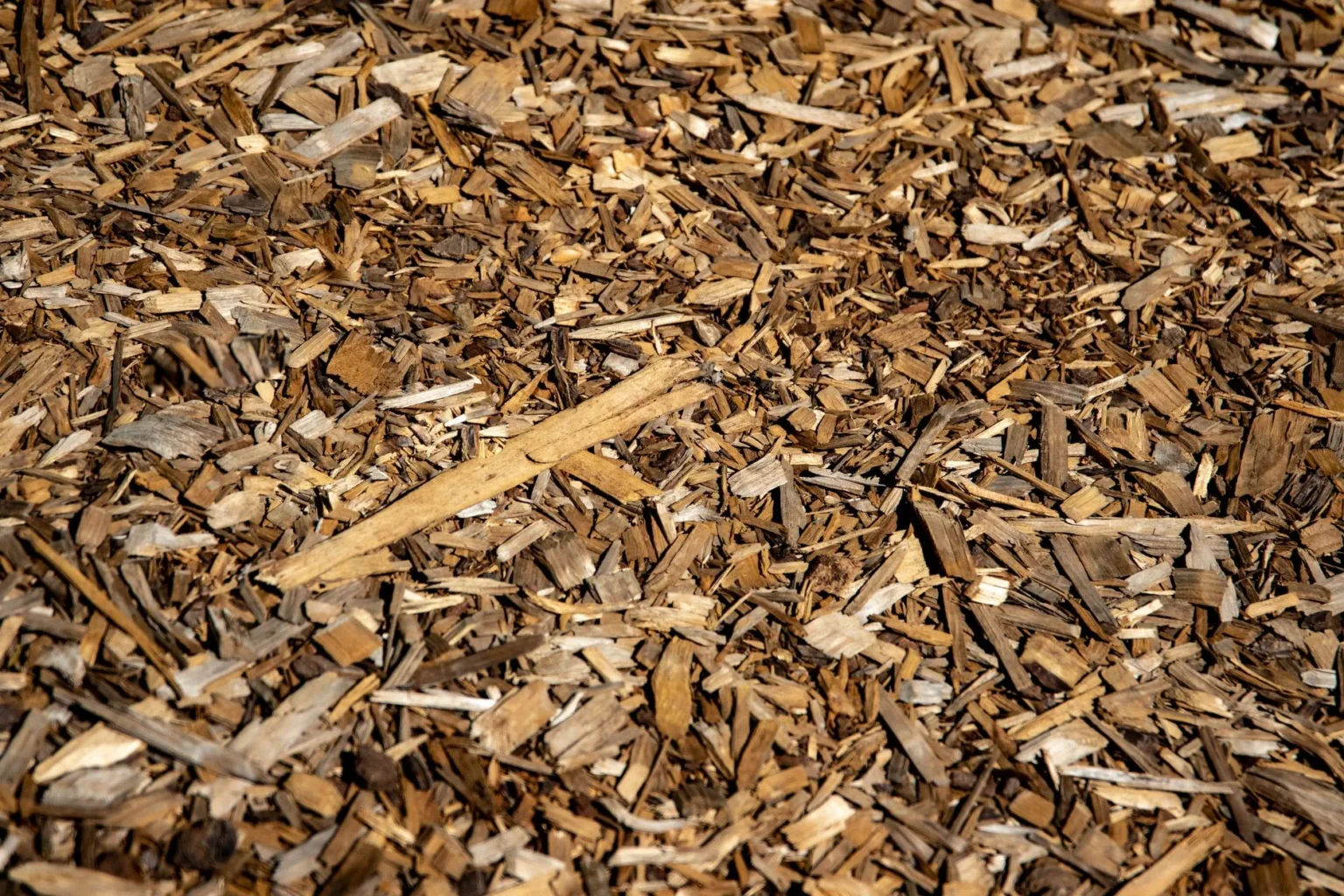
Mulch is the most common maintenance task in a yard, and the most commonly overdone. The ISA brochure on proper mulching techniques gives a recommended depth of two to four inches. It says fine mulches such as composted materials belong in a two to three inch layer and coarse mulches such as arborist wood chips in a three to four inch layer. Beyond that, the brochure says, many landscapes are falling victim to over mulching, and mulch volcanoes are the visible result.
A mulch volcano is an excessive pile of mulch around the base of a tree. According to the ISA mulching brochure, mulch against the trunk can soften the tissues so insects and diseases take hold, and it can lead to stem girdling roots that reduce growth or eventually kill the tree. Thick blankets of fine mulch can also mat down and block water and air. On wet soils, more than two inches of organic mulch can keep the root zone too moist and lead to root rot.
This matters in Hasbrouck Heights for a plain reason. The borough ordinance names over mulching and improper mulching in its definition of tree removal, so a volcano is more than a gardening mistake. The ordinance does not say how much mulch is too much, which makes the ISA numbers a sensible standard to follow. A neat ring at the correct depth satisfies both the tree and the reader of the code.
The fix is simple and can be done by hand this month. Pull the mulch back several inches so the base of the trunk is exposed, then spread it near but not touching the trunk and out toward the drip line if that is practical. The brochure puts the minimum at a ring with a three foot radius for most trees. Rake matted layers loose rather than adding a fresh coat on top, since buildup occurs when new material is added faster than the old decomposes.
A correct mulch ring
- Two to four inches deep depending on the material
- Pulled back from the trunk so the base shows
- Spread toward the drip line where practical
- Raked loose when old mulch has matted
Leaving the root flare visible also makes the next inspection easier, because decay and wounds at the base show up at once. If a trunk base already looks soft or sunken, our tree removal services team can tell you whether the tree can be saved.
The Yearly Inspection and Street Tree Permission
The ISA brochure on mature tree care says mature trees should be inspected at least once a year. The check looks at four signs of vitality: new leaf or bud formation, leaf size, twig growth and the absence of crown dieback, which is the gradual death of the upper part of the tree. Growth reduction is described as a fairly reliable cue that a tree’s health has recently changed. That is why late fall, with leaf color and leaf drop still fresh in mind, is a good time to look back over the season. The full brochure is available as the ISA mature tree care guide.
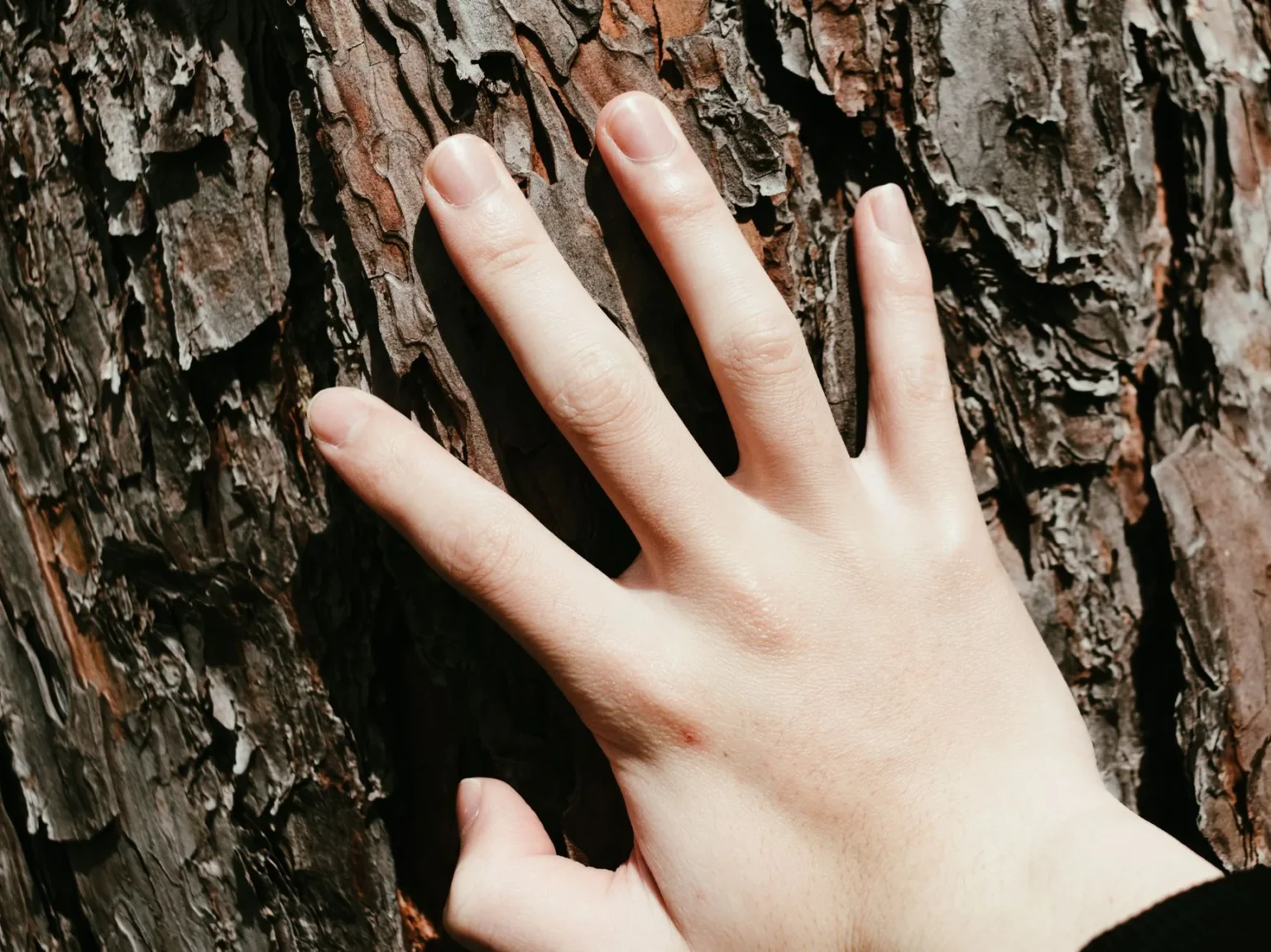
Stability gets its own list. The same brochure names cavity openings, extensive twig dieback and fungal conks, the mushrooms or brackets on the trunk, as characteristics that can indicate structural weakness. Anything found should be noted and monitored, and the brochure suggests reporting it to a local tree care professional for advice. A photograph from the same spot each fall gives a useful record of change.
Pruning belongs in the same plan, but with a reason behind every cut. The brochure says that removing live branches creates a lasting wound, so no branch should be removed without a reason, and that dead, diseased or insect infested wood and weak structure are good reasons. The borough ordinance carves out responsible pruning and maintenance from its definition of removal, which is another way of saying that careful pruning is welcome and excessive pruning is not.
Public trees add one more rule. Chapter 253 of the borough code, as amended by the same ordinance, says nobody may injure a tree or shrub planted in a public highway, park or parkway, or plant, remove, cut or trim one, except with the permission and under the direction of the Superintendent of Public Works. A street tree in front of a house is therefore a question for the borough before it is a job for a crew.
What a yearly tree inspection covers
- New buds, leaf size and twig growth
- Dieback in the upper crown
- Cavities, wounds and fungal growth on the trunk
- Mulch depth and soil condition at the base
Reading those signs takes practice, and a trained eye often spots a decline pattern before the homeowner does. Where wind, snow or a past storm has left a tree uneven or loose, our storm proofing and repair service can address the structure before winter.
Protecting Hasbrouck Heights Trees Through the Winter
Tree maintenance in Hasbrouck Heights combines good horticulture with a clear local rule. Protect the root zone, keep mulch at the right depth and away from the trunk, inspect each mature tree once a year and ask the borough before touching a street tree. Our other local guides are in the Hasbrouck Heights tree care articles section.
The ordinance also sets up a process for removal. It requires an application to the Department of Public Works Superintendent, replacement plantings that scale with the size of the tree, and fees that run from $50 to $250, though hazard trees are exempt from both fee and replacement. A written statement from a New Jersey licensed tree expert or arborist is the borough’s way of showing proper justification. When you hire help, the New Jersey Board of Tree Experts says to ask for the business registration, proof of insurance and the name and license number of the licensed person. We are family owned since 1960, and we will tell you plainly what a tree needs.
Our crews are ISA Certified Arborists and New Jersey Certified Tree Experts. Call Reliable Tree Service at (201) 943-4141 to schedule tree maintenance in Hasbrouck Heights, or have us look at a tree that may need work through our tree trimming and pruning service.
Related Articles

Tree Trimming in River Vale NJ: Right of Way Limbs, Topping Rules, and Timing
River Vale now holds owners responsible for street trees next to their property, and a permit covers any limb six inches or more across. This guide covers tree trimming in River Vale, from the ordinance to the topping rule and timing.
Stump Grinding in Emerson NJ: Street Tree Permits, Root Rules, and Replanting
Emerson asks for borough approval before anyone cuts roots or removes soil near a street tree, and the stump is the last step of any removal. This guide covers stump grinding in Emerson, from permits and root rules to wood chips and replanting.
Tree Storm Proofing in Saddle Brook NJ: Hazard Trees, Root Zones and Township Rules
Saddle Brook defines a hazard tree in its written tree ordinance and leaves hazard trees free of fees and replacement duty. This guide covers defects to check once the leaves drop, root zone care and replacement rules.
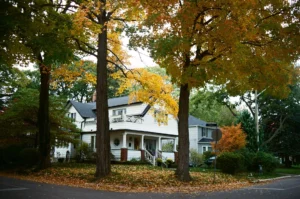
Tree Removal in Dumont NJ: Borough Permit, $25 Fee, and Commission Inspection
Dumont requires a permit before any tree can be removed in the Borough, with a Shade Tree Commission inspection before work begins. This guide covers tree removal in Dumont, from the paperwork and fee to hazard signs, Borough owned trees and replanting.
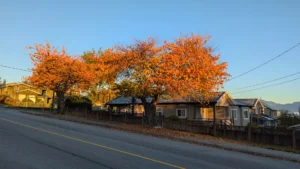
Tree Pruning in South Hackensack NJ: Permits, the 25 Percent Limit, and Fall Timing
South Hackensack publishes a Shade Tree Commission permit form that covers pruning as well as removal, with a stated 25 percent limit. This guide covers tree pruning in South Hackensack, from the permit and fee to clean cuts and fall timing.
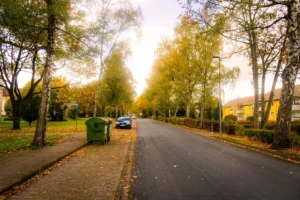
Tree Pest Management in Guttenberg NJ: Hazard Tree Rules and Redbud Replacement
Guttenberg counts a tree with an insect infestation as a hazard tree and calls for an Eastern Redbud when a tree comes down. This guide covers tree pest management in Guttenberg, from spotted lanternfly egg masses to the signs of emerald ash borer.