Table of Contents
Tree Care in Dumont, NJ
Dumont is a borough in Bergen County, and according to Wikipedia it was incorporated on July 20, 1891 as the Borough of Schraalenburgh and renamed Dumont on June 13, 1898. It covers about 1.95 square miles, counted 17,863 residents in the 2020 census, and borders Bergenfield, Cresskill, Demarest, Haworth, New Milford and Oradell. On lots that small, a single mature maple or oak can stand within a few steps of a roof, a driveway and a neighbor’s fence, which is why tree removal in Dumont is rarely a casual weekend decision.
Most people expect a rule about street trees and nothing more. Dumont goes further. According to the Borough’s own Shade Tree Commission page, Dumont requires a permit before any tree can be removed in the Borough. That sentence covers a dead ash in a back corner just as it covers a healthy oak in the front yard, and it is the first thing we explain when a Dumont homeowner calls about a tree that has to come down.
This guide walks through what the Borough says about the permit, the fee, the inspection and the paperwork, then covers the tree side of the question: how we judge whether a tree has to come down, what a safe removal looks like on a small lot, and what to do afterward. We read the Borough’s Shade Tree Commission page and its borough forms page on October 31, 2026. Reliable Tree Service has been family owned since 1960 and works across Hudson and Bergen counties from Cliffside Park. Municipal rules change, so confirm every detail with the Borough before any work begins.
The Commission is not a new idea in Dumont. The Borough’s page says it was formally established by ordinance in 2007 and takes part in the New Jersey Community Forestry Program. It also describes a 2008 Shade Tree Ordinance for public lands as the first formal regulation of shade trees in the Borough, covering who owns a tree, the right of way, and what the Borough and property owners may each do. In an emergency or other public threat, the ordinance also describes the Borough’s right to act on trees on private land.
We approach tree removal in Dumont in a fixed order. First we look at the tree and decide whether removal is justified at all. Then we confirm who owns it, because a street tree and a yard tree follow different paths. Only after that do we plan the cut, using the methods in our tree removal service, and we make sure the owner has the permit in hand before a crew arrives.
The Dumont Tree Removal Permit and Commission Inspection
The permit comes first. The Commission page says the process begins with a visit to Borough Hall at 50 Washington Avenue. The applicant needs a property survey, the Tree Removal Permit Application, information about the tree company hired to do the work, and verification that the company is insured. The Borough’s borough forms page lists the application under the Shade Tree Commission heading, beside an Adopt A Tree form.
The page states the permit fee as $25.00, payable by check or cash. After the application is in, the Commission inspects the tree, and when the permit is approved the work can go forward. The Borough Hall desk for shade tree questions is 201-387-5027. Hours are Monday to Friday, 9:00 am to 4:30 pm, with shorter summer hours from Memorial Day through Labor Day, so plan the visit around them.
The insurance line deserves attention. The guidance on hiring an arborist from the International Society of Arboriculture tells tree owners to ask for proof of insurance and to call the insurance company, to get more than one estimate, and to get the agreement in writing. The New Jersey Board of Tree Experts adds that it is mandatory to hire a tree care business registered with the state that employs a Licensed Tree Expert or Licensed Tree Care Operator, and that many homeowner policies will not cover damage done by an under insured contractor. Dumont’s insurance requirement and those two sources point the same way.
Timing is the other practical point. Commission meetings in 2026 are set for the third Monday of the month at 7:30 pm in Borough Hall, with a few summer meetings planned for the arboretum if the weather allows. The page does not say that a permit waits for a meeting, and we are not suggesting it does. It does say the Commission inspects the tree first, so build a little room into the schedule and confirm the steps with the desk before you book a crew.
What tree removal in Dumont starts with at Borough Hall
- A current property survey showing the tree
- The completed Tree Removal Permit Application
- The name of the insured tree company
- The permit fee by check or cash
Edward Hufnagel, who owns Reliable Tree Service, puts it this way: “Taking a tree down is the easy part to explain. The harder part is knowing why it has to come down, and being able to show the reason to the people who sign off on it.”
When a Dumont Tree Has to Come Down
Not every tree that looks bad has to come down, and not every tree that looks fine is safe. The tree risk brochure from the same society notes that there is no such thing as a completely safe tree, that all trees have the potential to fall, and that evaluating how serious a defect is is best left to a professional arborist. That is the starting point of every removal consultation we do in Dumont, and it is why the Commission’s inspection and our own look at the tree should agree on what is wrong.
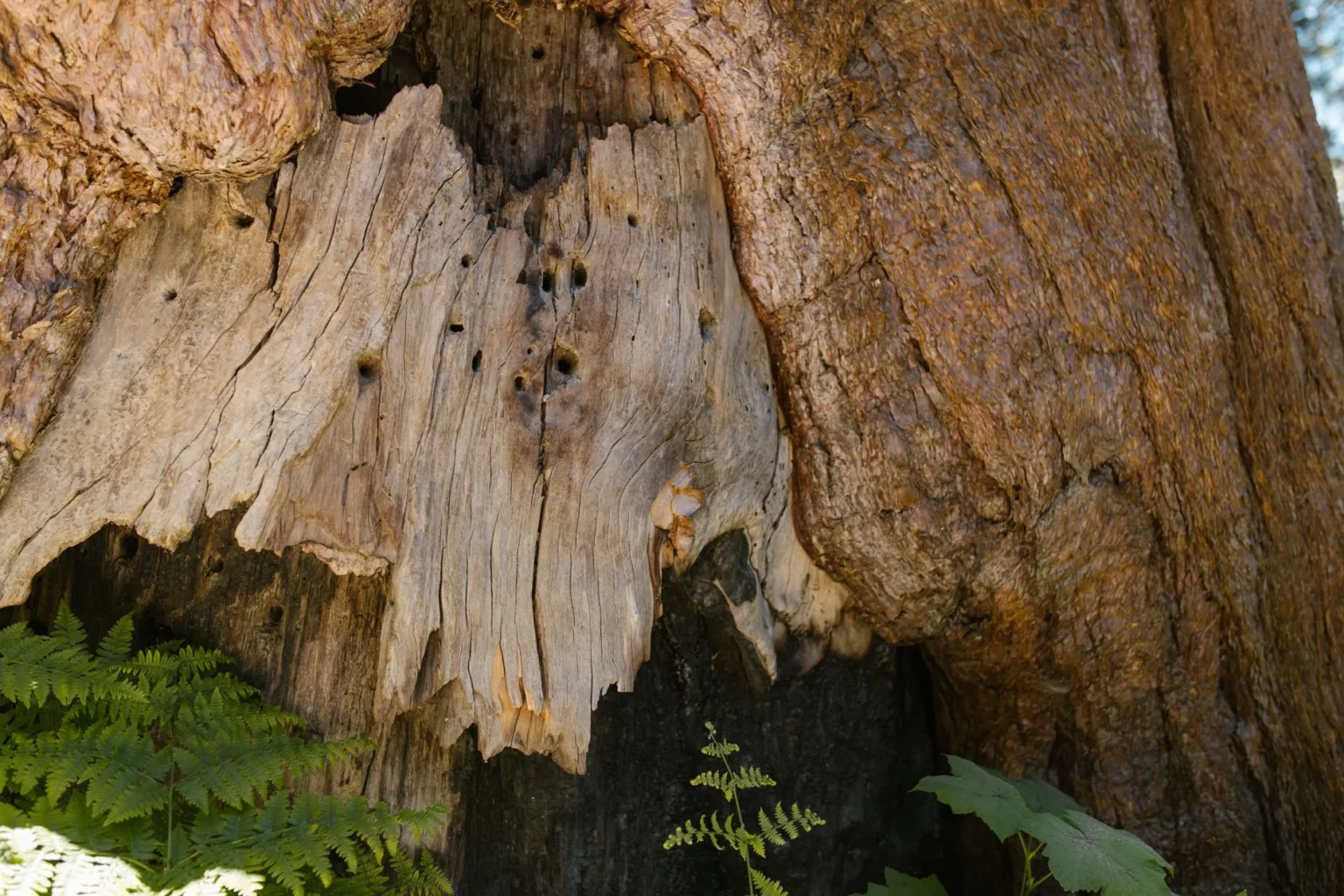
The brochure gives a short checklist of warning signs. It asks whether there are large dead branches, hanging or detached branches, loose bark, or cracks and splits in the trunk or where branches attach. It also asks about cavities or rotten wood, mushrooms at the base, recent construction or changes in soil level near the tree, unusual leaf color or size, and whether the tree has been topped or heavily pruned. None of these signs alone proves a tree must go, but several together usually do.
On Dumont lots the consequences of a wrong call are close at hand. A trunk with a cavity can look sound from the street, yet fail in a storm and land on a house or a parked car. Our storm proofing and repair crews look at those weak points first. When the answer is that the tree can be saved, we say so, and a cabling plan or a round of tree trimming and pruning may be enough. When the answer is removal, the written reason is also what the Commission will want to see on the permit.
We keep the reasons simple and honest. A tree that is dead, a tree with a major structural defect, a tree leaning with soil heaving at the base, and a tree whose roots are lifting a foundation or a sewer line are all fair grounds. A tree that is only messy in the fall or shades a patio is a different conversation, and the Borough’s inspector may see it differently than the owner does.
Signs a Dumont tree needs a professional look before removal
- Cracks or splits in the trunk or union
- Mushrooms or soft wood at the base
- Large dead limbs over a roof
- Soil lifting on one side of the trunk
If you can see any of these from the ground, take a photograph and call before the next storm. The photograph also helps the Commission understand the application, and it gives our arborist a record of how the tree looked on the day you first noticed the problem.
Borough Trees, Safe Removal and Replanting
Some Dumont trees are not the owner’s to remove. The Borough page says owners can request inspections of Borough owned trees by calling the Department of Public Works at 201-387-5045 so that tree issues are recorded. It asks for a name, street address, phone number and a description of the problem, and it asks residents to give the department two weeks to carry out an inspection. If it is an emergency, say so when you call.
The page also separates true hazards from routine requests. Any unsafe tree issue that poses an imminent potential hazard will be dealt with immediately, according to the Borough, and after business hours the contact is the Borough police at 201-387-5000 or 911. For a tree on a utility line, the ISA brochure adds a firm warning to stay away from branches near power lines and to call the electric provider if tree parts touch a line. We follow the same rule on every job.
A private tree is different, and the permit applies to it. Our tree removal crews take a tree down in controlled sections on a small lot, because there is rarely room to drop a trunk whole. Branches are roped and lowered, the trunk is cut from the top down, and the wood is cleared the same day. If a utility line is involved, the work is coordinated before anyone climbs.
The tree does not end the job. A stump left behind catches mowers and feet and can sprout, so we pair removal with stump grinding when the owner wants the yard back. Neighboring guides show how other towns handle the same sequence, including our Park Ridge tree removal guide and our Edgewater tree removal guide, and the details do differ from borough to borough.
Questions to settle before a removal date is booked
- Does the tree stand on your property or the Borough’s
- Is the tree dead, split or leaning
- Will the work reach a wire or a neighbor
- Does the permit cover the crew you hired
Replanting is the last question, and the Borough has an answer worth knowing. Its Adopt A Tree program plants free street trees in the right of way in exchange for the homeowner’s commitment to water and protect the tree. A selection is offered for small, medium and large sites, and examples can be seen at the Dumont Shade Tree Arboretum on West Shore Avenue along the railroad tracks. Our Demarest guide to replacement tree care and Cresskill tree maintenance guide explain how we look after young trees so that a replacement actually establishes.
Protecting Dumont Trees Before the Cut
Dumont asks for a permit, a survey, an insured contractor and an inspection before any tree comes down. Treat that as a plan and not an obstacle. Look at the tree, read the Borough page, photograph what worries you, and have a professional review the tree before the application goes in. Done in that order, tree removal in Dumont is slower to start and much easier to finish.
Our other local guides are collected in the Dumont tree care articles section, and for ongoing care after a removal, our tree maintenance visits keep a record of each remaining tree from one season to the next. We are family owned since 1960, and we will tell you what the tree needs and what the Borough asks for before work begins.
Our crews are ISA Certified Arborists and New Jersey Certified Tree Experts. Call Reliable Tree Service at (201) 943-4141 to schedule tree removal in Dumont or to have a tree inspected before you apply for the permit.
Related Articles

Tree Pruning in South Hackensack NJ: Permits, the 25 Percent Limit, and Fall Timing
South Hackensack publishes a Shade Tree Commission permit form that covers pruning as well as removal, with a stated 25 percent limit. This guide covers tree pruning in South Hackensack, from the permit and fee to clean cuts and fall timing.
Tree Pest Management in Guttenberg NJ: Hazard Tree Rules and Redbud Replacement
Guttenberg counts a tree with an insect infestation as a hazard tree and calls for an Eastern Redbud when a tree comes down. This guide covers tree pest management in Guttenberg, from spotted lanternfly egg masses to the signs of emerald ash borer.
Tree Feeding in Demarest NJ: Caring for Replacement Trees Under Borough Rules
Demarest can require a replacement tree and a cash bond when a tree comes down, and the owner stays responsible if that tree dies within twenty four months. This guide covers tree feeding in Demarest, from watering and mulch to soil tests and timing.
Tree Trimming in Waldwick NJ: Pruning Rules, Qualified Trees, and Right of Way Care
Waldwick regulates tree removal and replacement under a chapter adopted in 2024, and it sets firm rules for trees in the public right of way. This guide covers tree trimming in Waldwick, from qualified trees and roots to clean cuts and topping.
Tree Maintenance in Cresskill NJ: Willows, Poplars, Street Trees, and Borough Rules
Cresskill bans new poplars and willows in its shade tree chapter, and a 2025 ordinance treats excessive pruning as tree removal. This guide covers tree maintenance in Cresskill, from street tree ownership to roots, pipes, and permits.
Land Clearing in Englewood NJ: Tree Permits, Root Zones, and Replacement Rules
Englewood regulates tree removal under Chapter 425 of its city code, and clearing a lot can trigger a permit before the first tree comes down. This guide covers land clearing in Englewood, from permits to root protection.