Table of Contents
Tree Care in Palisades Park, NJ
Palisades Park is a borough in Bergen County, and tree roots in Palisades Park are a daily fact of life on a small lot. According to Wikipedia, the borough was created by an act of the New Jersey Legislature on March 22, 1899, from portions of Ridgefield Township, and it is named for its location atop the New Jersey Palisades. It covers 1.28 square miles and had 20,292 residents in the 2020 census, which is more than 16,000 people per square mile. On streets that busy, a sidewalk, a curb, a driveway and a mature tree all share a few feet of ground.
The borough has its own rule book for the trees in that shared space. Chapter 274 of the borough code, titled Trees, was adopted in 1976 and amended in its entirety on August 16, 1994 by Ordinance 1195, according to the borough code on eCode360. It deals with shade trees on public streets and places, including the public right of way, and it covers permits, sidewalk damage, replacement fees and penalties.
This guide explains what that chapter says, how roots lift and crack a walk, and what to settle before any cutting starts. We read the sources linked below on November 7, 2026. Rules change, so confirm the current requirement with the Palisades Park Building Department before work begins. Reliable Tree Service has been family owned since 1960 and works across Hudson and Bergen counties from Cliffside Park.
Our approach starts at the ground and works up. We look at where the roots are heading, what structure they are pushing against, and whether the tree is sound enough to be worth keeping. A certified arborist looks at the tree, the roots and the walk together before recommending a repair, a careful trim or a removal.
The full range of work is on our tree maintenance and tree removal services pages. Other towns in our area write their own versions of these rules, as our guides to tree maintenance in Leonia and tree removal in Edgewater show.
Permits for Street Trees Under Chapter 274
The key word in the chapter is public. The ordinance defines a public street or place as property the borough owns or leases, plus property in the public right of way next to or contiguous to a roadway. Section 274-4 says no person may remove, break, damage, alter, kill, destroy, mutilate or cut down a shade tree in those places without first getting a permit from the Building Department. The list is wider than a chainsaw. Damage and alter are on it, so we treat a trench near a street tree as something to raise with the borough first.
The application fee is $25, paid by check or money order to the Tree Preservation Fund. The chapter says that money is dedicated to the Environmental Commission for maintaining, planting or otherwise caring for trees in the borough. When an application comes in, the Building Department forwards copies to the Environmental Commission and to the Department of Public Works. Public Works then makes a site investigation and sends the Building Department a written recommendation.
The Building Department makes the decision. The chapter says it considers the Public Works recommendation, that it may grant the permit or attach conditions, and that it has sole discretion to reject or grant the application. The applicant is notified in writing. A neighbor, a contractor or a homeowner cannot count on a yes, and a street tree should not be cut on the assumption that a permit will follow.
Pruning has its own section. Section 274-5 says that nobody other than the property owner may cut a branch or limb of a street tree without a permit, unless the limb is dead, diseased, broken, decayed or a menace to public safety. A permit to attach wires to a tree does not give a right to cut its limbs. Section 274-2 bars fastening wires, signs, ropes or other devices to shade trees on public streets, and section 274-3 bars climbing them with spurs that perforate or injure the bark.
Questions to settle before a street tree permit
- Confirm whether the tree stands in the public right of way
- Photograph the trunk, the roots and the damaged walk
- Ask the Building Department which application applies
- Hire a company that has a licensed tree expert
A back yard is a different question. The sections we read are written for public streets and places, so ask the Building Department before assuming a yard tree sits outside the chapter. Edward Hufnagel, who owns Reliable Tree Service, puts it this way: “A street tree belongs to the whole block, not only to the house in front of it. We start by asking who is responsible for the tree, because that answer decides what happens next.”
Sidewalk Damage and Tree Roots in Palisades Park
Section 274-6 speaks directly to roots. If a sidewalk next to a property is raised, cracked or otherwise damaged in a way that creates a hazardous condition, and the owner receives a notice from the borough ordering the repair, the owner has to contact the Building Department before doing any work. A representative of the Building Department then inspects the tree or the root causing the damage.
The section also sets an order of preference. If at all possible, the owner trims the root in a way that causes as little damage as possible to the root system, and the trimming is to be done while the root system is dormant. Removing the tree is allowed only if it is absolutely necessary and only if the roots cannot be trimmed or cut back to correct the problem. For a homeowner holding a repair notice, that language makes the root the first thing to look at and the tree the last.
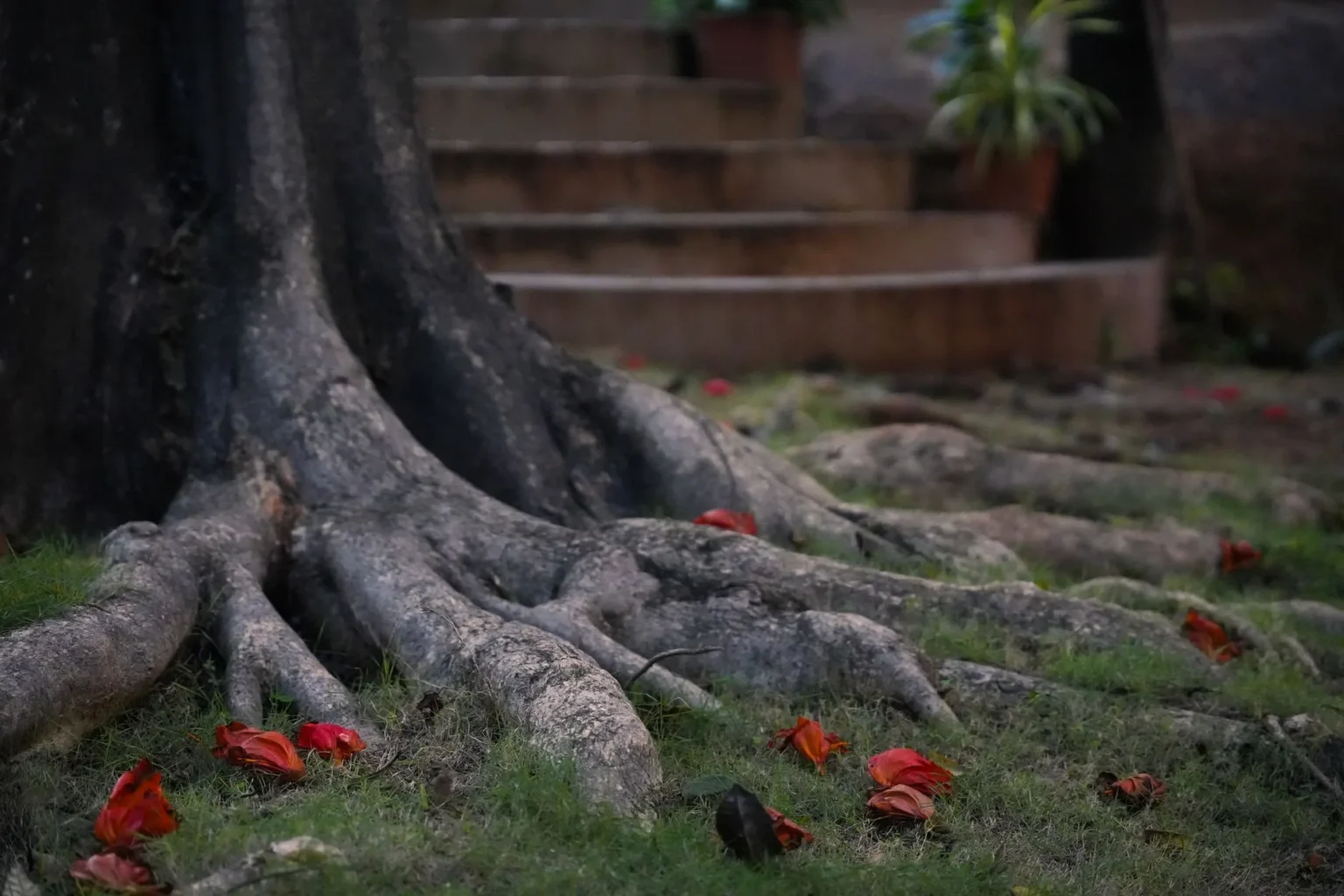
It helps to know why a walk fails. Iowa State University Extension explains that roots grow horizontally near the surface seeking water and nutrients, and that as they thicken they push upward and outward, which can buckle slabs, widen cracks and displace whole sections. Its guidance is general and is not a Palisades Park rule, but it gives useful limits. It advises avoiding cuts to roots larger than 2 inches across, making clean cuts with a saw or hand pruners and not a backhoe, and not cutting buttress roots closer to the trunk than three times the trunk diameter, measured 3 feet up. If cuts would fall within 1.5 times the trunk diameter, the page calls removing the tree the more prudent choice.
The International Society of Arboriculture makes a matching point in its brochure on avoiding tree damage during construction. It says cutting roots close to the trunk can severely damage a tree and limit its ability to stay upright in storms, so cuts should be made as far from the tree as possible. The brochure is a 2011 edition, so we use it for its general method and not as a local rule. On a street where a tree stands within reach of a road, parked cars and wires, a root cut made in the wrong place can turn a tripping problem into a falling tree problem.
Tree roots in Palisades Park: what to check before anyone cuts
- Note how far the slab has lifted at the joint
- Find the roots doing the pushing and measure their thickness
- Measure the trunk and the distance from trunk to walk
- Look for lean, cracks or decay at the root flare
Shaving or grinding a raised slab reduces the tripping hazard, Iowa State says, but the fix is temporary because roots keep growing. When roots are the problem, the first step is to have the tree assessed before anyone cuts. Our tree trimming and pruning crews handle the branches when the roots are not at fault.
Replacement Fees, Unsafe Trees and Penalties
If the Building Department approves a permit, section 274-7 requires the property owner to pay $500 to the Palisades Park Tree Preservation Fund. The money is earmarked for planting new trees at a location chosen by the Environmental Commission. The same section says that if the tree is deemed unsafe or hazardous, the borough assesses no additional cost for removing it. The section was amended in 1999 and 2001, and fee amounts are the kind of detail that changes, so confirm the figure with the borough.
An emergency has its own path. Under section 274-9, if the Police Department, Fire Department or Department of Public Works declares a tree unsafe, the owner may remove it or trim the affected parts without first getting the permit. The owner must then immediately file the application and send a copy to the Environmental Commission, so the borough knows what was done and why.
The chapter also limits what goes back in the ground. Section 274-8 bars planting a poplar or willow in any public street or place, or within 40 feet of the side lines of any street or place. Iowa State University Extension lists poplars and willows among the shallow rooted species to avoid near sidewalks, so the borough rule and the extension advice point the same way. A replacement tree is a chance to choose a species that suits the strip of ground it will have.
Enforcement is plain. Section 274-10 says that if the Environmental Commission or any of its members observes a violation, they forward written notice to the Building Department, which acts to help enforce the chapter. Section 274-11 sets a fine not to exceed $500 for each offense. A violation affecting more than one tree counts as a separate violation for each tree, and each day of a violation is a separate offense.
What a street tree removal file should include
- Address and exact location of the tree
- Reason for removal with photos of the defects
- Contractor name and licensed tree expert details
- Plan for the replacement tree or the fee payment
Once a tree is down, the stump and the roots remain. Stump grinding takes the stump below grade and leaves the ground ready for a new planting, and our storm proofing and repair work covers the other trees on the lot. Our guide to tree service in Fort Lee covers the borough next door.
Protecting Palisades Park Trees Before You Cut
Tree roots in Palisades Park come down to a short list of habits. Find out whether the tree stands on public ground, ask the borough which permit applies, trim roots only on an arborist’s judgment, and plan the replacement before the saw starts. The chapter backs those habits with a fine of up to $500 per offense, counted separately for each tree and each day. Our other local guides are in the Palisades Park tree care articles section.
We are family owned since 1960, and we will tell you plainly whether a root problem calls for a repair, a careful trim or a removal. The New Jersey Board of Tree Experts says the licensing Act requires at least one licensed person in each company hiring itself out for tree care. Our crews are ISA Certified Arborists and New Jersey Certified Tree Experts. Call Reliable Tree Service at (201) 943-4141 to schedule an inspection, or read about our tree removal services.
Related Articles

Land Clearing in New Milford NJ: Permits, One Tree a Year, and Root Zone Protection
New Milford regulates tree removal through Chapter 26A, from a single yard tree to a cleared lot. This guide covers land clearing in New Milford, including permits, clear cutting limits and how to protect the trees that stay.
Tree Pest Management in Hillsdale NJ: Lanternfly Egg Masses, Ash Borers, Borough Rules
Hillsdale treats an insect infestation as a reason a tree may come down and keeps invasive species treatment out of its removal rules. This guide covers tree pest management in Hillsdale, from lanternfly egg masses to the signs of ash borers.
Tree Maintenance in Hasbrouck Heights NJ: Root Zones, Mulch, and Borough Rules
Hasbrouck Heights counts over mulching and root zone compaction as tree removal in its borough ordinance. This guide covers tree maintenance in Hasbrouck Heights, from the root radius and mulch depth to the yearly inspection.
Tree Trimming in River Vale NJ: Right of Way Limbs, Topping Rules, and Timing
River Vale now holds owners responsible for street trees next to their property, and a permit covers any limb six inches or more across. This guide covers tree trimming in River Vale, from the ordinance to the topping rule and timing.
Stump Grinding in Emerson NJ: Street Tree Permits, Root Rules, and Replanting
Emerson asks for borough approval before anyone cuts roots or removes soil near a street tree, and the stump is the last step of any removal. This guide covers stump grinding in Emerson, from permits and root rules to wood chips and replanting.
Tree Storm Proofing in Saddle Brook NJ: Hazard Trees, Root Zones and Township Rules
Saddle Brook defines a hazard tree in its written tree ordinance and leaves hazard trees free of fees and replacement duty. This guide covers defects to check once the leaves drop, root zone care and replacement rules.