Table of Contents
Tree Care in Kearny, NJ
Kearny sits in the western part of Hudson County, and according to Wikipedia the Passaic River separates it from Newark and Belleville while the Hackensack River separates it from Secaucus and Jersey City. The same page says the Legislature created Kearny as a township on April 8, 1867, out of Harrison Township, and that it became a town on January 19, 1899. The town is divided into the Kearny Uplands, the Kearny Meadows, and South Kearny. Older streets, river frontage, and low ground all shape how a property owner should think about stump grinding in Kearny, because a stump is a piece of the ground as much as a piece of the tree.
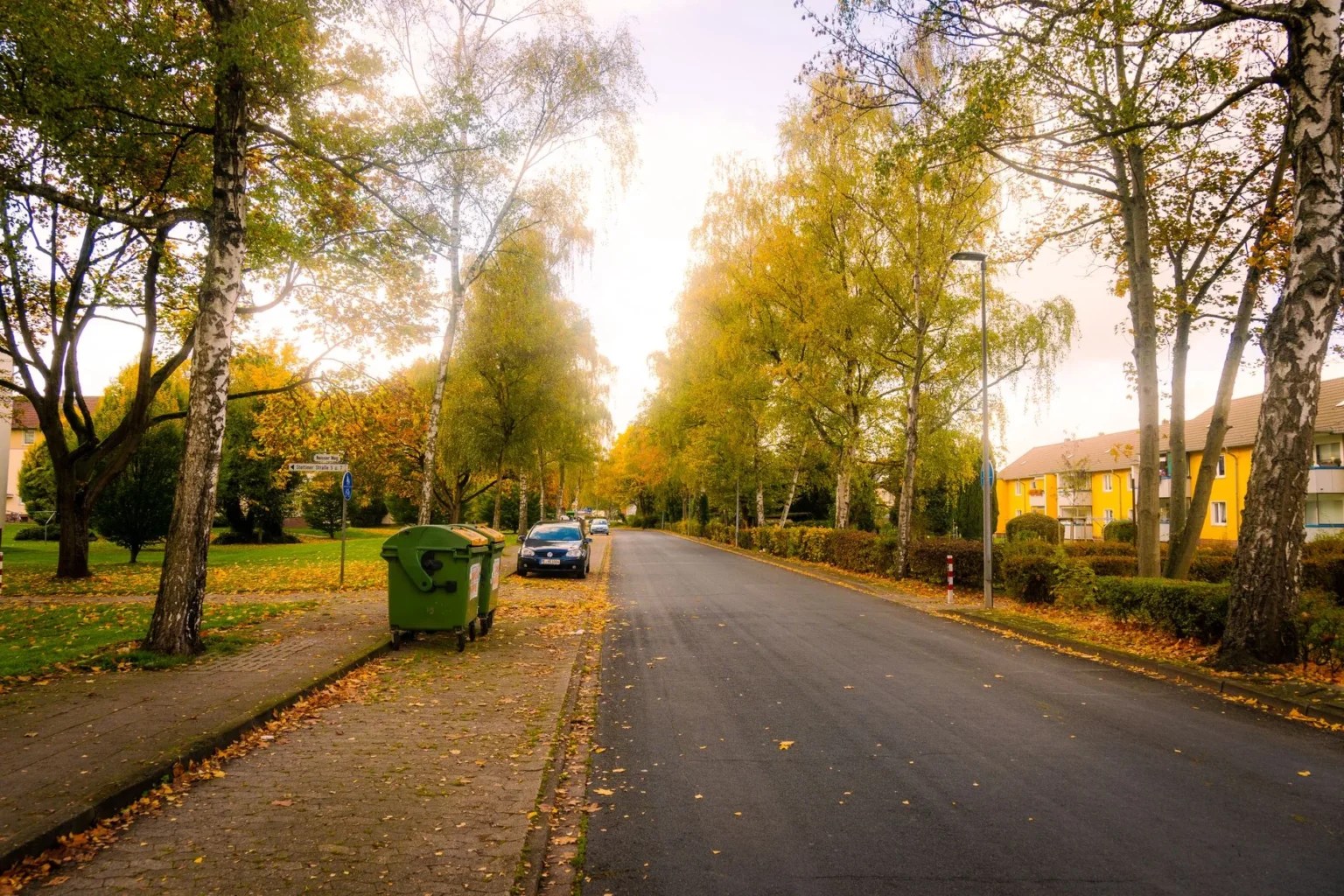
Most of the shade along Kearny streets is looked after by the town. The Shade Tree page says the Shade Tree Division of the Department of Public Works keeps a routine pruning cycle, plants new trees, and removes hazardous and dead trees. The same page says Kearny has held Tree City USA status for more than 30 consecutive years. Riverbank Park and West Hudson Park, the largest park in town and one it shares with Harrison, carry that shade into public green space.
Reliable Tree Service has been family owned since 1960 and works across Hudson and Bergen counties out of Cliffside Park. This guide covers what happens after a tree in Kearny comes down: the town rules that apply before any cutting, the utility marks that come before any digging, how a grinder works, and what to do with the soil and the space afterward.
Fall is a practical time to deal with a stump. Leaves are thinning, the ground is easy to read, and the work can be finished before the soil freezes. A stump left in place does not stay a small problem. It collects water, hides roots that trip mowers, and can send up shoots, which is why our stump grinding follows nearly every tree removal job we do.
The rest of this page walks through the order of operations. Our Kearny tree care guides collect what we publish for the town on one page, and the guide to urban and suburban tree removal explains how tight lots change the plan for the work on top of the ground.
Town Rules and Utility Marks Before the Grinder Arrives
Kearny adopted a tree ordinance in 2024, and it matters for stumps because a stump only exists after a tree has been removed. Chapter 37 of the town code, titled Tree Preservation and Removal, was added on May 7, 2024 by Ordinance 2024-13. It says anyone planning to remove a street tree with a diameter at breast height of 2.5 inches or more, or any tree that is not a street tree with a diameter of 6 inches or more on their property, submits an application to the Manager of the Department of Public Works. No tree is removed until municipal officials have reviewed and approved it. Diameter at breast height means the trunk measured 4.5 feet above the ground.
The ordinance attaches a replacement duty to approved removals. For the smallest size category, the table calls for one replacement tree with a trunk caliper of at least 1.5 inches, and it lists an application fee of $25. Replacement trees go in within 12 months of the removal, the applicant monitors them for two years, and a tree in a temporary pot does not count. Hazard trees, a category the code defines to include trees that are dead or dying, have an infectious disease or insect infestation, or cause obvious damage to structures, carry no fee and no replacement requirement. Fees and rules change, so confirm the current version with the Department of Public Works before you plan. If an insect or disease problem is the reason a tree is coming out, our tree pest management crews can help document it.
One definition in Chapter 37 deserves a second read. The code treats tree removal as more than cutting, and its definition includes over mulching and soil compaction or improper grading within the critical root radius, the zone found by multiplying the trunk diameter in inches by 1.5 feet, when that damage leads to the decline of a tree. Rules differ from town to town, and our Secaucus permit guide shows how another Hudson County town handles the same question.
Utilities come next. New Jersey One Call says state law requires anyone digging to call at least three full business days, excluding weekends and holidays, before beginning work, and that this covers the contractors of property owners as well as excavators. Call 811 or 800-272-1000, wait for the site to be marked with paint, flags, or stakes, and hand dig within two feet on either side of any marked facility. A grinder works below the surface, so ask the contractor who is making that call and on what date.
What stump grinding in Kearny needs settled first
- Whether the stump sits in the street tree strip
- Whether the town approved the removal in writing
- Who placed the 811 call and on what date
- Where the replacement tree will be planted
The Shade Tree page describes the Department of Public Works as the group that maintains street trees, so a stump in the planting strip is a question for the town before it is a question for a contractor.
Edward Hufnagel, who owns Reliable Tree Service, puts it this way: “A stump looks like the end of the job, and it is really the start of the next one. What you plan to put in that spot decides how deep we go and what we leave behind.”
How a Stump Grinder Works and How Deep It Goes
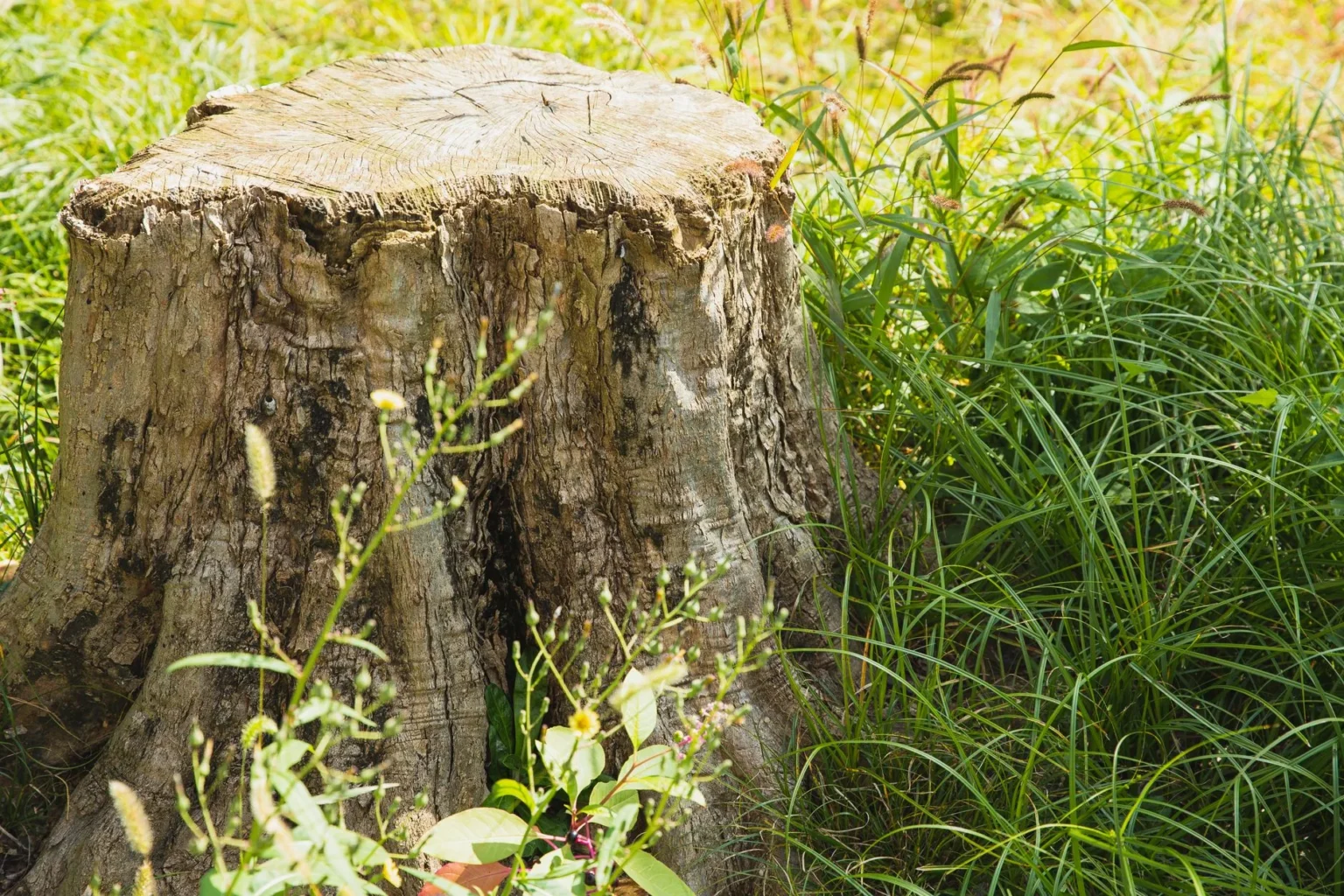
The Iowa State University Extension calls hiring an arborist to grind a stump the quickest, easiest, and safest way to remove it. The machine chews away the stump and any large lateral roots, typically down 8 to 12 inches, and the stump is gone in a matter of hours. Arborists price the job by the size of the stump, measured at its widest point. Planning stump grinding in Kearny starts with that same measurement.
Depth is not fixed, and stump grinding in Kearny varies from one yard to the next. The Illinois Extension notes that grinders can take a stump anywhere from flush with the soil line to more than a foot deep, and that deeper grinding costs more. The right depth depends on what will grow there next. A patch of lawn needs less wood removed than a spot that will take a new tree.
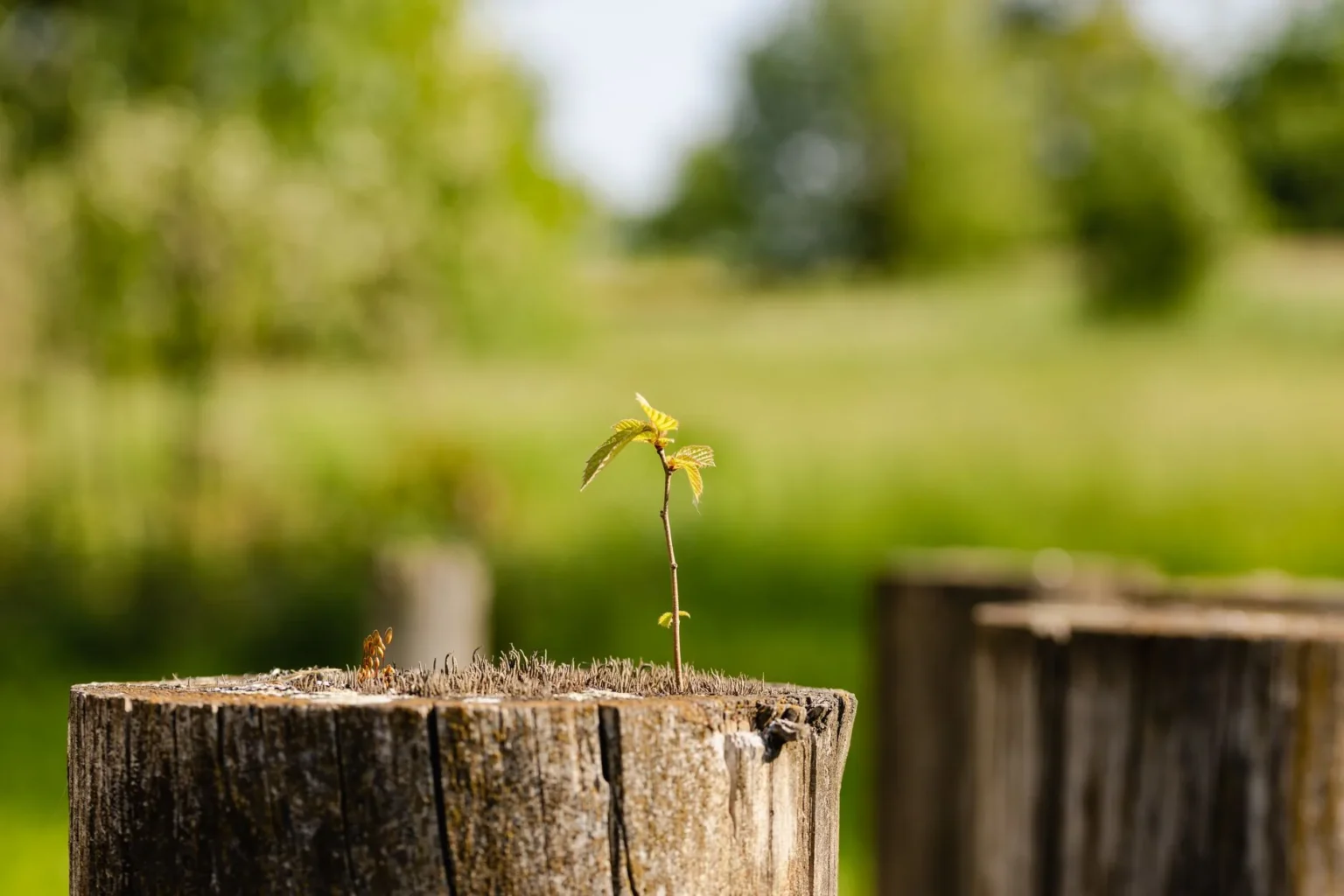
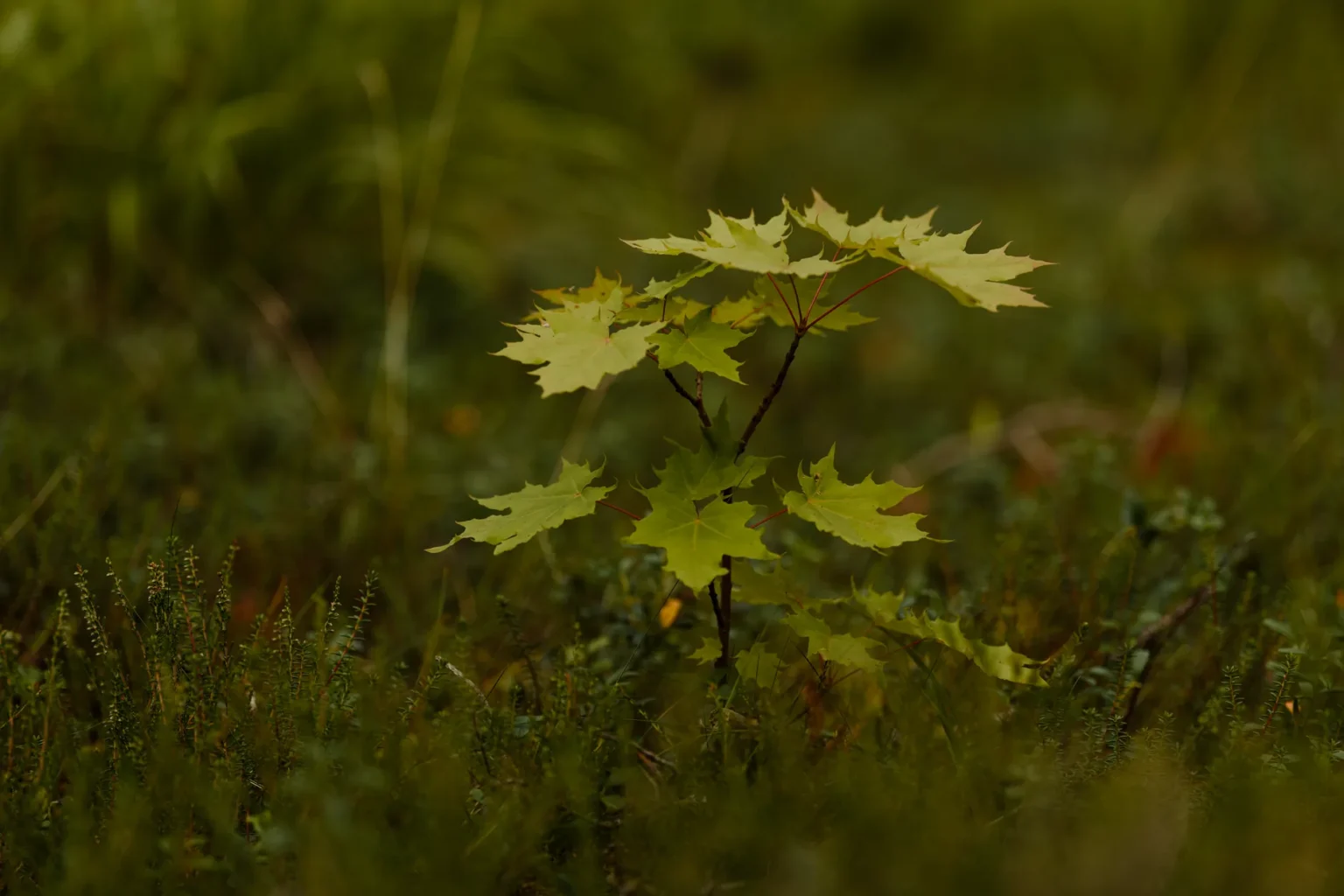
Depth also decides whether the stump comes back. The UC WeedCUT guide describes grinding as a way to control trees that otherwise resprout when cut, and says the stump must be ground to below ground level for the method to work. A stump ground only flush with the soil can send up shoots, which is what the photo above shows on an old stump. If a tree is known to sprout from the base, say so when you ask for a quote.
Grinding does not remove the whole root system. The machine takes the stump and the large roots near it down to its working depth, and what lies deeper stays in the ground and breaks down on its own schedule. For that reason we keep the planting plan in mind from the first visit. A new tree set into the same spot meets old wood in the soil, so the grinding depth should reflect that.
What to settle with the crew before grinding starts
- Grinding depth in inches below the soil line
- Whether grindings are hauled away or left behind
- Whether the hole is filled with clean topsoil
- What will be planted there and when
Iowa State adds that hauling away the shavings and filling the hole usually cost extra, so ask for each item to be listed in the quote and not assumed.
Grindings, Soil, and Replanting a Tree
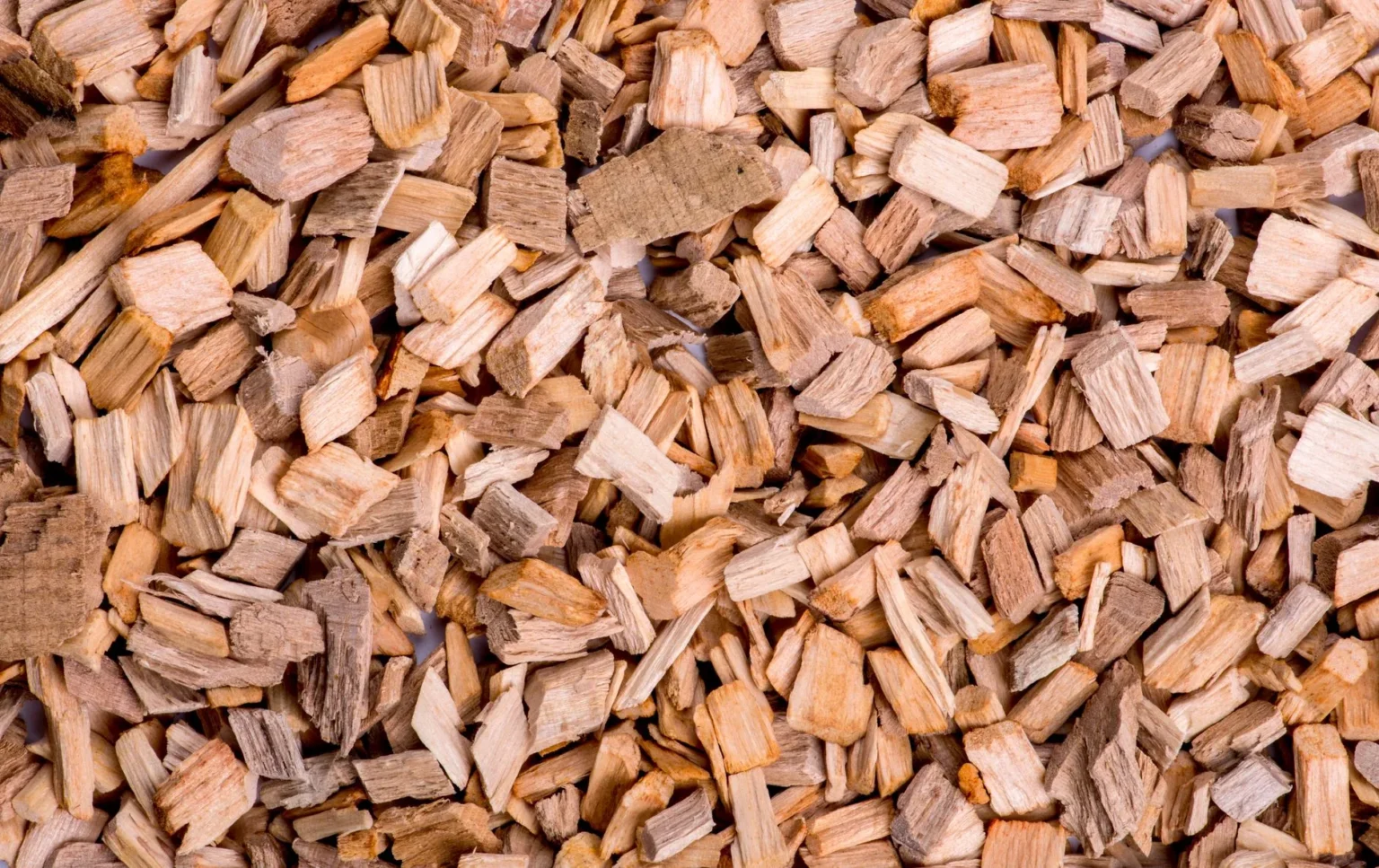
Once the grinder stops, a pile of wood shavings is left in and around the hole. Iowa State says most arborists do not remove this material unless asked, and that they fill the hole only on request, both for an added cost. It also says the shavings change the structure, moisture holding capacity, and nutrient balance of the soil, which makes it hard for new turf or plants to grow, so ideally they are removed before new topsoil is added.
The Illinois Extension page makes the same point from another angle. Grindings get mixed into the surrounding soil as the blade works, and wood mixed into the soil can tie up nitrogen as it breaks down. For a lawn, it recommends hauling off the chipped debris and filling the hole with quality topsoil. UC WeedCUT adds that the grindings left behind can suppress new plants from taking hold. Those three sources agree, which is why we treat cleanup as part of the job and not as an extra.
If the removal triggered a replacement under Chapter 37, the planting plan has a deadline and a standard to meet. The ordinance sets 12 months from the removal, a trunk caliper of at least 1.5 inches for the smallest category, and species chosen from its Appendix A list of approved replacement trees. Setting the new tree in fresh, undisturbed soil next to the old stump, and not in the grinding pit itself, is a choice many crews prefer, and it is worth raising when you plan the spot.
Call 811 again before digging the planting hole. The state Board of Public Utilities reported in 2023 that, according to a 2019 survey by the Common Ground Alliance, planting a tree or shrub is the project for which homeowners most often receive citations for not notifying before they dig. The Shade Tree page also gives the care routine for a new street tree: about one inch of rain per week, a deep soak from the hose when it is dry, and 2 to 4 inches of mulch kept off the trunk.
Steps for replanting after stump grinding
- Remove most grindings and backfill with quality topsoil
- Call 811 before digging the planting hole
- Choose a species from the town approved list
- Water deeply and keep mulch off the trunk
A young tree needs attention in its first seasons more than a mature one does. Our tree maintenance visits cover watering checks, mulch depth, and early structural pruning, so the replacement tree grows into the space the old one left.
Protecting Kearny Trees After the Stump Is Gone
Good stump grinding in Kearny comes down to a short order of operations: settle the town approval, make sure the 811 call is placed, agree on the grinding depth, deal with the grindings, and plant the replacement in soil that can support it. Skipping a step shows up later as a shoot, a sunken patch, or a tree that struggles.
Our crews are ISA Certified Arborists and New Jersey Certified Tree Experts, and we explain what we see on a stump before any machine starts. If a stump or a tree in Kearny is on your mind, we will look at it, tell you what the town needs, and plan the work so the space is ready for what comes next.
Call Reliable Tree Service at (201) 943-4141 to schedule a visit. We are family owned since 1960, and our stump grinding service is built around leaving the ground ready to use.
Related Articles

Tree Maintenance in Leonia NJ: Fall Care for Mature Shade Trees
Leonia has been a Tree City USA since 1990, and steady care is how its shade trees stay that way. This guide covers tree maintenance in Leonia this fall, from the yearly inspection to mulch, roots, and borough rules.
Tree Trimming in Fair Lawn NJ: Fall Pruning for Mature Yard and Street Trees
Fair Lawn has rewritten how it protects its trees, and careful pruning is the quiet half of that work. This guide covers tree trimming in Fair Lawn this fall, how much a mature tree can lose, and why topping backfires.
Tree Removal in Secaucus NJ: What the Town Permit Means for Your Trees
Secaucus asks owners to get a permit before removing almost any standing tree, dead or alive. This guide explains tree removal in Secaucus, the warning signs that a tree is failing, and how to plan a replacement.
Tree Storm Proofing in Teaneck NJ: Fall Prep for Mature Street and Yard Trees
Teaneck has looked after its street trees since 1995. This guide covers fall tree storm proofing in Teaneck for the yard trees behind the curb, the warning signs to watch for, and who handles what.

Weehawken’s Trusted Tree Experts – Trimming, Pruning & Removal
In Weehawken, where history meets the Manhattan skyline, Reliable Tree Service helps every tree tell its story. We specialize in expert trimming, pest care, and precision removals that keep the community’s parks, streets, and waterfront spaces thriving all year.
Elmwood Park Tree Service Experts – Trimming, Pruning, Removal & Pest Care
Reliable Tree Service provides professional tree trimming, pruning, pest control, and safe tree removal across Elmwood Park, NJ. Our certified arborists help local homeowners protect and enhance their landscapes year-round.