Table of Contents
Tree Care in Teaneck, NJ
Teaneck was incorporated in 1895 and lies along the Hackensack River in Bergen County, with Overpeck Creek running through the township. It is also a town that has paid attention to its trees on purpose. The Shade Tree Advisory Board has looked after the street trees since 1995, and the board’s 2023 annual report says Teaneck completed its Community Forestry Master Plan ahead of a February 2024 deadline and is back in good standing with Tree City USA.
That level of care is worth matching on private property. Tree storm proofing in Teaneck is mostly about the trees behind the curb: the mature oaks and maples in back yards, the old specimens that lean toward a roofline, and the trees that have grown for years in tight lots with compacted soil. Those are the trees a storm tests first, and they are the ones a homeowner has to look after without a township crew.
Reliable Tree Service has been family owned since 1960 and works across Hudson and Bergen counties out of Cliffside Park. This guide explains why fall is the right time to inspect trees, which warning signs matter in a mature tree, and who handles what when a tree in Teaneck needs work.
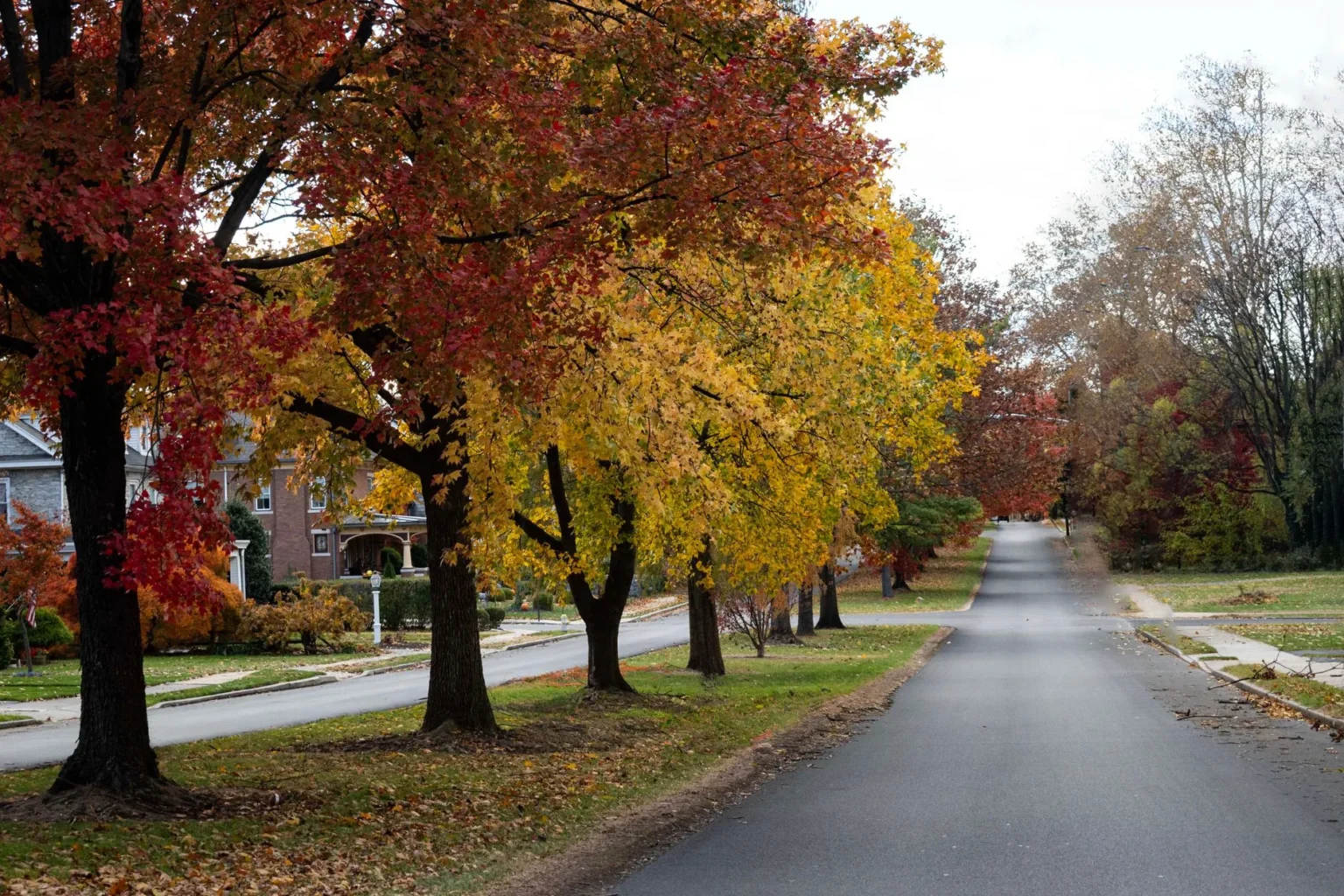
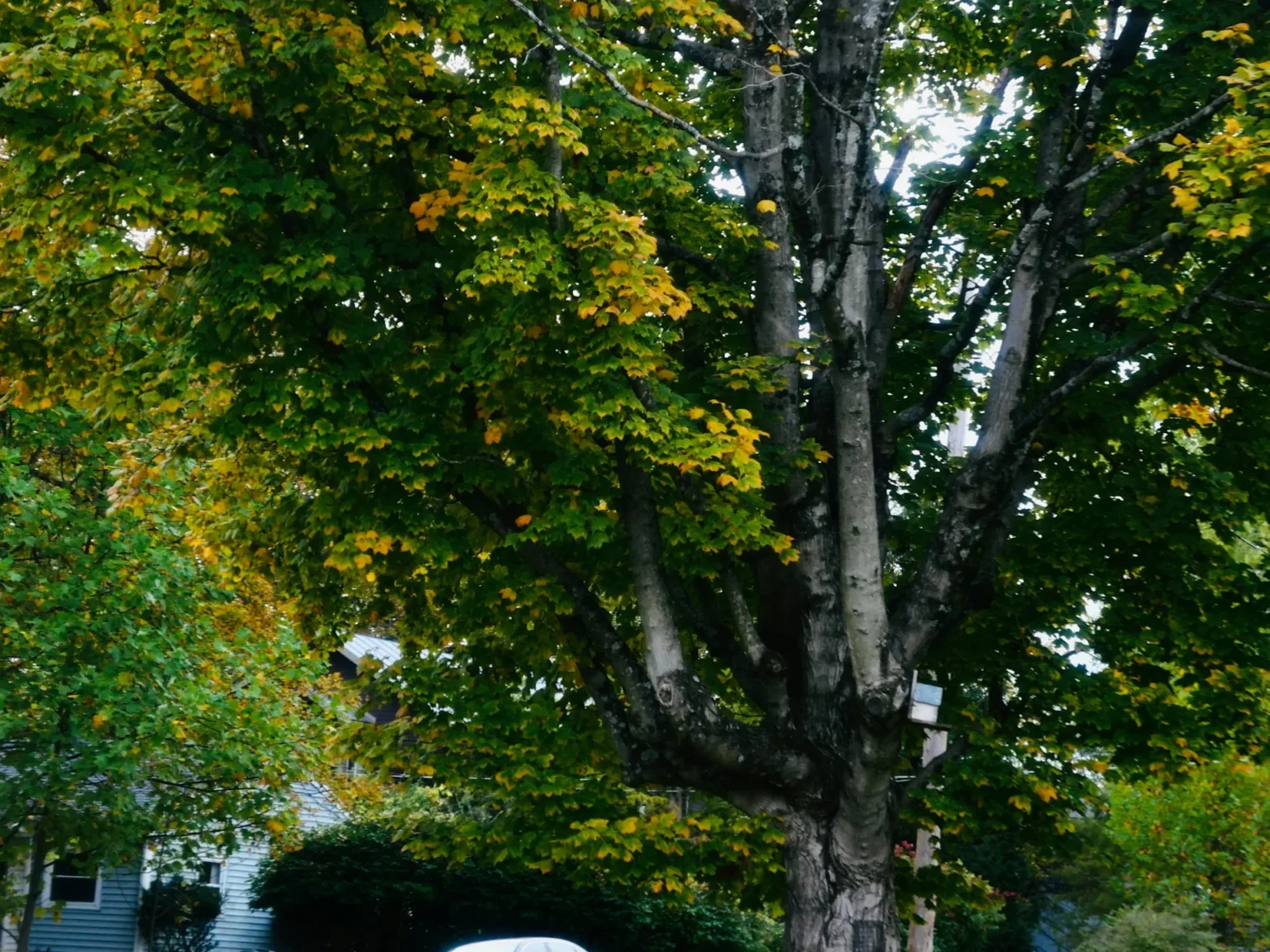
October is a useful month for this work because the canopy is still carrying leaves while the weather turns. Leaves catch wind like a sail, so a branch that held up all summer can fail in the first hard gust of the season. A few weeks later the leaves drop and the structure of the tree is finally visible, which makes it the easiest time of year to see dead wood, cracks, and crossing limbs.
Teaneck itself treats autumn as planting season. The board’s report estimates that about 220 trees were planted in the township in 2023, and 86 of them went in during the fall. Homeowners can follow the same rhythm by inspecting what they already have before the next storm. Our other Teaneck tree care guides are collected on one page.
Why Fall Is the Season for Storm Proofing Mature Trees
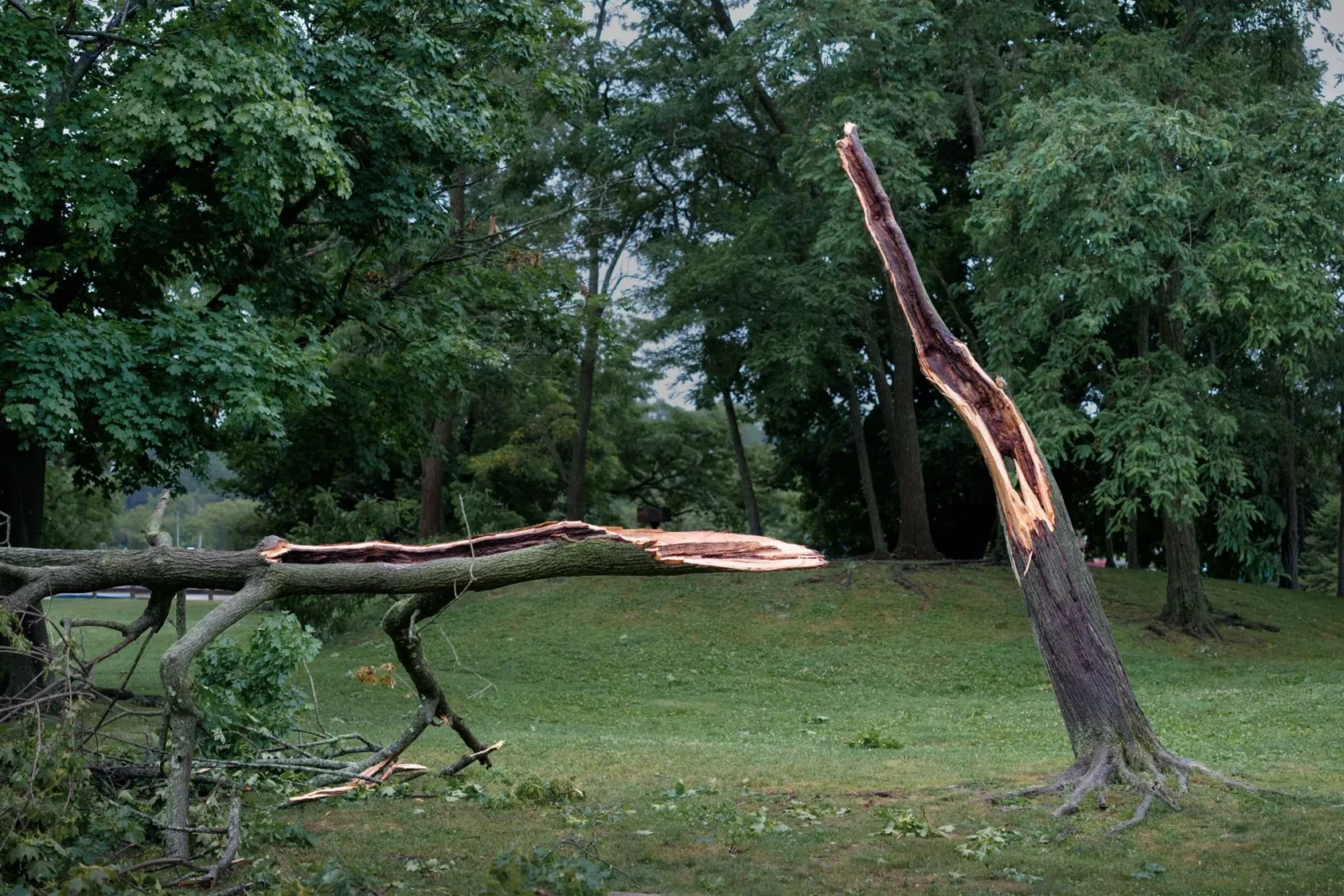
The International Society of Arboriculture explains the three ways storms hurt trees in its storm related tree damage guide. Strong winds can break branches and even uproot a tree, particularly when heavy rain has softened the soil. Heavy snow or ice can snap limbs under the added weight. Lightning heats the water inside the wood and can rupture it. Each one is easier to prepare for than to repair.
Fall puts the first two on the calendar. Autumn rain saturates the ground before winter snow and ice arrive, and trees that stand on wet ground hold their roots less firmly. Properties near the Hackensack River or Overpeck Creek can stay wet longer, and any lot where the lawn was graded or paved close to the trunk has already lost some of the root room the tree depends on.
This is the work our storm proofing and repair service was built for. It is not a single cut. It is a walk around the tree with a trained eye, followed by a plan that fits the tree, the lot, and the structures near it.
The walk around is slower than most people expect. We look up into the canopy for dead wood and for limbs that have grown long and heavy over a roof, then down at the base for exposed roots, fungus, and soil that has settled or lifted. We also look at what stands near the tree, because the same failure does very different damage over an open lawn than over a garage or a neighbor’s fence.
What tree storm proofing in Teaneck covers each fall
- Dead, hanging, and rubbing branches removed from the canopy
- Weak branch unions reviewed for support cables or bracing
- Root zone and soil checked for heaving, decay, and compaction
- Clearance checked over roofs, driveways, and service lines
A visit like this gives the homeowner a written picture of what is sound and what is not. Some trees need nothing. Others need a few careful cuts, and a smaller number need a harder conversation about removal.
Edward Hufnagel, who owns Reliable Tree Service, puts it this way: “A tree does not warn you about the storm it cannot handle. You have to read its structure before the weather does.”
Reading the Warning Signs in an Older Tree
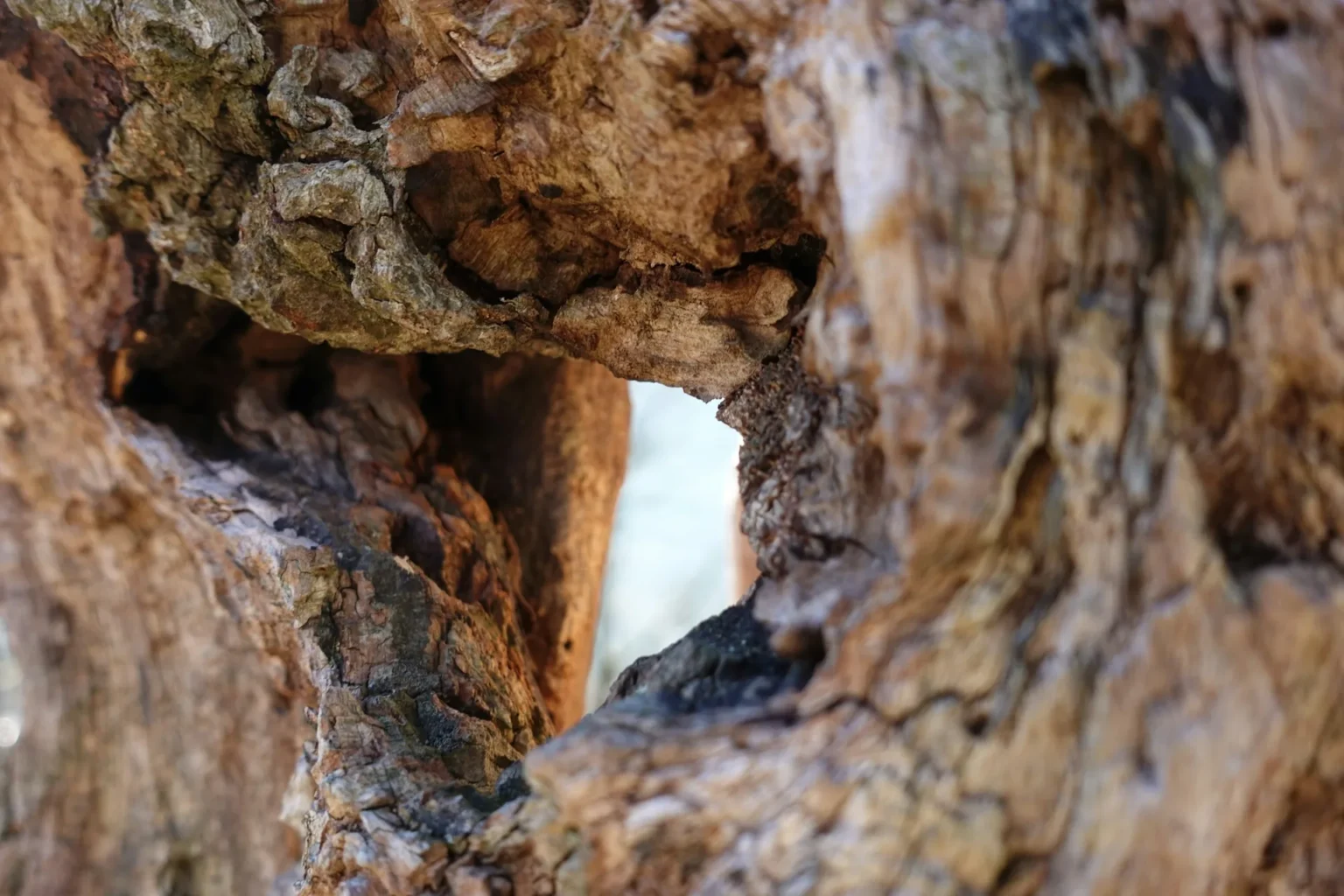
Most storm failures start with a defect that was visible months earlier. The ISA lists the common ones in its Recognizing Tree Risk brochure, and the list is practical enough to use in your own yard. It asks whether there are large dead branches, hanging branches, loose bark, cracks or splits in the trunk or where branches attach, cavities or rotten wood, and mushrooms at the base of the tree.
The brochure also points to two defects that matter in older suburban trees. Codominant stems, where a trunk splits into two main leaders, can be a failure point because the union between them is weak. Cracks or separations in the soil near the base can show that the roots are moving, which is a warning sign if the tree also leans. It adds that construction, a change in soil level, or new lawn and pavement near a tree can alter the root zone, and that topping or heavy pruning is itself a risk factor.
The same brochure is clear that judging how serious a defect is belongs to a professional arborist. A crack that is cosmetic on one tree is a structural problem on another. That is why regular tree maintenance matters: it gives a trained person a chance to see a tree more than once and notice change.
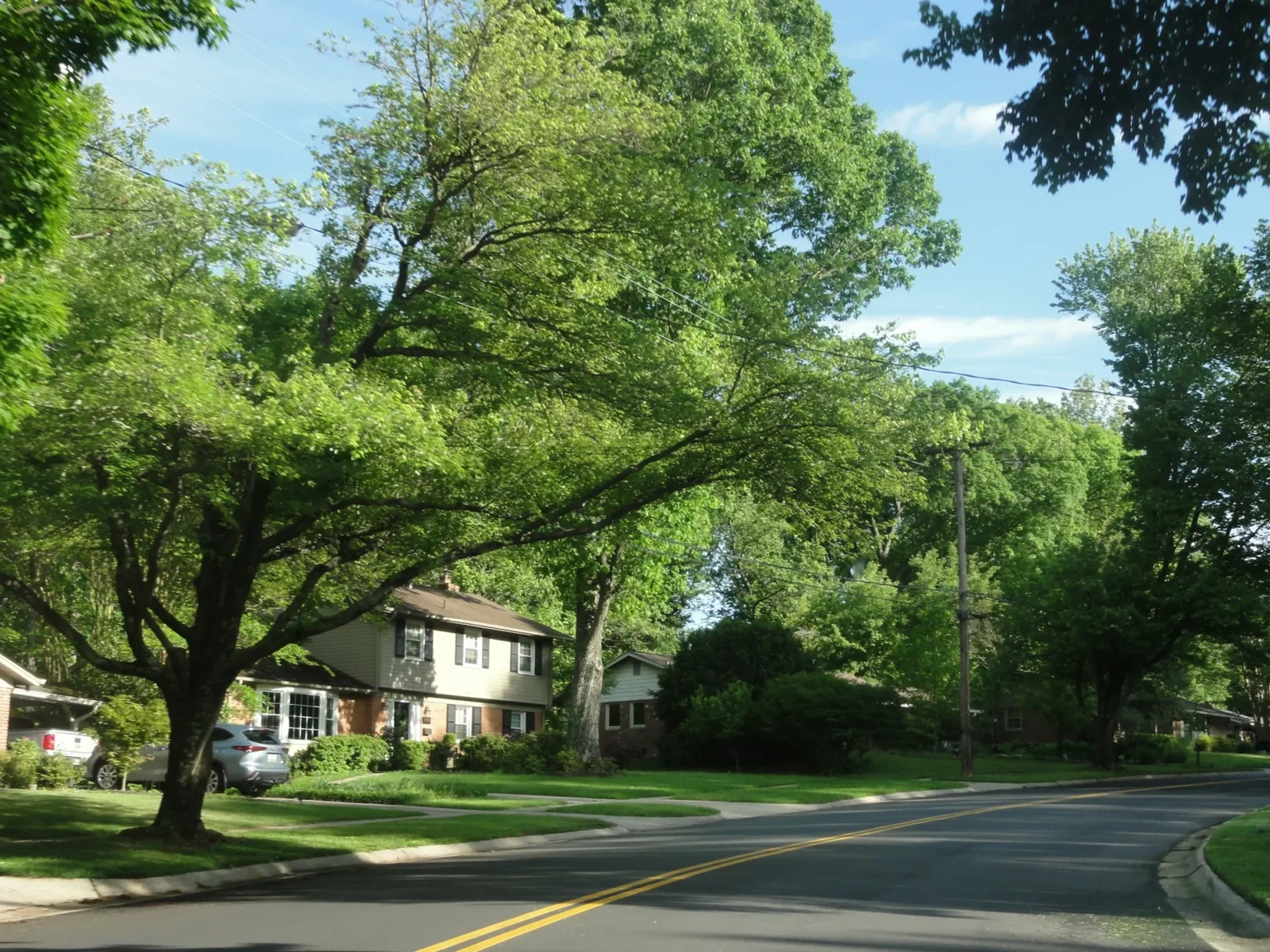
Teaneck lots give those risks plenty of ways to appear. A patio poured a few feet from an old trunk, a driveway widened over the root zone, or a grade change after a renovation can each cut roots that took many years to spread. The tree often looks fine for several seasons and then loses a limb or leans after a wet fall. Photographing a tree each October makes slow changes much easier to spot.
Signs worth a call before the next storm
- Large dead branches or limbs that hang loose in the canopy
- Cracks or splits in the trunk or at a branch attachment
- Mushrooms, cavities, or soft wood at the base or along the trunk
- A new lean, or soil cracking and lifting near the roots
Many of these problems can be reduced with careful tree trimming and pruning, which removes dead wood and lightens heavy limbs without topping the tree. When a defect cannot be corrected, an honest assessment saves a bigger loss later.
Street Trees, Yard Trees, and Who Handles What
In Teaneck, the first question is whose tree it is. The trees along the street are part of the township’s urban forest, and the Shade Tree Advisory Board’s annual report describes the board working closely with the Department of Public Works on plantings and removals. Its 2023 account includes replacing felled oaks on Penn Avenue with yellowwoods, ginkgos, and Japanese lilacs after consulting residents.
Rules for work on those trees have changed over time. In 2013 the township council approved an ordinance that let residents hire certified specialists to prune or remove hazardous public trees, with the township’s tree supervisor approving the work, as Patch reported. Terms and fees can change, so confirm the current process with the township before booking anyone. The same annual report lists a goal of removing sycamore and red maple from the municipal list of trees that need no removal permit, which is a reminder that removal rules exist and get revised.
Trees on a private lot are the owner’s responsibility, including the decision to keep, prune, or take down. If a tree is leaning toward a house, a stump is left behind, or a limb is over the driveway, the tree removal and stump grinding pages explain how we handle both. Our note on urban and suburban tree removal covers why tight lots change the plan.
Replacement planting is part of the same conversation. The township’s autumn plantings in 2023 included ginkgo, European hornbeam, linden, redbud, golden chain tree, weeping cherry, Japanese lilac, and October Glory maple, which shows how many different trees one town can use. A homeowner replacing a removed tree can do the same and choose a species that suits the space, rather than repeating the one that outgrew it.
Before you hire anyone for tree work
- Check for an ISA credential and verify it on the ISA website
- Ask for proof of insurance and call the insurance company
- Check that local permits and licenses are in order
- Get more than one estimate, and get the scope in writing
Those four steps come straight from the ISA’s guide on why to hire an arborist. It also warns against door to door offers of bargains, which tend to show up after storms.
Getting Teaneck Trees Ready Before the Next Storm
The best time to look at a tree is before it matters. A fall inspection takes an hour or two, and it turns a vague worry about the old oak by the garage into a clear answer. Tree storm proofing in Teaneck does not need to wait for a forecast. It needs a calm day, a list of questions, and someone who knows what a failing union looks like.
Our crews are ISA Certified Arborists and New Jersey Certified Tree Experts, licensed, bonded, and insured, and we answer emergency calls 24/7 when a tree comes down. If you would rather have a plan before that call, ask for an inspection and we will walk the property with you.
After the visit you receive plain answers, in order of urgency. The first item is anything that could hurt someone or damage a building in the next storm. The second is work that improves the tree over the next few seasons, such as thinning or deadwood removal. The last is simply what to watch, so a healthy tree can be left alone with a clear conscience.
Call Reliable Tree Service at (201) 943-4141 to schedule a fall inspection in Teaneck. We are family owned since 1960, and we would rather prevent the storm damage than clean it up.
Related Articles

Tree Removal in Secaucus NJ: What the Town Permit Means for Your Trees
Secaucus asks owners to get a permit before removing almost any standing tree, dead or alive. This guide explains tree removal in Secaucus, the warning signs that a tree is failing, and how to plan a replacement.

Weehawken’s Trusted Tree Experts – Trimming, Pruning & Removal
In Weehawken, where history meets the Manhattan skyline, Reliable Tree Service helps every tree tell its story. We specialize in expert trimming, pest care, and precision removals that keep the community’s parks, streets, and waterfront spaces thriving all year.
Elmwood Park Tree Service Experts – Trimming, Pruning, Removal & Pest Care
Reliable Tree Service provides professional tree trimming, pruning, pest control, and safe tree removal across Elmwood Park, NJ. Our certified arborists help local homeowners protect and enhance their landscapes year-round.
East Rutherford Tree Removal & Cleanup
We help East Rutherford homeowners and businesses storm-proof their trees, clear debris, and manage removals safely. Our certified arborists keep local properties secure and healthy before and after every storm.
Expert Tree Trimming & Removal in East Newark, NJ
East Newark, NJ is a compact Hudson County community where trees bring life and balance to an urban landscape. Reliable Tree Service provides expert trimming, removal, restoration, and pet-safe pest control to help homeowners preserve the health, safety, and beauty of their trees.
Lodi, NJ Tree Expert Company – Removals, Trimming, and More
As certified arborists serving Lodi, NJ, we take pride in protecting the community’s well-earned “Tree City USA” status. From precise tree removals and structural pruning to advanced restoration and storm recovery, Reliable Tree Service delivers expert care rooted in decades of Bergen County experience.