Table of Contents
Tree Care in Park Ridge, NJ
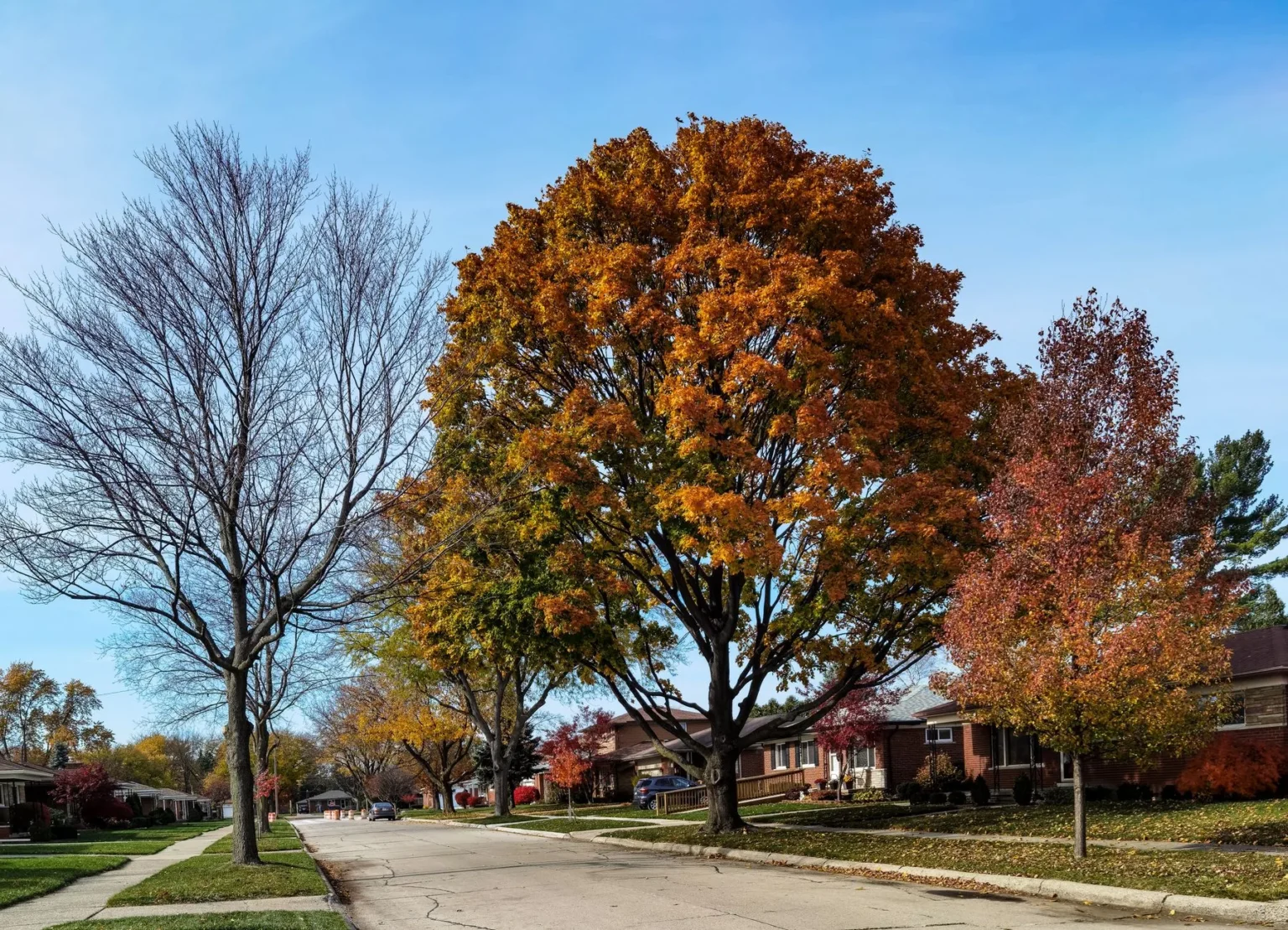
Park Ridge is a Bergen County borough in the Pascack Valley. According to Wikipedia, it became a borough by an act of the New Jersey Legislature on May 15, 1894, formed from portions of Washington Township, and it covers about 2.63 square miles. Pascack Brook runs through its history, and the same page lists neighbors such as Hillsdale, Montvale, River Vale, and Woodcliff Lake. Streets here are lined with mature maples and oaks, and that is why tree removal in Park Ridge is a question many homeowners face sooner or later.
The question is rarely just whether a tree should come down. It is also who decides, what the borough requires first, and what has to go back in the ground afterward. In 2024 the borough adopted Ordinance No. 2024-009, a tree removal and replacement ordinance filed under Chapter 80 of its code, and the full text is posted as a borough ordinance document on the borough website. Reading it before you hire anyone can save a good deal of trouble.
Reliable Tree Service has been family owned since 1960 and works across Hudson and Bergen counties out of Cliffside Park. This guide walks through the ordinance in plain language, explains how an arborist tells a hazard tree from a healthy one, and covers the root zone rules that catch many owners by surprise. Confirm the current wording with the borough before you schedule work, since ordinances can be amended.
The ordinance states its purpose directly. It sets requirements for tree removal and replacement in Park Ridge to reduce soil erosion and pollutant runoff, promote infiltration of rainwater into the soil, and protect public health, safety, and welfare. In other words, the borough treats a mature tree as part of its drainage and soil system, and not only as something that looks nice along a street.
That framing explains most of the rules that follow. A large tree takes in a great deal of water, holds soil together with its roots, and shades pavement and lawn. When it is removed, the ground has to be made good somehow, which is the idea behind replacement planting. Our tree removal work follows the same logic, starting with the question of whether removal is truly the right answer, and our other Park Ridge tree care guides are collected on one page.
Hazard Trees and the Defects an Arborist Looks For in Park Ridge
The ordinance has a short definition of a hazard tree, and it is worth knowing because hazard trees are treated differently from the rest. A hazard tree is a tree or limbs of a tree that meet one or more listed criteria. The tree has an infectious disease or insect infestation, is dead or dying, blocks the view of traffic signs or the free passage of people or vehicles where pruning has not worked, is causing obvious damage to structures such as foundations or sidewalks, or is judged a threat to public health, safety, or welfare by a certified arborist or Licensed Tree Expert. A tree proposed for removal only to make room for development does not count.
What does an arborist actually look at? The ISA brochure on recognizing tree risk offers a checklist that works well as a homeowner walk around. It asks about large dead branches, detached or hanging branches, loose bark, cracks or splits in the trunk or where branches attach, cavities or rotten wood, mushrooms at the base, and recent changes such as construction, soil level changes, or new pavement. It also asks whether the tree has been topped or heavily pruned.
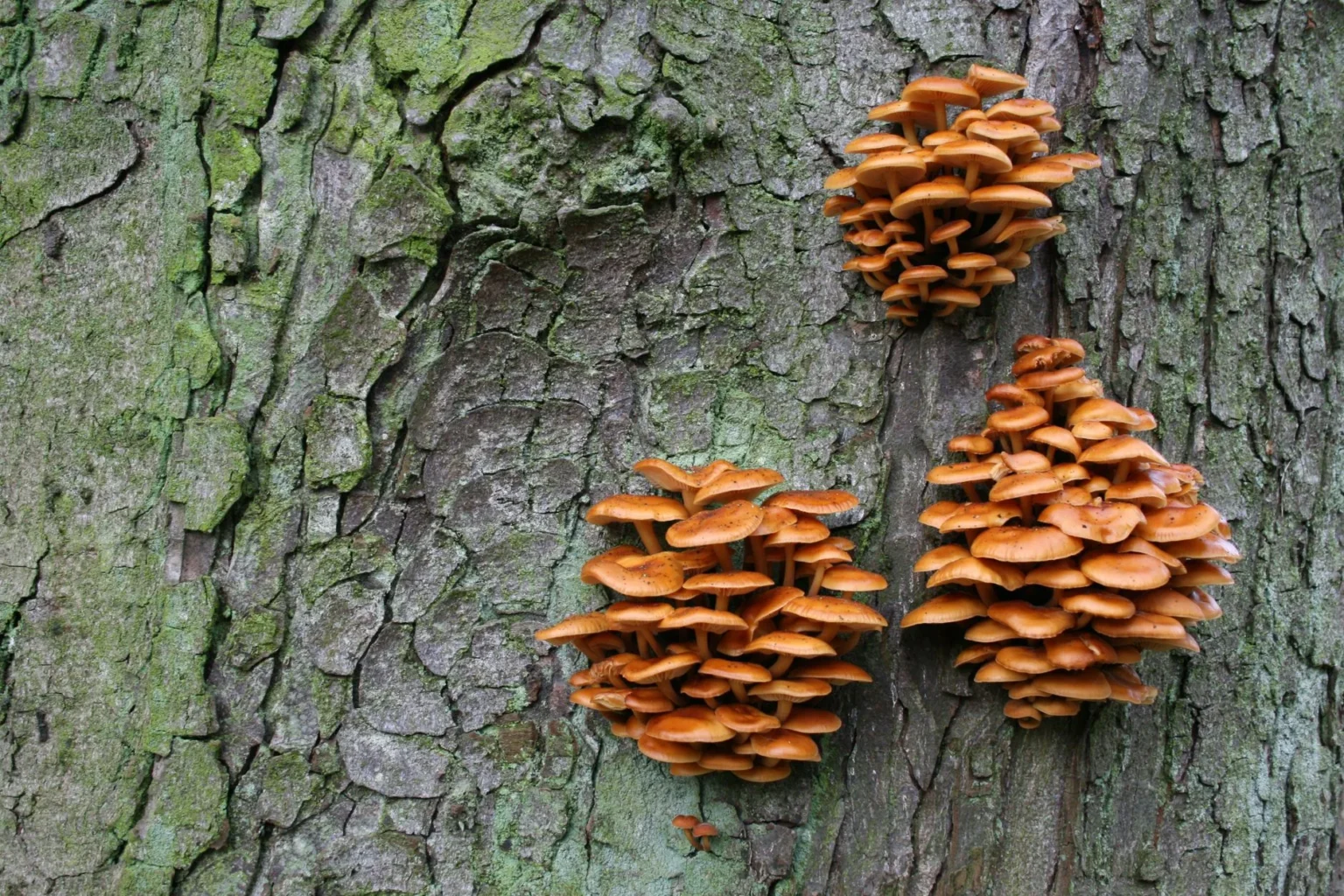
The photograph above shows clusters of mushrooms on a trunk. Fungal fruiting bodies are one of the external signs of decay listed in the brochure, along with cavities and an asymmetric shape. The brochure is careful to say that each sign could be minor or the start of a significant problem, which is why it recommends that an ISA Certified Arborist look closely before anyone decides. A defect is a reason to inspect, not an automatic verdict.
The brochure also lists the usual answers once risk is found. An arborist may prune to remove defective branches, cable and brace a weak stem, provide routine care such as mulch and water, or recommend removal when the risk is too high. It adds that cables and braces are not guarantees against failure. Our tree trimming and pruning crews handle the smaller steps first, and removal is the last step in that order, not the first.
Signs that call for an arborist inspection
- Large dead branches over a roof or driveway
- Cracks or splits at a trunk or branch union
- Mushrooms or cavities at the base or on the trunk
- Soil heaving or gaps around a leaning tree
Any one of these is worth a closer look, and several together are worth a call. Park Ridge treats the hazard finding seriously because the ordinance exempts hazard trees from the fee and replacement requirement. Edward Hufnagel, who owns Reliable Tree Service, puts it this way: “A tree that looks fine from the street can still be hollow where it counts. The decision to remove should rest on what an arborist finds in the wood, not on how the tree looks from the sidewalk.”
What the Park Ridge Replacement Rule Asks of Owners
Park Ridge asks owners to replace certain trees that come down. Under the ordinance, anyone who removes a street tree with a diameter at breast height of 8 inches or more, or removes trees of that size on private land, is subject to the replacement table unless an exemption applies. Diameter at breast height, or DBH, is measured at a point four and a half feet above ground level on the uphill side of the trunk. If the trunk divides below that height, it is measured at the highest point before the division.
The table sorts trees into four categories by size. A smaller removed tree is replanted with one tree of at least 1.5 inch caliper, a middle size tree with two, a larger tree with three, and a tree of 33 inches or more with four. Each category has an application fee, and the borough document lists the amounts, so check the current figures with the borough before you apply. Replacement trees must be planted within twelve months of the removal, monitored by the applicant for two years, and replaced if they fail. A tree in a temporary container does not count.
If the replacement trees cannot fit on the property, the ordinance gives two alternatives. The applicant can plant them in a separate area approved by the borough, or pay a fee per tree removed into a fund dedicated to tree planting and continued maintenance of trees. Species and diversity follow an appendix to the ordinance, so you cannot simply plant the same tree four times over.
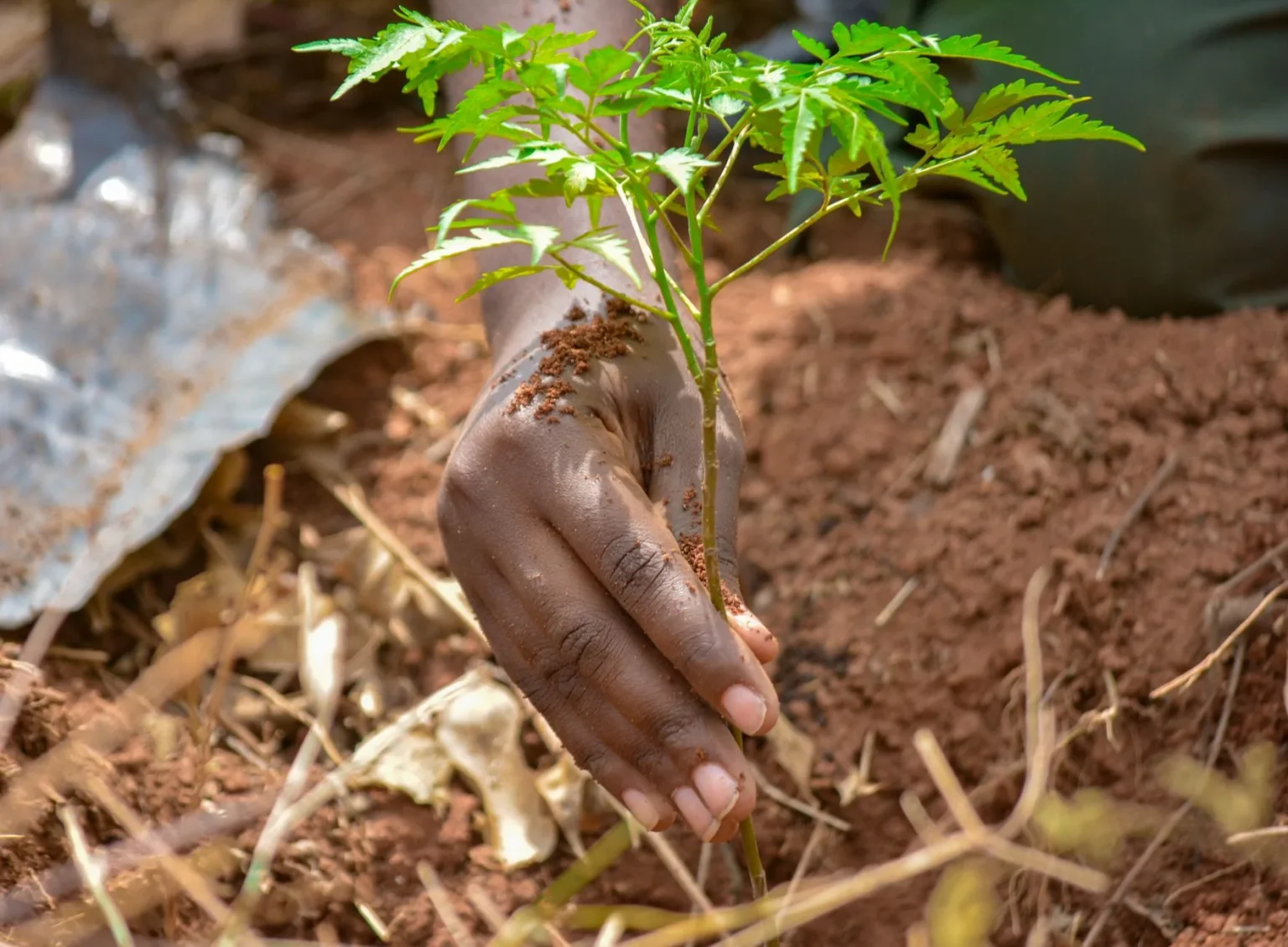
The exemptions matter too. Residents who remove fewer than four trees per acre in the first three categories within a five year period are exempt, and the count is a rolling one. Hazard trees are exempt from the fee and replacement. In every case the person claiming an exemption must provide written justification, made by a New Jersey licensed tree expert or arborist. The photograph of a young tree being planted shows the end goal, and our tree maintenance visits help that replacement tree get through its first two seasons.
Steps to plan tree removal in Park Ridge
- Measure the trunk at four and a half feet
- Get a written hazard opinion if the tree is failing
- Check replacement and exemption rules with the borough
- Plan the replacement planting within twelve months
Each step is a small piece of paperwork or a small measurement, and together they keep an owner from a violation. The ordinance sets a fine for a violation and treats each tree cut in violation as a separate one, and it is enforced by the borough Zoning Officer. Planning ahead costs far less than correcting a mistake after the saw has run.
Critical Root Radius and the Hidden Ways a Tree Is Removed
The most surprising part of the ordinance is its definition of tree removal. It is not limited to cutting a tree down. The ordinance defines tree removal as killing a tree or causing irreparable damage that leads to its decline or death, and it names excessive pruning, applying substances toxic to the tree, over mulching or improper mulching, and improper grading or soil compaction within the critical root radius around the base of the tree. Responsible pruning, ordinary maintenance, and treatments to manage invasive species are not counted.
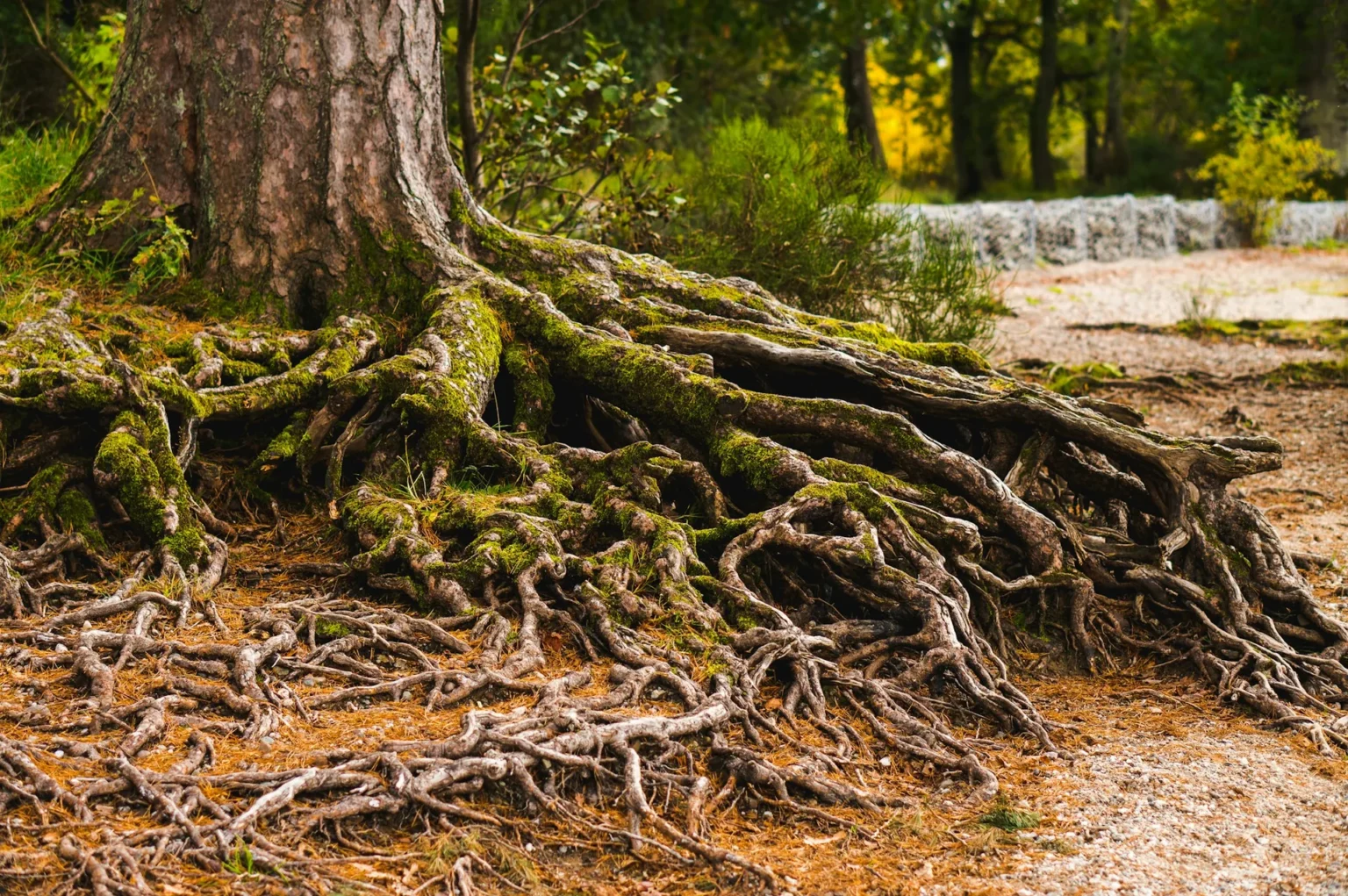
The critical root radius, or CRR, is the zone around the base of a tree where most of the root system is found. The ordinance calculates it by multiplying the tree’s DBH by 1.5 feet, and it gives the example of a 6 inch tree, which has a CRR of 9 feet. For a trunk of 20 inches the same formula gives a much larger circle, and that circle often reaches under a driveway, a patio, or a trench for a new utility line. The root photograph above shows why: a mature tree’s roots spread wide and close to the surface.
This means a patio project, a regrade, or a heavy pile of fill beside a tree can be treated as a removal under the ordinance if it leads to the tree’s decline. The ISA brochure says much the same from the tree’s side. It lists human caused defects such as wounds, root loss, and decay that follow construction, grade changes, soil compaction, or poor pruning. Damage of this kind is slow, which is why a tree can look fine for a year or two and then fail in a storm.
Before any project near a mature tree, measure the trunk, work out the CRR, and keep heavy equipment and fill outside that circle where you can. If the work has to enter the circle, ask an ISA Certified Arborist how to do it with the least harm. A tree that has lost a large share of its roots may need to be assessed again, and sometimes the honest answer is that it should come down. Once a trunk is down, our stump grinding service clears what is left.
Ways to protect the root zone
- Keep fill and heavy equipment outside the root radius
- Spread mulch in a flat ring away from the trunk
- Avoid trenching for lines and pipes near the base
- Keep lawn edging and mowers clear of the bark
The borough’s Shade Tree Committee page explains terms such as DBH and critical root zone, and it recommends pruning, soil care, mulching, watering, and root protection. It also recommends hiring an ISA certified arborist and checking references. The committee itself is a group of volunteers appointed by the Mayor and Council, and it works under Borough Ordinance 97-5, adopted in 1997, to regulate the planting and care of trees on public property, including rights of way and parks.
Protecting Park Ridge Trees Through Careful Removal Decisions
Tree removal in Park Ridge works best when it starts with a plain question and ends with a new tree in the ground. A borough rule is only one piece of that. The tree itself, the soil around it, and the people and property beneath it all count, and an ISA Certified Arborist can weigh them with you on your own lot. When a pest or disease is the reason for a decline, our tree pest management page explains how that side of the work goes. Neighbors in nearby towns have asked the same questions, and our guides to removal in North Bergen and pruning before removal in Glen Rock cover similar ground.
New Jersey also has rules for who may do the work. The New Jersey Board of Tree Experts says a tree business must be registered with the Board and should employ a Licensed Tree Expert or Licensed Tree Care Operator. It suggests asking to see the company’s current business registration, proof of insurance, and the name and license number of the licensed person. Our crews are ISA Certified Arborists and New Jersey Certified Tree Experts, and we are glad to walk a Park Ridge property with you and explain what we find before any work begins.
Call Reliable Tree Service at (201) 943-4141 to schedule an inspection in Park Ridge. We are family owned since 1960, and we will answer your questions about the borough rules, the tree, and the replacement plan in plain terms.
Related Articles

Tree Storm Proofing in Ramsey NJ: Thunderstorm Wind, Borough Rules, and Fall Checks
Ramsey has plenty of mature trees, and a June thunderstorm showed what wind can do to them. This guide covers tree storm proofing in Ramsey, from common defects to the borough’s rules on who handles which tree.
Tree Maintenance in River Edge NJ: Leaves, Mulch, and Root Care for Fall
River Edge has been a Tree City USA every year since 2000, and what happens on the ground under a tree matters as much as what happens in the canopy. This guide covers tree maintenance in River Edge from fallen leaves and mulch to who handles street trees.
Tree Removal in North Bergen NJ: Hillside Roots, Hazard Trees, and Replacement Rules
North Bergen sits on the Hudson Palisades, so trees grow on steep ground, close to walls and buildings. This guide covers tree removal in North Bergen, from what a slope does to roots to the paperwork worth gathering first.
Tree Trimming in Fairview NJ: Borough Tree Rules, Wires, and Small Lot Pruning
Fairview is a Bergen County borough with a written tree code, small lots and mature trees close to buildings and wires. This guide covers tree trimming in Fairview, from what the borough code regulates to when and how to prune.
Tree Pest Management in Oradell NJ: Ash Trees, Emerald Ash Borer, and Borough Rules
Oradell is a Bergen County borough with a written tree code and a lot of mature shade trees, and some of them are ash. This guide covers tree pest management in Oradell, from the signs of emerald ash borer to the borough approvals that apply before any cutting.
Tree Maintenance in Closter NJ: Street Tree Rules, Root Protection, and Fall Care
Closter has a Shade Tree Commission that controls street trees and a private property code that counts root damage as tree removal. This guide covers tree maintenance in Closter, from who may touch which tree to a fall walk around mature trees.