Table of Contents
Tree Care in Maywood, NJ
Maywood is a borough in Bergen County, incorporated on June 29, 1894, from portions of Midland Township. According to Wikipedia it covers 1.29 square miles, counted 10,080 residents in the 2020 census and borders Hackensack, Lodi, Paramus and Rochelle Park. On lots this size almost every tree has a house, a car or a sidewalk close by, so tree risk evaluation in Maywood is rarely about one tree alone. It is about what that tree could hit.
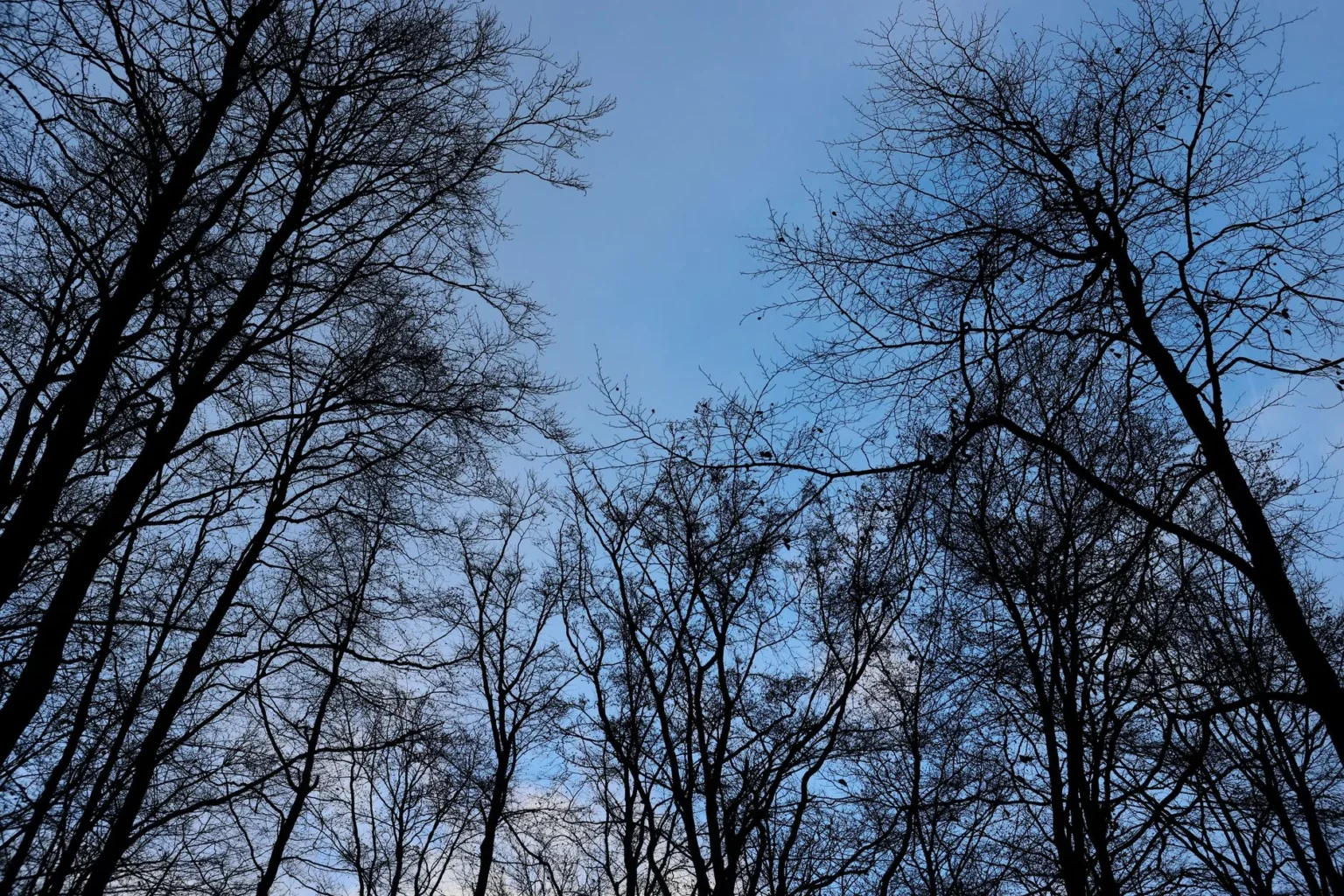
A tree risk evaluation is a structured look at a tree. It asks what could fail, how likely that failure is and what stands beneath the tree if it does. Late fall is a good time for it, because the leaves are down and the structure of the crown shows, and because winter wind and wet snow test every weak union before spring.
This guide covers what an evaluation checks, what Chapter 94 of the borough code says about the Maywood Shade Tree Commission, and how to hire for the work. We read the Maywood code on eCode360, the ISA Recognizing Tree Risk brochure, a Rutgers summary of how to rate a hazardous tree, a New Jersey Department of Health page on tree hazards and the New Jersey Board of Tree Experts consumer page on November 13, 2026. Rules change, so confirm each detail with the Borough Clerk.
Reliable Tree Service is family owned since 1960 and works across Hudson and Bergen counties from Cliffside Park. In small boroughs like Maywood our crews see the same pattern again and again. A tree gets attention only after a limb lands, when a quiet look a season earlier would have shown the split union or the dead limb. Our storm proofing and repair visits start with that look.
We also keep the borough rules in view. A tree beside the curb may stand in the public right of way and answer to the Shade Tree Commission, while a tree in the back yard answers to its owner. Our Maywood tree care articles page collects the local guides we write for the borough.
What a Tree Risk Evaluation Checks
The ISA brochure starts with a plain statement. It says there is no such thing as a completely safe tree, that all trees have the potential to fall, and that only a small number actually hit something or someone. It also says it is a tree owner’s responsibility to ensure the safety of others around trees on the property, and that judging how serious a defect is is best done by a professional arborist.
The same brochure gives owners a checklist. It asks whether there are large dead branches, detached hanging branches or branches that have already fallen, whether bark is loose on the trunk, and whether there are cracks or splits in the trunk or where branches attach. It also asks about cavities and rotten wood, mushrooms at the base, recent construction or changes in soil level, and whether the tree has been topped or heavily pruned. A yes to any of these means the tree should be looked at by an ISA Certified Arborist.
Rutgers describes a simple way professionals rate a tree. First decide whether the tree has a target. If it fell, what would it hit, and how often is that spot used. With no target there is no hazardous tree. With a target, the tree is scored from 1 to 3 on its root zone, its trunk and its crown, where a strong root flare, one solid trunk and a balanced crown score low. A total of 10 or more must be addressed and the tree may need to come down. A total of 8 or 9 should be watched closely, and anything lower is monitored on a regular basis. Rutgers adds that any tree can fail if winds are above 70 miles per hour.
Utility lines change the picture. The ISA brochure says to leave branches on or near power lines alone and to stay away from downed lines, since they may still be live. If tree parts touch a line, the advice is to call the local electricity provider. We treat any tree near a service drop as a job for trained crews only.
What we look at during tree risk evaluation in Maywood
- Root flare, soil cracks and any lean
- Trunk cracks, cavities and codominant stems
- Crown balance, dead wood and hanging limbs
- What sits beneath the tree if it fails
That order matters, because the target decides how much a defect counts. A dead limb over a quiet corner of the yard is a small matter, and the same limb over a driveway is not. Our tree maintenance visits record these four points so the next inspection has something to compare.
Edward Hufnagel, who owns Reliable Tree Service, puts it this way: “A tree tells you where it is weak long before it fails. The job is to read the structure and ask what sits underneath it, because a weak tree over an empty field is a different problem from a weak tree over a bedroom.”
The Maywood Shade Tree Commission and Chapter 94
Chapter 94 of the Maywood code was adopted by the Mayor and Council on November 4, 1981, as Ordinance 816. It creates the Maywood Shade Tree Commission under New Jersey law at N.J.S.A. 40:64-1 and following. The commission has five members who must live in Maywood and serve without pay, and a 2023 amendment added up to two alternates.
The commission has full and exclusive control over shade and ornamental trees on any public highway, park or parkway in the borough, except those under a county shade tree commission or the State Highway Department. That control covers planting, trimming, spraying, care and protection. Section 94-3 also lets the commission move or require the removal of any tree or part of a tree that is dangerous to public safety, which is the power a risk evaluation of a street tree can bring into play.
Two other provisions reach further. Section 94-3 lets the commission treat or remove a tree on private property that is believed to harbor a disease or insects readily communicable to neighboring healthy trees in the care of the municipality. It may do that only with the owner’s consent, and only after the suspected condition is confirmed by a certificate from the Department of Agriculture. Section 94-5 says no sidewalk, curb or paving work may interfere with or injure a highway shade tree without the commission’s consent.
We did not find a general permit for removing a tree on private property in Chapter 94, and other parts of the code or the construction office may apply to a particular job. Before any cutting, ask the Borough Clerk whether the tree is a public tree or a private one and which approvals the work needs.
Questions for the borough before work near a street tree
- Does the tree stand in the public right of way
- Has the commission given written permission
- Will sidewalk or paving work reach the roots
- Who certifies a tree believed to be diseased
When a public tree needs pruning rather than removal, the permission still comes first. Once it is in hand, our tree trimming and pruning crews can work to the commission’s conditions, and we can write up what we found so the borough has a record.
Hazard Trees, Fines and Hiring Safely
Section 94-7 is the enforcement rule. It says no person, business or agency may remove, cut, break, injure or treat a shade tree in a way that injures or destroys it, and none may plant, take down or remove a shade tree without first obtaining written permission from the commission. A violation, or failure to follow the terms of a permit, can bring a fine from $100 to $1,500 in Municipal Court at the court’s discretion, and each day the violation continues is a separate offense.
Section 94-8 adds restitution. The commission may require a person who removes or destroys a tree in violation of the chapter to pay a replacement assessment equal to the value of the tree, set by the appraisal of a trained forester or certified tree expert. In place of an appraisal the commission may use a formula based on the square inches in a cross section of the trunk, measured from the diameter at breast height at 4 1/2 feet above the ground, multiplied by a value that cannot exceed $27 per square inch. An unpaid assessment can become a lien added to the property taxes.
The code carves out public utilities and cable companies that clear trees on lands where they hold an easement or right of way for their service lines. They are not subject to those penalties, but the exemption does not cover negligent actions. That is a rule for utilities, and it does not change what a homeowner or a contractor must do.
Hiring is the other half of safety. The New Jersey Board of Tree Experts says it is mandatory to hire a tree care business registered with the state that employs a Licensed Tree Expert or Licensed Tree Care Operator, and it advises asking to see the business registration, proof of insurance and the license number of the licensed person. The Department of Health notes that 73 workers died doing tree care in New Jersey between 1991 and 2012 and says storm related tree work should be left to licensed professionals.
Before a tree in Maywood comes down
- Written permission from the commission for public trees
- Registration and insurance of the tree company
- License number of the licensed tree expert
- A written scope naming the tree and the work
If an evaluation finds a tree that cannot be saved, our tree removal crews can document the defects before cutting begins. Nearby boroughs face the same questions, and our guides to hazard trees in Ridgefield and tree removal rules in Lyndhurst show how other Bergen County owners handle them.
Protecting Maywood Trees This Winter
Good tree risk evaluation in Maywood comes down to a few habits. Look at your trees each season, name the target beneath each one, and act on dead wood, cracks and leaning before winter wind arrives. Check with the borough before touching a street tree, and keep records of what you saw and when.
Our crews are ISA Certified Arborists and New Jersey Certified Tree Experts. Call Reliable Tree Service at (201) 943-4141 to have a Maywood tree evaluated before the next storm. We are family owned since 1960, and a visit ends with a plain list of what we saw and what we would do about it.
If the list includes a tree that has outgrown its place, our storm proofing and repair work and the borough process can be planned together, so the job is done once and done to the rules.
Related Articles

Tree Feeding in Northvale NJ: Soil Tests, Mulch Depth and the Borough Tree Ordinance
A tree that looks tired is not always hungry, and the cause is often in the soil or the mulch. This guide covers tree feeding in Northvale, from the soil test to the borough tree removal ordinance.
Tree Trimming in Bogota NJ: Commission Permits, Excessive Pruning and Fines
Bogota requires the written permit of its environmental commission before anyone cuts or climbs a street tree. This guide covers tree trimming in Bogota, from that permit and the open ground rule to the code that counts excessive pruning as removal.
Tree Pruning in Midland Park NJ: Street Tree Permits, Notices and Winter Timing
Midland Park requires a written permit before anyone prunes a tree on a public street or in a park. This guide covers tree pruning in Midland Park, from that permit and the dangerous tree notice to clean cuts and winter timing.
Tree Removal in Lyndhurst NJ: Permit Rules, Replacement Trees and Hazard Trees
Lyndhurst now asks for an application before most trees on private property come down. This guide covers tree removal in Lyndhurst: replacement rules, fees and the hazard tree exemption.
Tree Storm Proofing in Ridgefield NJ: Hazard Trees, Borough Rules and Wet Soil
Ridgefield sits in the Hackensack River floodplain, and its borough tree code spells out what an owner may do about a hazard tree. This guide covers tree storm proofing in Ridgefield: how storms and wet soil break trees, and which borough rules apply.
Tree Roots in Palisades Park NJ: Sidewalk Damage, Borough Permits and Replacement Fees
Palisades Park regulates street trees through Chapter 274 of its borough code, and sidewalk damage from roots is covered by it. This guide explains tree roots in Palisades Park, the permit and fee rules, and what to settle before anything is cut.