
Table of Contents
Tree Care in Old Tappan, NJ
Old Tappan is a borough in Bergen County, incorporated on October 18, 1894 from parts of Harrington Township after a referendum two days earlier. According to Wikipedia it covers 4.16 square miles, about 20 percent of it water, and Lake Tappan, a reservoir, straddles the line between Old Tappan and River Vale. River Vale lies to the west, Harrington Park to the south, Northvale and Norwood to the east, and the Rockland County hamlets of Pearl River and Tappan to the north.
A borough with that much water and open ground has a lot of trees, and November is when pest trouble that stayed hidden all summer becomes easy to see. The leaves are down, the branches are bare and the insects that survive winter have already left their eggs where they plan to hatch in spring. Tree pest management in Old Tappan starts with one slow walk around the yard, looking at bark, branch unions and the undersides of limbs.
This guide covers tree pest management in Old Tappan for the cold months: how to find and destroy spotted lanternfly egg masses, why tree of heaven matters, and what the Borough shade tree page says about work on trees in the right of way. We read the Borough shade tree page, Wikipedia, a state Department of Agriculture release, two Rutgers extension pages and the state tree expert board consumer page on November 17, 2026. Advice and rules change, so confirm each detail with the Borough Department of Public Works before you act.
Reliable Tree Service is family owned since 1960 and works across Hudson and Bergen counties from Cliffside Park. Our tree pest management visits start by identifying what is on the tree, since the right response to a sap feeding insect is not the same as the right response to a borer or a leaf disease.
Old Tappan neighbors can see how nearby boroughs handle related questions in our guides to tree feeding in Northvale and stump grinding in Norwood. Our Old Tappan tree care articles page collects the local guides we write for the borough.
Spotted Lanternfly Egg Masses on Old Tappan Trees
The New Jersey Department of Agriculture explained in a November 14, 2022 release that adult spotted lanternflies cannot survive freezing temperatures, but they lay egg masses that do. Each mass holds 30 to 50 eggs, and the eggs hatch in late April or early May. That is why a cold month is a good time to look, because every mass you remove now is one less hatching in spring.
The release says egg masses can sit on almost any surface, including vehicles, park benches, steps and the sides of buildings. A Rutgers extension page describes the mass as a gray, flat patch like dried mud and says females look for trees 10 feet up or higher. The same page says laying runs from September through December and that each female may produce up to two masses. Most masses on a tree are therefore above head height.
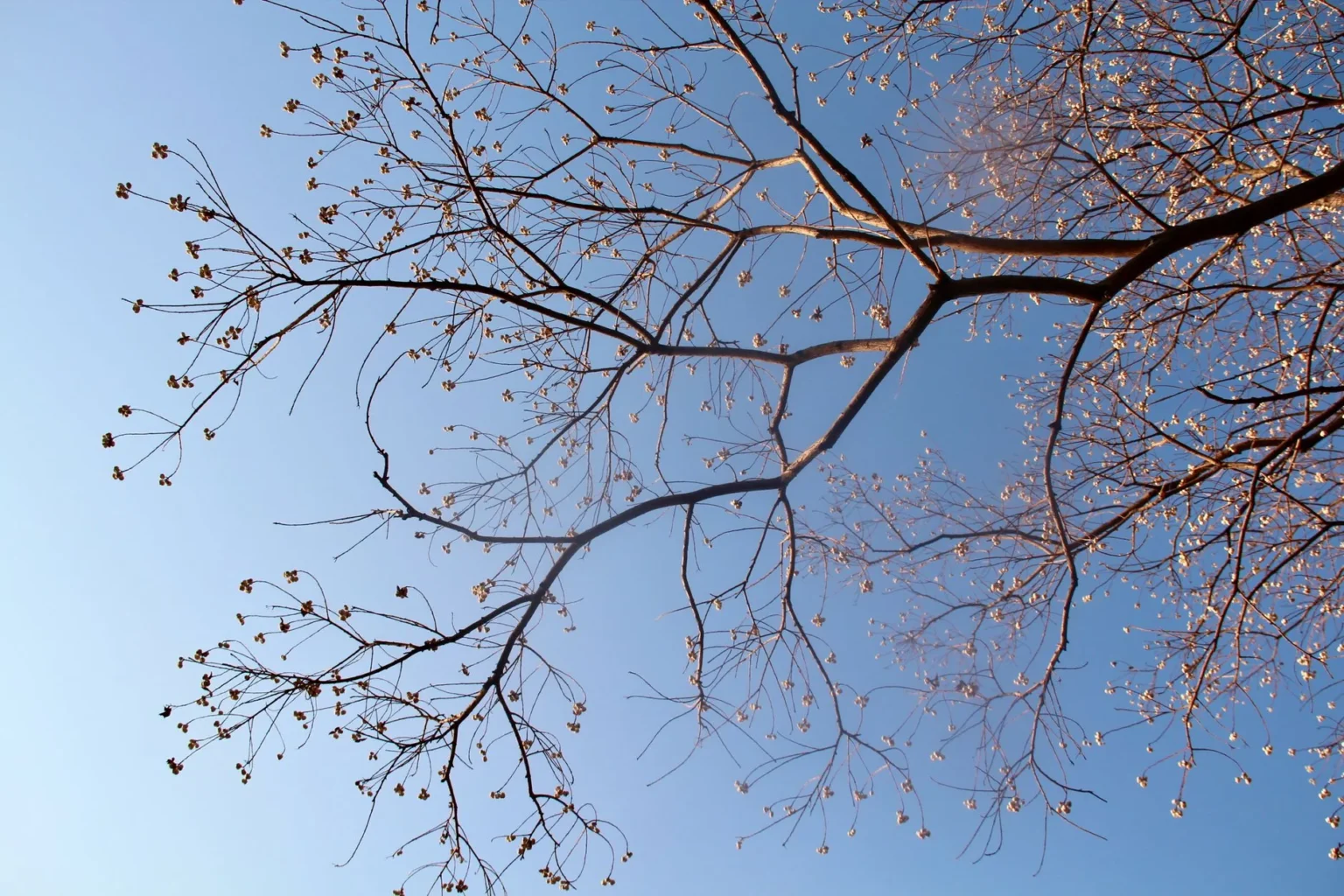
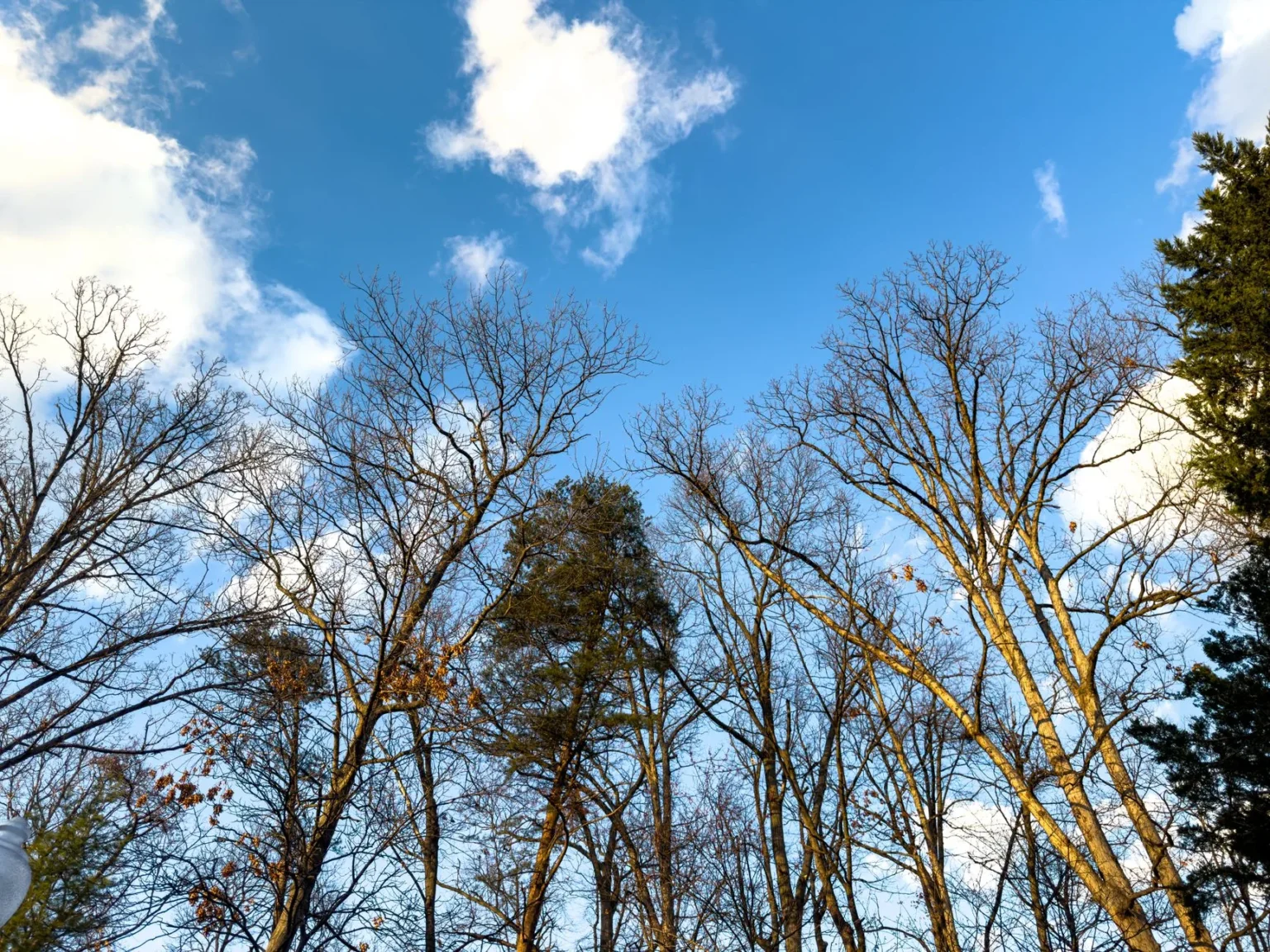
From the ground, a bare crown is the place to scan with binoculars, and the trunk and the undersides of limbs deserve a slow look. Egg masses can be mistaken for lichen, which a Rutgers fact sheet says causes no harm to the trees it lives on, so look closely before you scrape.
For masses you can reach, the Rutgers page says to scrape them into a plastic bag with a hard plastic tool or a putty knife, then soak them in hand sanitizer or rubbing alcohol before discarding. The state release suggests a credit card or a similar edge, pressed until you hear the eggs pop, and says scraping cards are available at the Rutgers extension office in each county. A mass out of reach from the ground is not a job for a ladder. It belongs with a crew that has the right equipment.
Winter checks for tree pest management in Old Tappan
- Scan bare crowns with binoculars from solid ground
- Check trunks and limb undersides for flat gray patches
- Inspect fences, steps and furniture near the trees
- Scrape reachable masses into a bag and soak them
On a pest visit we look at the whole picture and not only the insect. A tree stressed by dry summers or packed soil tolerates feeding less well than a healthy one. Edward Hufnagel, who owns Reliable Tree Service, puts it this way: “An insect on a tree is a symptom as often as it is the cause. You have to look at the tree, the soil and the season before you decide the insect is the problem.” Our tree pest management service starts with that look.
Tree of Heaven and the Other Trouble Behind the Pest
The Rutgers page calls tree of heaven the preferred, and possibly required, host of the spotted lanternfly. It says the tree has an expansive root system and sprouts suckers freely, which is why cutting it once rarely finishes the job. The fall steps it lists are short: kill as many insects as you can, scrape and destroy egg masses and remove tree of heaven if possible.
That last step deserves care. Tree of heaven is an invasive tree, and the Rutgers page says removing it from a property may reduce lanternfly numbers. Cutting one stem without a plan tends to bring up a thicket of suckers from the roots, so it helps to have the tree identified by a certified arborist before anyone picks up a saw.
The pest is not limited to one tree. Rutgers says the insect feeds on the sap of many agricultural crops and hardwood trees, and the state release lists black sooty mold on a tree as a sign of its presence. Sooty mold grows on the sugary waste that sap feeders leave behind, so it shows up on bark and leaves below a feeding site. Seeing it in summer is a reason to look at the crown again in November.
Sap feeders are only one group of tree pests. Bark that peels in plates, small round holes, sawdust at the base and dieback in part of the crown can point to borers or to disease, and none of those is something to guess about. A certified arborist can tell a surface feeder from a borer and say whether treatment is worth doing, which keeps owners from treating a tree that needed something else.
Signs on a tree that call for an arborist
- Black sooty mold on bark, limbs or leaves
- Dieback in one part of the crown
- Small round holes with fresh sawdust nearby
- Sap weeping from bark that is splitting or peeling
When one of these signs shows up, our tree maintenance visits sort out what is pest damage, what is storm damage and what is simply age, and we write down what to do now and what can wait for late winter.
Borough Shade Trees, Spraying and Who to Call
Old Tappan has a Shade Tree Advisory page on the Borough website. It describes a board that promotes the conservation and stewardship of trees throughout the Borough and oversees the planting, care and maintenance of trees on Borough owned land. The page says the board is headed by the DPW Superintendent.
The page also sets a rule that matters for pest work. Before cutting, pruning, removing or spraying any Borough shade tree, you must get permission from the Borough. Spraying is on that list, so a homeowner who wants to treat a street tree for lanternflies or anything else needs the Borough first. If you are not sure whether a tree inside the 10 foot right of way is a Borough tree, the page says to contact the DPW, and it lists the number and extension to use.
The page adds that home or yard alterations that may affect a Borough shade tree require a copy of the plans for review. That covers a new driveway or a regrade as much as pruning, and it is a good reason to ask before the work and not after. The page is a short notice and does not link ordinance text, so confirm the current rules with the Borough before you start.
On your own property the Borough page does not decide the question, and the treatment is your choice. The state Board of Tree Experts advises asking a tree care business for its registration, the name and license number of its Licensed Tree Expert or Licensed Tree Care Operator, and proof of insurance. Its consumer page adds that a homeowner policy may not cover injuries or damage caused by an under insured contractor.
What to confirm before any pest treatment
- Which pest or disease is actually on the tree
- Whether the tree is a Borough tree or private
- Whether treatment is needed or monitoring is enough
- Who holds the license and insurance for the work
If an inspection shows a tree has declined past saving, our tree removal crews can plan the take down and the cleanup, and on a Borough tree the permission step stays with the Borough.
Protecting Old Tappan Trees This Winter
Good tree pest management in Old Tappan comes down to a few habits. Scan the bare crowns and trunks this month, scrape and bag the egg masses you can reach, learn what tree of heaven looks like before you cut anything, and ask the Borough before spraying or pruning a shade tree in the right of way. Winter leaves the pests with nowhere to hide, which makes it an efficient time to look.
Our crews are ISA Certified Arborists and New Jersey Certified Tree Experts. Call Reliable Tree Service at (201) 943-4141 to have an Old Tappan tree looked at before spring. We are family owned since 1960, and each visit ends with a written plan that separates what to do now from what can wait.
If the inspection finds dead limbs over a roof or a wire, our tree trimming and pruning crews can take care of them.
Related Articles

Tree Maintenance in Wallington NJ: Winter Prep Under the Borough Tree Rules
Wallington counts overmulching, excessive pruning and soil compaction as tree removal under its borough code. This guide covers tree maintenance in Wallington, from mulch and pruning cuts to winter inspections and hazard trees.
Stump Grinding in Norwood NJ: Borough Permits, 811 Calls and Replanting
A removed tree leaves a stump, and in Norwood the company that grinds it has to be registered with the borough. This guide covers stump grinding in Norwood, from permits and 811 marks to what to do with the hole afterward.
Tree Risk Evaluation in Maywood NJ: Shade Tree Commission, Hazard Trees and Fines
A tree does not need to be leaning to be a risk, and the borough has its own rules for trees along the street. This guide covers tree risk evaluation in Maywood, from the defects an arborist checks to Chapter 94 of the borough code.
Tree Feeding in Northvale NJ: Soil Tests, Mulch Depth and the Borough Tree Ordinance
A tree that looks tired is not always hungry, and the cause is often in the soil or the mulch. This guide covers tree feeding in Northvale, from the soil test to the borough tree removal ordinance.
Tree Trimming in Bogota NJ: Commission Permits, Excessive Pruning and Fines
Bogota requires the written permit of its environmental commission before anyone cuts or climbs a street tree. This guide covers tree trimming in Bogota, from that permit and the open ground rule to the code that counts excessive pruning as removal.
Tree Pruning in Midland Park NJ: Street Tree Permits, Notices and Winter Timing
Midland Park requires a written permit before anyone prunes a tree on a public street or in a park. This guide covers tree pruning in Midland Park, from that permit and the dangerous tree notice to clean cuts and winter timing.