Table of Contents
Tree Care in Midland Park, NJ
Midland Park is a borough in Bergen County, and according to Wikipedia it was incorporated on September 6, 1894, formed from parts of Franklin Township and Ridgewood Township. It covers about 1.58 square miles, counted 7,014 residents in the 2020 census, and borders Ridgewood, Waldwick and Wyckoff, with Prospect Street running north and south through the middle of the borough. On lots this size, tree pruning in Midland Park is usually a question of how one mature tree fits over a roof, a driveway and a neighbor’s fence at the same time.
Most homeowners treat pruning as a weekend chore, but the borough code gives it a framework. Chapter 18 of the Midland Park municipal code, titled Trees, requires a written permit from the Foreman of the Department of Public Works before anyone cuts, prunes or removes a tree on a public street or in a park. It also describes what happens when a tree on private property is judged a danger. Knowing which rule applies to which tree is the first step in any pruning plan.
This guide explains how the borough code treats street trees and dangerous trees, when pruning is done and how to make a clean cut. We read the borough’s Chapter 18 on eCode360, the pruning guidance from the International Society of Arboriculture, a Rutgers Master Gardener fact sheet and the New Jersey Board of Tree Experts consumer page on November 10, 2026. Reliable Tree Service has been family owned since 1960 and works across Hudson and Bergen counties from Cliffside Park. Municipal rules change, so confirm every detail with the borough before you cut.
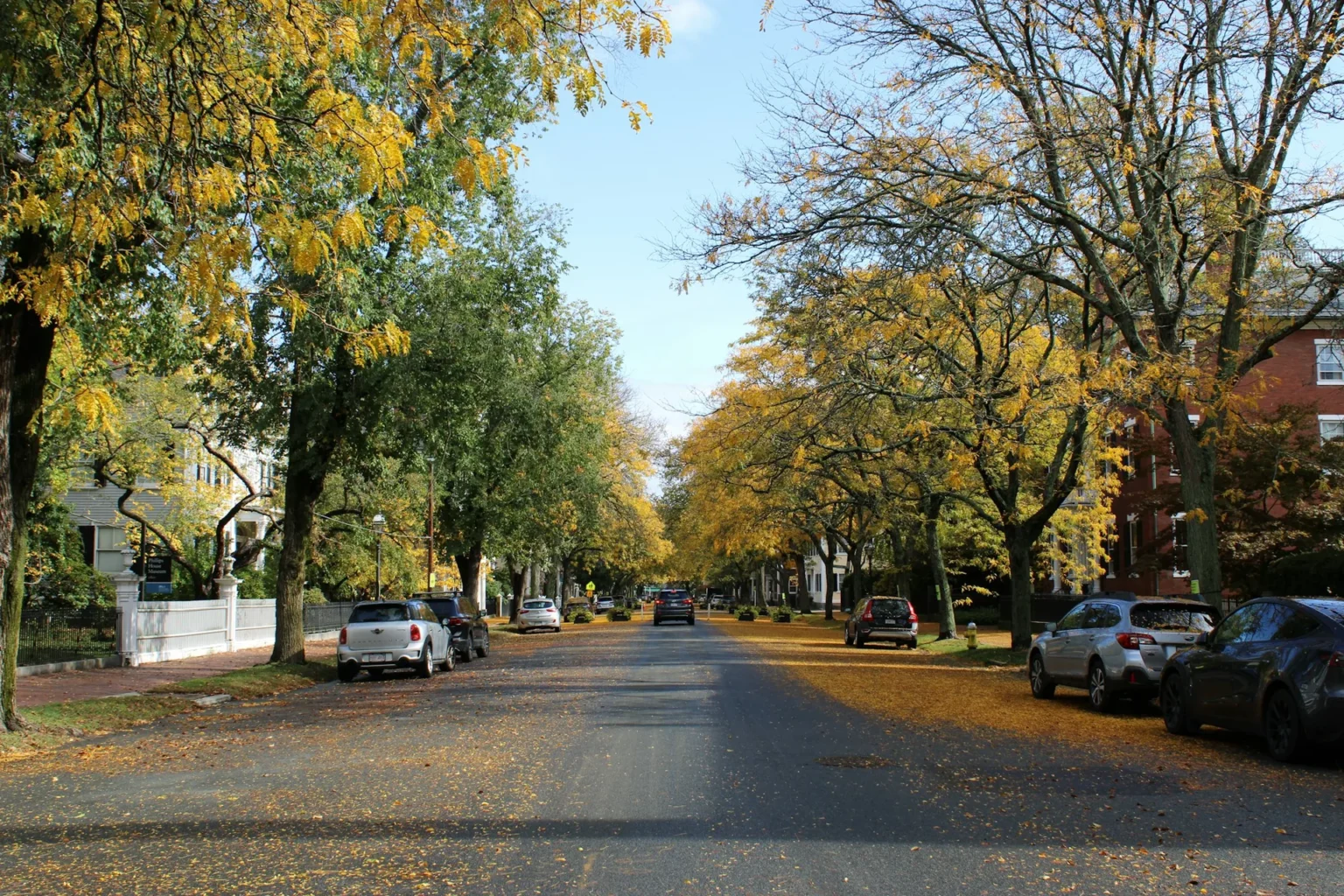
A small borough shows why a code like this exists. Chapter 18 defines a street broadly. The area measured five feet to the center of a tree, in from the curb line or from the edge of the pavement where there is no curb, counts as part of the street for the purposes of the chapter. As we read it, a tree whose center falls inside that strip is treated as a street tree even when it looks like part of the front lawn, which is why we ask owners to confirm the line with the borough before anyone climbs.
We handle pruning in a set order. First we look at the tree and decide what the cuts are meant to do. Then we check who owns the tree and what the code asks for. Only then do we cut, using the methods in our tree trimming and pruning service. Our other local guides are collected on the Midland Park tree care articles page.
Street Tree Permits and the Foreman of Public Works
The code lists the acts that need a written permit from the Foreman, who is the Supervising Foreman or Head Foreman of the Department of Public Works or a designee. They include cutting, pruning, breaking, injuring, removing or disturbing any tree on a public street or in a park, and planting a tree there. They also include spraying a chemical that could injure a tree, fastening a rope, wire or sign to a tree, and piling building material or mixing cement or mortar within six feet of a tree.
One detail matters a great deal to homeowners. In this chapter the word tree means a tree, shrub or plant located in or upon a street or park. So the permit rules reach street trees and park trees, and a tree well back in a rear yard is handled differently, as the next section explains. If you are not sure which side of the line a tree stands on, ask the Department of Public Works before you order work.
The chapter also protects roots. Anyone building, altering or repairing a structure has to put guards around nearby trees so they are not injured, and any excavation within four feet of a tree needs a permit from the Foreman. Equipment may not be used in a way that damages a tree. A violation carries a fine not exceeding $1,000, and each day a violation continues is a separate offense. The borough may also ask for a replacement assessment based on the value of the tree, as appraised by a person trained in forestry or a certified tree expert, plus the cost of that appraisal.
The chapter sets up a Shade Tree Advisory Committee of five members, appointed by the Mayor with the advice and consent of the Borough Council and serving two year terms. The committee advises the Mayor, the Council and the Foreman on planting, pruning, removal and care of trees in public places, and it is charged with developing the borough’s Community Forestry Management Plan. Street trees planted by the borough follow the New Jersey Shade Tree Commissioners guide Trees for New Jersey Streets, with a caliper of at least one and one half inches.
What tree pruning in Midland Park should settle before a permit request
- Whether the tree stands in the street strip or on the lot
- Which limbs will be cut and the reason for each
- How close digging or equipment will come to the trunk
- Who will do the work and how that business is licensed
A written plan like this makes the conversation with the Department of Public Works short. It also gives us a clear brief for our tree maintenance visits, where we keep a record of each tree from one season to the next.
Edward Hufnagel, who owns Reliable Tree Service, puts it this way: “Every cut changes how a tree grows for the rest of its life. Decide what you want the tree to do next, then make only the cuts that get it there.”
Ten Day Notices and Dangerous Trees on Private Property
Chapter 18 has a separate section for trees on private property. If the Foreman, with the advice and consent of the Shade Tree Advisory Committee, decides that a tree growing on private property is a danger to public health or to public property, the owner receives ten days of written notice, sent to the owner’s last known mailing address. Within that time the owner has to cause the tree to be removed, or properly pruned or cut back, as the Foreman directs.
If the owner does not comply, the Department of Public Works is authorized to do the removal or pruning itself. The cost is charged against the property and collected by the borough in the same way as taxes. Violations of the shade tree provisions are punishable by any combination of a fine not exceeding $1,000, imprisonment not exceeding 90 days, or community service not exceeding 90 days. We are tree specialists and not lawyers, so read any notice closely and ask the borough what it requires.
Ten days is a short window for tree work. The tree has to be inspected, the defect has to be understood, and a decision has to be made between pruning and removal. That is a good reason to have a mature tree looked at before a notice arrives. Our storm proofing and repair work is built around that kind of early look, because a limb that is dead or poorly attached fails first in wind.
Some defects can be fixed by pruning and some cannot. The Rutgers fact sheet points to crossed branches that rub the bark off each other and to tight V shaped unions of less than 45 degrees between co dominant stems, where the pressure of growth can make one stem break. Removing the weaker of the two stems is often the right cut. When decay or a failing root system is the problem, pruning does not solve it, and our tree removal crews take the tree down in sections over roofs and wires.
Signs a Midland Park tree may draw a notice or a call to us
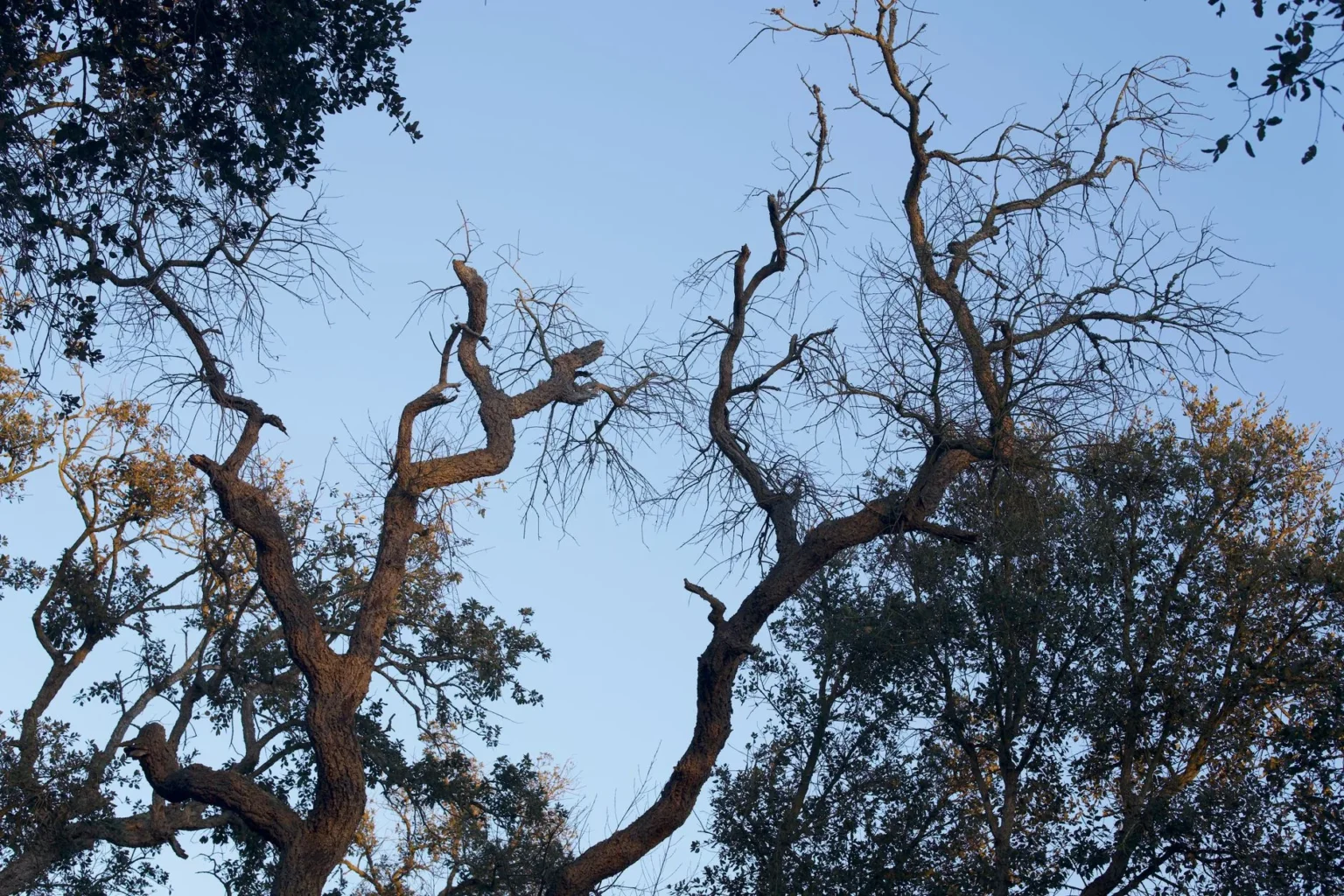
- Large dead limbs hanging over a street or roof
- Crossed branches rubbing the bark off each other
- Tight V shaped unions between two main stems
- Broken or hanging limbs left after a wind storm
Dead branches can be removed at any time of year, according to the Rutgers fact sheet, so a dead limb over a roof does not have to wait for winter. A hanging limb is different, because it can fall without warning, and the work to bring it down calls for a trained crew.
Winter Timing, Clean Cuts and Why Topping Hurts
Timing is the second question after permission. The Rutgers Master Gardener fact sheet from Hunterdon County says late February to early March is a good time to prune many landscape trees. Without leaves it is easier to see the shape of a tree and anything out of proportion or structurally unsound. Cuts on dormant trees do not stimulate new growth, and many disease organisms and pests are dormant, so they are less likely to invade a cut. The fact sheet adds that oaks and elms should only be pruned in winter, to avoid oak wilt and Dutch elm disease.
Winter is not the answer for every tree. The same fact sheet says spring flowering trees are usually pruned right after they bloom, and that maple, birch and beech may bleed sap from winter cuts. The sap loss does not hurt the tree, and anyone concerned can wait until late spring after the sap stops running. That is why we sort the trees in a yard by species before we set a schedule.
The International Society of Arboriculture gives a similar picture in its pruning guidance for tree owners. Light, routine removal of weak, dead or diseased limbs can be done at almost any time of year with little effect on the tree. Growth and wound closure are favored when pruning happens before the spring growth flush, and heavy pruning of live tissue right after the flush should be avoided on weak trees. The guidance also says every branch removal should have a reason, because each cut can change how the tree grows.
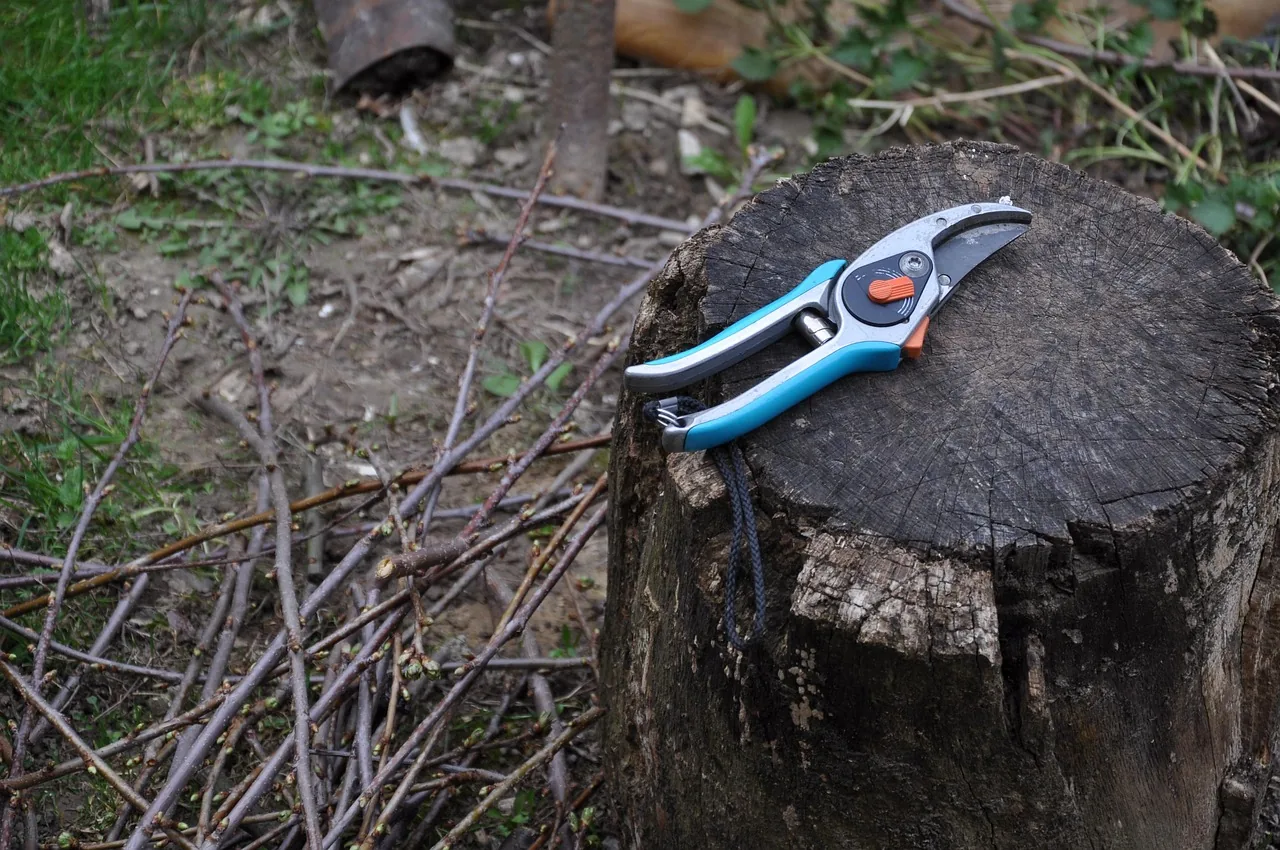
Good cuts follow the tree’s own anatomy. The Rutgers sheet says to prune just above the branch collar, where the branch thickens to meet the trunk, because the collar holds the hormones that let the scar heal quickly. It recommends sharp tools to avoid tearing bark, and for a diseased branch it says to cut back to healthy wood and disinfect the pruners with isopropyl alcohol or a ten percent bleach and water solution after each cut. The ISA adds that a large limb should be cut back to a side branch at least one third the diameter of the stem being removed, so that the side branch can take over as the new leader.
Marks of a clean pruning cut
- Cut made just outside the branch collar
- Sharp tools that leave smooth edges
- Large limbs cut back to a strong side branch
- No bare stubs left along the limb
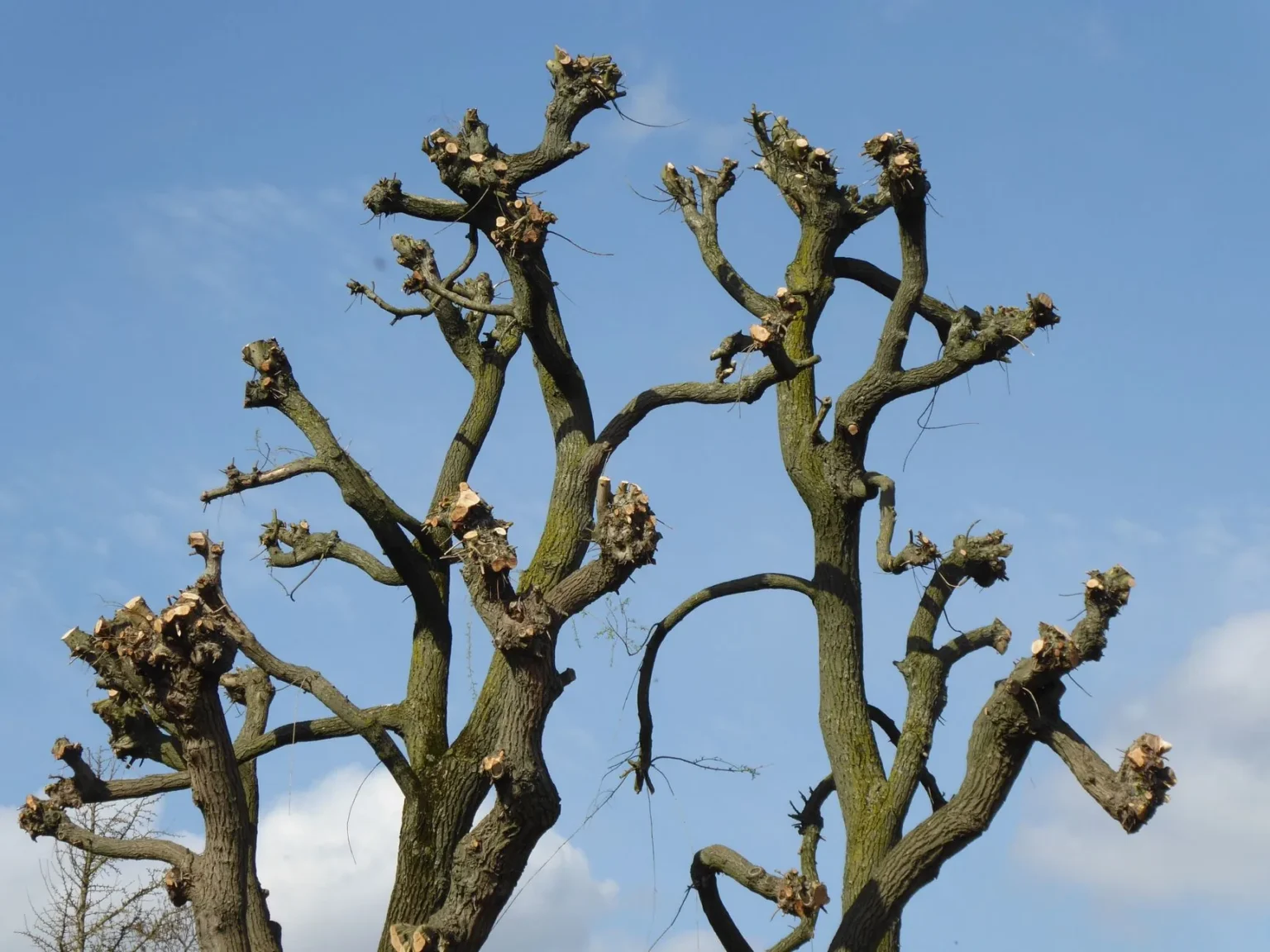
The photograph above shows what topping looks like, with limbs cut back to stubs and no side branch left to take over. The ISA describes topping as one of the most harmful pruning practices, because it stresses the tree and invites decay, and it is the reverse of the cuts described here. Neighboring boroughs ask about the same thing, and our guides to tree trimming in Waldwick and tree trimming in River Vale show how those boroughs treat limbs and topping.
Protecting Midland Park Trees Before the Cut
Midland Park asks a little more of tree owners than a quick weekend cut. A permit for street trees, care near roots, a ten day notice for dangerous trees and a fine of up to $1,000 make tree pruning in Midland Park slower to start and much easier on the tree. Look at the tree, read the borough code and have a professional review the plan before the first cut.
Hire carefully. The New Jersey Board of Tree Experts says it is now mandatory to hire a tree care business that is registered with the state and that employs a licensed individual, either a Licensed Tree Expert or a Licensed Tree Care Operator. It advises homeowners to ask for a copy of the business registration, proof of insurance, and the name and license number of the licensed person. The details are on the Board’s consumer guidance page.
Our crews are ISA Certified Arborists and New Jersey Certified Tree Experts. Call Reliable Tree Service at (201) 943-4141 to schedule tree pruning in Midland Park or to have a tree looked at before a notice or a permit request. We are family owned since 1960, and our pruning crews will tell you what the tree needs and what the borough asks for before any work begins.
Related Articles

Tree Removal in Lyndhurst NJ: Permit Rules, Replacement Trees and Hazard Trees
Lyndhurst now asks for an application before most trees on private property come down. This guide covers tree removal in Lyndhurst: replacement rules, fees and the hazard tree exemption.
Tree Storm Proofing in Ridgefield NJ: Hazard Trees, Borough Rules and Wet Soil
Ridgefield sits in the Hackensack River floodplain, and its borough tree code spells out what an owner may do about a hazard tree. This guide covers tree storm proofing in Ridgefield: how storms and wet soil break trees, and which borough rules apply.
Tree Roots in Palisades Park NJ: Sidewalk Damage, Borough Permits and Replacement Fees
Palisades Park regulates street trees through Chapter 274 of its borough code, and sidewalk damage from roots is covered by it. This guide explains tree roots in Palisades Park, the permit and fee rules, and what to settle before anything is cut.
Land Clearing in New Milford NJ: Permits, One Tree a Year, and Root Zone Protection
New Milford regulates tree removal through Chapter 26A, from a single yard tree to a cleared lot. This guide covers land clearing in New Milford, including permits, clear cutting limits and how to protect the trees that stay.
Tree Pest Management in Hillsdale NJ: Lanternfly Egg Masses, Ash Borers, Borough Rules
Hillsdale treats an insect infestation as a reason a tree may come down and keeps invasive species treatment out of its removal rules. This guide covers tree pest management in Hillsdale, from lanternfly egg masses to the signs of ash borers.
Tree Maintenance in Hasbrouck Heights NJ: Root Zones, Mulch, and Borough Rules
Hasbrouck Heights counts over mulching and root zone compaction as tree removal in its borough ordinance. This guide covers tree maintenance in Hasbrouck Heights, from the root radius and mulch depth to the yearly inspection.