Table of Contents
Tree Care in Harrington Park, NJ
Harrington Park is a borough in Bergen County. According to Wikipedia it was incorporated on March 29, 1904, from parts of Harrington Township, Washington Township and the borough of Closter. It covers 2.06 square miles, about 10.5 percent of it water, and it borders Closter, Emerson, Norwood, Old Tappan and River Vale. Older streets, mature lots and a lot of shade mean that most households here live under at least one large tree.
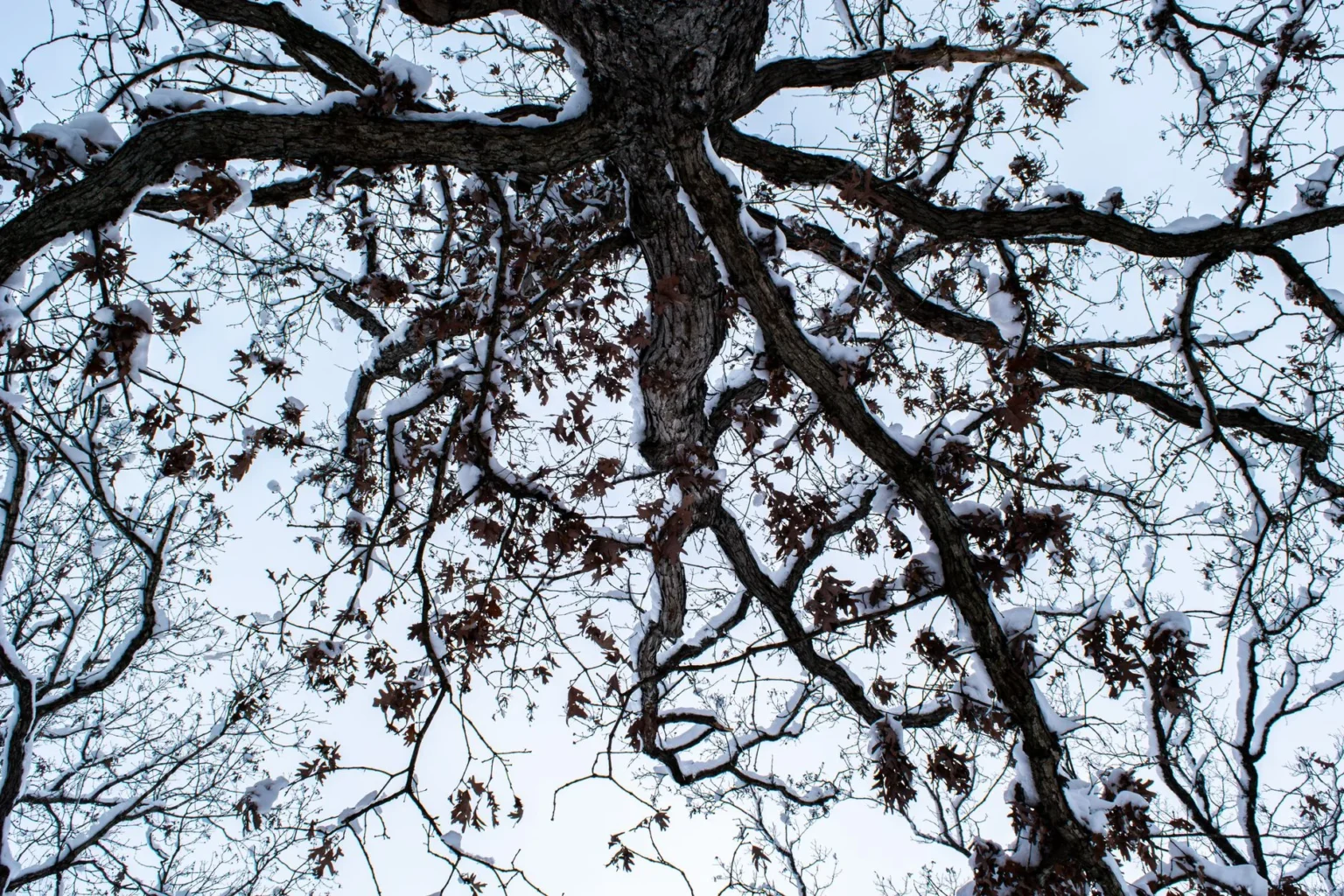
That is why tree removal in Harrington Park is not a simple matter of calling a crew. A removal in this borough runs through a local ordinance that asks for an application, sets replacement planting and carries a fine for skipping the steps. Late fall is a good time to sort it out, because bare crowns show dead limbs, cracks and cavities that summer leaves hide.
This guide covers tree removal in Harrington Park as the Borough rules read today: when to apply, what replacement means, where hazard trees fit and what happens to the stump and the wood. We read the Borough tree removal ordinance, the Borough Environmental Commission page, the Public Works page, Wikipedia and the state tree expert board consumer page on November 18, 2026. Rules change, so confirm each detail with the Borough Clerk before work begins.
Reliable Tree Service is family owned since 1960 and works across Hudson and Bergen counties from Cliffside Park. Our tree removal crews plan the take down, the rigging and the cleanup, and we can point a homeowner to the Borough office for the paperwork that has to come first.
Neighbors in the area can compare how nearby boroughs handle related questions in our guides to tree pest management in Old Tappan and stump grinding in Norwood. Our Harrington Park tree care articles page collects the local guides we write for the borough.
Tree Removal in Harrington Park Starts With Ordinance 778-24
The Borough ordinance is numbered 778-24 and is titled Tree Removal and Tree Replacement. Its stated purpose is to reduce soil erosion and pollutant runoff, help rainwater soak into the ground and protect public health, safety and welfare. That is a stormwater and environmental purpose, which explains why the rules focus on replacing canopy and not only on permission.
The ordinance text says a person planning to remove a street tree with a diameter at breast height of 2.5 inches or more, or any other tree on their property with a diameter of 6 inches or more, must submit a Tree Removal Application to the Construction Code Official. No tree is to be removed until municipal officials have reviewed and approved it. A street tree here means a tree in the sidewalk, planting strip or public right of way beside the roadway.
Diameter at breast height means the trunk width measured four and a half feet above ground. The ordinance adds a rule for trees that divide low, where the measurement is taken at the highest point before the split. A 6 inch trunk is smaller than many homeowners expect, so a mid sized yard tree can fall under the rule well before it looks large.
The definition of tree removal is wider than cutting. The ordinance says it means to kill or cause irreparable damage that leads to decline or death, and it names excessive pruning, toxic substances, over mulching and soil compaction inside the critical root radius. Responsible pruning and maintenance are not counted as removal, but severe cuts or a mulch pile against a trunk could be read as one.
Before you apply for tree removal in Harrington Park
- Measure the trunk four and a half feet up
- Note whether the tree is on the street side
- Photograph dead limbs, cracks and any fungus
- Call the Borough to confirm the current form
The ordinance names the Construction Code Official as the enforcer, with a fine of $250 for a violation. Edward Hufnagel, who owns Reliable Tree Service, puts it this way: “Before a tree comes down, the question is what the tree is telling you and what it is standing next to. A hazard tree and a tree someone simply dislikes are two different jobs, and the paperwork should follow the difference.” That is the habit we bring to every tree removal estimate.
Replacement Trees, Fees and the Hazard Tree Exception
When a removal is approved, the replacement table sets the price in trees. A removed tree from 6 inches, or 2.5 inches on the street, up to 12.99 inches is replaced with one tree. From 13 to 22.99 inches the requirement is two trees, from 23 to 32.99 inches three trees, and at 33 inches or more four trees. Each replacement has a minimum caliper of 1.5 inches.
The rules around those new trees are specific. They are to be planted within twelve months of the removal, watched by the applicant for two years and replaced if they fail. Trees sold in temporary containers or pots do not count. The posted copy also lists a $25 application fee, so ask the Borough what the fee is today.
If the Borough decides replacement trees cannot go on the property, the applicant plants them in another approved area or pays $250 per tree removed into a fund for tree planting and maintenance. The ordinance also exempts a resident who removes fewer than four trees per acre in the three smaller size categories within a rolling five year period, and tree farms, nurseries and orchards.
Hazard trees have their own line. They may be removed with no fee and no replacement requirement. The ordinance defines a hazard tree as one with an infectious disease or insect infestation, one that is dead or dying, one blocking a traffic sign or free passage where pruning has not worked, one damaging a building or sidewalk, or one a certified arborist or Licensed Tree Expert finds to be a threat.
Signs a tree may qualify as a hazard
- Dead branches across a large part of the crown
- Mushrooms or soft wood at the trunk base
- Cracks or splits where two stems meet
- Roots lifting a walk, wall or foundation
An assessment from a certified arborist is the document that carries weight if the Borough asks why a tree came down. Our tree maintenance visits include a written look at structure, and a tree that can be saved with pruning is better handled as tree trimming and pruning than as a removal.
Stumps, Wood and Replanting After the Cut
Once the tree is on the ground, the work is only half done. A stump stays behind, and the ordinance says nothing about it, which leaves the choice to the owner. A stump can be left to rot, ground below the surface or removed, and the right answer depends on whether the spot will be replanted or paved. Our stump grinding crews handle that step after the take down.
Wood is the next question. The Borough Public Works page lists yard waste collection on Mondays from April 1 to October 31 and describes it as including grass clippings, weeds, flowers, small limbs and small branches. A trunk, large limbs and stump grindings are not small branches, so the contractor should haul them as part of the job, and the estimate should say so.
The Borough Environmental Commission is a seven member advisory body that studies open space, water, soil and landscape and advises the Mayor and Council. Its page points residents to the Borough Code Book for tree rules, which is where the ordinance lives. The commission page does not set removal rules itself, so the Clerk and the Construction Code Official remain the contacts for a permit.
Replanting is the last step and the one most often delayed. The ordinance sets a twelve month deadline, and its Appendix A lists replacement species with planting seasons, including red maple, river birch, swamp white oak, ginkgo and tulip tree. Fall and spring are the usual planting seasons on that list, so a removal in November leads naturally to a planting plan for spring.
What to settle after a tree removal in Harrington Park
- Decide whether the stump will be ground or left
- Confirm who hauls trunk wood and chips
- Choose a replacement species from the Borough list
- Calendar the planting deadline and two year check
If the removal followed storm damage or a leaning tree after wet soil, our storm proofing and repair work looks at the neighboring trees as well, since a tree that stood in a group can be exposed once its neighbor is gone.
Protecting Harrington Park Trees This Winter
Good tree removal in Harrington Park comes down to a short list. Measure the trunk, confirm the Borough requirement before any cut, document hazard conditions, plan the stump and the wood, and put the replacement tree on the calendar. Winter is a quiet season for the ground and a clear one for the canopy, so it is a good moment to look.
Our crews are ISA Certified Arborists and New Jersey Certified Tree Experts. The state Board of Tree Experts consumer page advises asking any tree company for its registration, the name and license number of its licensed tree expert or tree care operator, and proof of insurance. Call Reliable Tree Service at (201) 943-4141 to have a Harrington Park tree looked at. We are family owned since 1960, and each visit ends with a written plan.
For limbs that can be saved, our tree trimming and pruning crews can reduce risk without a removal.
Related Articles

Tree Pest Management in Old Tappan NJ: Lanternfly Egg Masses and Borough Shade Trees
Old Tappan’s Shade Tree Advisory page asks owners to get Borough permission before spraying or pruning a shade tree. This guide covers tree pest management in Old Tappan, from spotted lanternfly egg masses to tree of heaven and who to call.
Tree Maintenance in Wallington NJ: Winter Prep Under the Borough Tree Rules
Wallington counts overmulching, excessive pruning and soil compaction as tree removal under its borough code. This guide covers tree maintenance in Wallington, from mulch and pruning cuts to winter inspections and hazard trees.
Stump Grinding in Norwood NJ: Borough Permits, 811 Calls and Replanting
A removed tree leaves a stump, and in Norwood the company that grinds it has to be registered with the borough. This guide covers stump grinding in Norwood, from permits and 811 marks to what to do with the hole afterward.
Tree Risk Evaluation in Maywood NJ: Shade Tree Commission, Hazard Trees and Fines
A tree does not need to be leaning to be a risk, and the borough has its own rules for trees along the street. This guide covers tree risk evaluation in Maywood, from the defects an arborist checks to Chapter 94 of the borough code.
Tree Feeding in Northvale NJ: Soil Tests, Mulch Depth and the Borough Tree Ordinance
A tree that looks tired is not always hungry, and the cause is often in the soil or the mulch. This guide covers tree feeding in Northvale, from the soil test to the borough tree removal ordinance.
Tree Trimming in Bogota NJ: Commission Permits, Excessive Pruning and Fines
Bogota requires the written permit of its environmental commission before anyone cuts or climbs a street tree. This guide covers tree trimming in Bogota, from that permit and the open ground rule to the code that counts excessive pruning as removal.