
Table of Contents
Tree Care in Leonia, NJ
A tree can lose a limb in a storm and still hold onto it. The branch cracks, catches on the wood below and stays overhead, waiting on the next gust or its own weight. That is why hanging limb removal in Leonia deserves attention on the morning after the Thanksgiving wind. According to Wikipedia, Leonia is a Bergen County borough incorporated on December 5, 1894, on the western slope of the Palisades, near the western approach to the George Washington Bridge. The same page lists about 1.52 square miles of land and 9,304 residents in the 2020 census.
The National Weather Service office in Upton, New York, published a summary of highest wind reports on Thursday evening, November 26, 2026. It lists a 54 mph gust at Teterboro Airport at 7:05 PM and a 56 mph gust in Bayonne at 5:49 PM. NJ.com reporting published that night described flooding and fallen trees disrupting travel across New Jersey under a state of emergency.
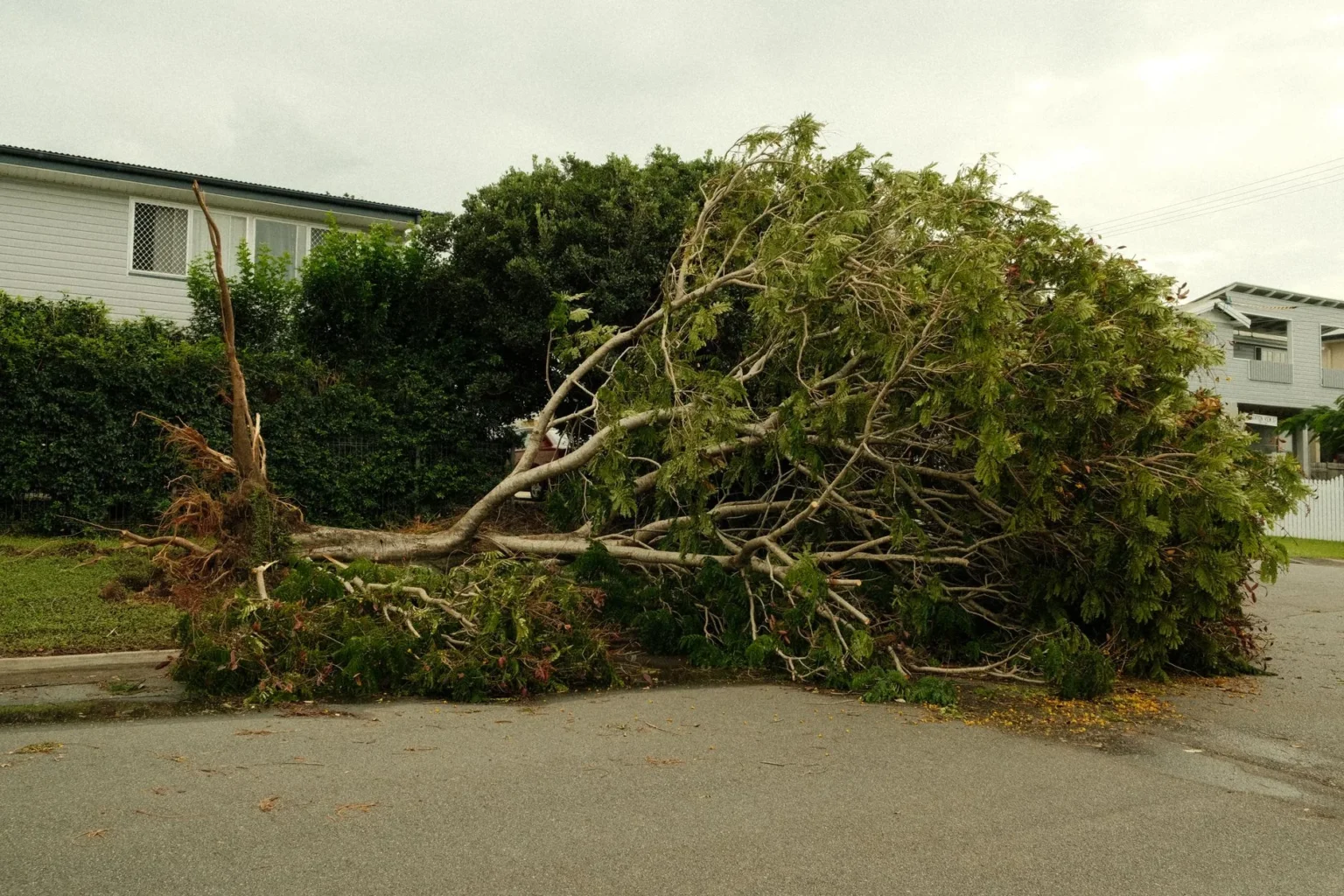
Trees came down close to home as well. The preliminary National Weather Service storm report lists a downed tree at 9:11 PM Thursday on the northbound local lanes of the New Jersey Turnpike at Exit 71, Route 4 and Broad Avenue, in the Leonia area, with one lane blocked. It also lists a downed tree on Routes 1 and 9 in neighboring Palisades Park at 6:16 PM. Those entries describe highways. We have not read a report of tree damage to a particular Leonia home, and your own yard needs its own look.
Reliable Tree Service is family owned since 1960 and works across Hudson and Bergen counties from nearby Cliffside Park. Our storm proofing and repair work begins with what is loose overhead, then moves to the unions, the trunk and the roots. A crown that looks whole from the front step can show a very different picture from the other side.
Earlier this fall we covered fall maintenance for mature Leonia shade trees, including mulch, root care and the yearly inspection. We also wrote about roots and sidewalks in Palisades Park next door. Borough articles collect under our Leonia tree care page. This one stays with the days right after high wind.
Broken Limbs Overhead Come First
Start with distance. Walk the property in daylight and look up from well outside the spread of the crown. A broken limb may rest on a smaller branch, a fence, a garage roof or a neighboring tree, and any of those supports can give way without warning. Keep children, pets and parked cars away from the area underneath until the piece is on the ground. Close the gate, move the trash cans and choose another door if the usual path runs beneath it.
The International Society of Arboriculture explains in its storm related tree damage brochure that broken limbs hanging overhead, or uprooted trees resting on other trees and buildings, may continue to move during and after a storm. It adds that trees and limbs under tension may react unexpectedly when cut or moved. A bent branch stores force much like a drawn bow. The first saw cut releases it, often in a direction an untrained eye would not predict.
Wires change everything. If a limb touches or sags toward any line, treat the line as live, leave the area and call PSE&G. Call 911 when someone is in danger. Do not pull on the branch, and do not trust a rake handle, a pole or a dry pair of gloves to protect you. Wood that is wet from a day of rain is a poor barrier, and a line that looks dead can still carry current.
Once the area is secured, note what you can see without going closer. Binoculars help, and so does a photograph taken with the zoom. A clean record from several sides lets an arborist judge how the limb is caught before anyone climbs. Our tree trimming and pruning work removes the broken piece in controlled sections and then finishes the wound with a proper cut back to sound wood.
Signs of a limb still caught overhead
- Leaves or twigs hanging at an odd angle
- Pale torn wood where a branch meets the trunk
- A large piece resting across smaller branches
- Fresh debris collecting beneath one part of the crown
Edward Hufnagel, who owns Reliable Tree Service, puts it this way: “A broken limb that is still up there has not finished falling. Treat the ground under it as closed until someone who understands the weight has looked.”
Cracks, Split Unions and Roots After Wind and Rain
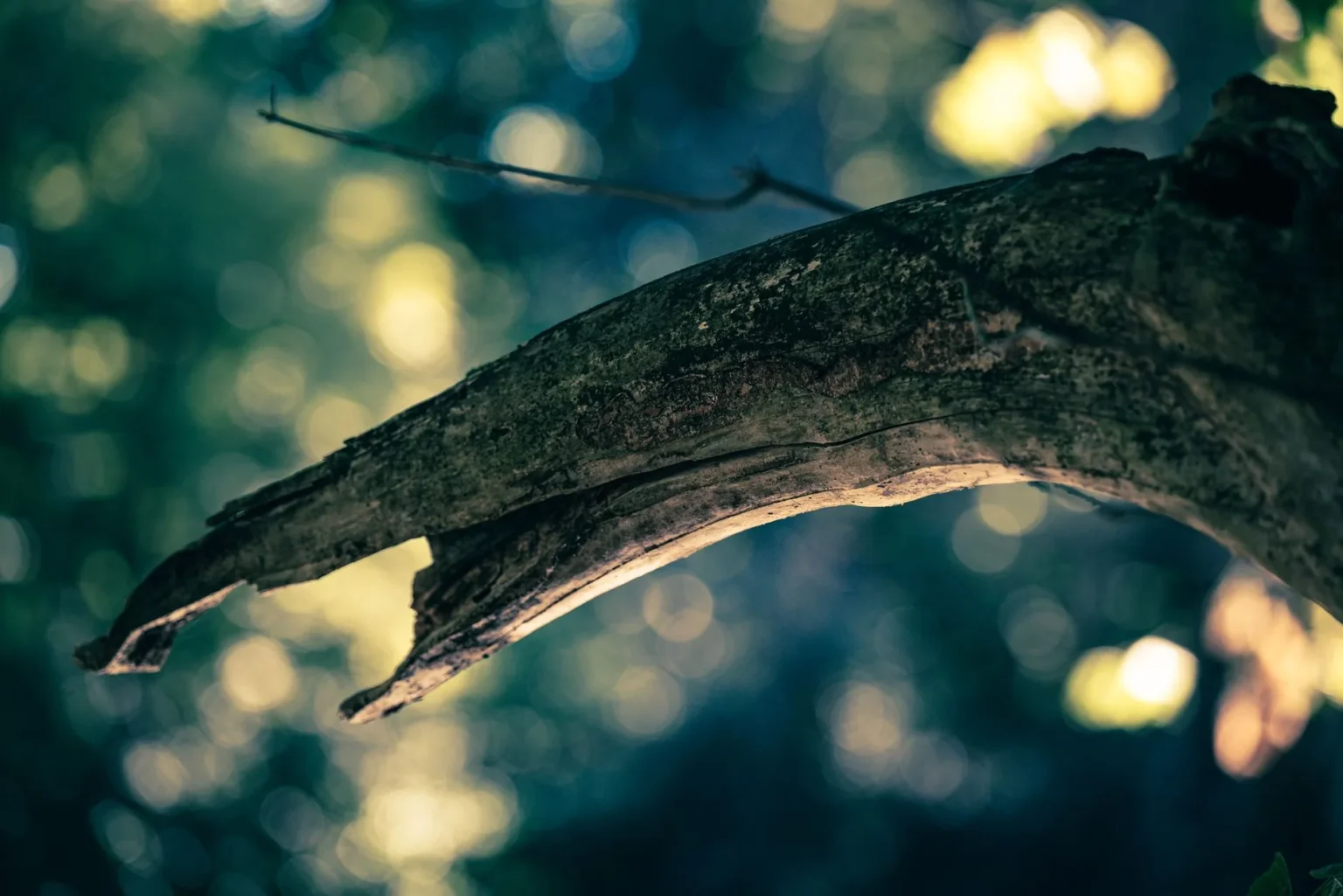
The piece that broke is only part of the story. The society guide to recognizing tree risk asks owners to look for detached or hanging branches, loose bark, and cracks or splits in the trunk or where branches attach. Longitudinal cracks on a major limb or at a union deserve prompt attention. A union that opened under load may close again when the wind drops, leaving only a thin dark line and a streak of fresh bark to show what happened.
Codominant stems are a common place to find that line. These are two trunks of similar size rising from one point, and the guide notes that they can often be failure points. Bark folded into the seam leaves less solid wood holding the two sides together. Long limbs with most of their weight near the tip are also more prone to failure. Both forms can be managed with planned tree maintenance before the next hard blow.
Then look at the ground. Rain came with this wind, and softened soil lets roots shift. Cracks or separations in the soil near the base, a plate of turf that has lifted on one side, or a lean that was not there on Wednesday can all point to root movement. The society guide treats soil heaving as a warning sign, especially under a leaning tree. Stay clear of the side the tree is leaning toward and ask for an assessment soon.
A hanging limb removal in Leonia should therefore come with a look at the whole tree. The storm brochure advises that trees which seem undamaged, particularly larger ones near people or property, be checked by an arborist for cracks, hanging branches and soil heaving. One visit can settle which trees need pruning, which need support and which can simply be watched through the winter.
Questions to answer during the tree check
- Which broken pieces remain above a path or roof
- Where cracks run along the trunk or unions
- How the soil looks on every side of the base
- What the tree could strike if it failed
Some trees can be pruned back to a sound structure. Others have lost so much of the crown, or split so deeply, that tree removal is the sensible course. That judgment is best made on site, with the targets around the tree in view.
Borough Trees, Private Trees and Leonia Rules
Before any cutting, work out whose tree it is. The Leonia Shade Tree Commission page says that if any part of the root collar touches or extends onto the Borough right of way, the tree is treated as a Borough tree. The right of way includes the strip between curb and sidewalk and on many streets reaches past the sidewalk. Owners may not cut or prune those trees. Damage is reported through the Borough concern form, and a tree in imminent danger of causing injury or damage should be reported to the Leonia Police Department.
Fallen trees have their own contact path. The Department of Public Works page asks residents to call the department about fallen trees during its weekday hours of 7:00 a.m. to 3:30 p.m. and to notify the police for emergencies outside those hours. A holiday weekend may change who answers, so use the police line when in doubt. Photograph the base of the trunk and the sidewalk together, which helps show where the tree stands.
Private trees follow Chapter 275 of the Borough code. The commission explains that a permit is generally required to remove a private tree measuring 8 inches or more in diameter at four and a half feet above the ground. It also says no permit is needed to prune a private tree, provided the pruning does not harm its health, balance or shape. Where a tree is so compromised that it is in imminent danger of causing damage or injury, the permit application is not required first, but written notice of the emergency removal and color photographs are due to the Building Department within 7 days.
Storm damaged trees that can safely wait take a different route. The page says an owner may seek a waiver of the tree replacement fee by filing the permit application with a written determination from a Licensed Tree Expert, a color photograph and supporting documentation. The filing fee still applies. The commission lists a $20 filing fee and a $350 replacement fee per tree, and it also posts a 2024 resolution updating the replacement fee schedule, so confirm current amounts with the Borough before you file.
Records to keep for hanging limb removal in Leonia
- Dated photographs taken before any piece is moved
- A wide view showing trunk, curb and sidewalk
- Written findings from an arborist or tree expert
- Copies of any notice sent to the Borough
Smaller debris has rules too. The Public Works page lists branches and brush as yard waste, picked up on alternating Mondays from March through November, with holidays excepted. It also describes covered containers of no more than 32 gallons and 50 pounds each, and says loose bags at the curb will not be collected. Check the Borough calendar for the next date, and ask the department how to handle anything too large for a container.
Protecting Leonia Trees Into Winter
The wind has moved on, but cracked wood and loosened roots can remain through winter. Walk the yard again after the next rain and compare it with your first photographs. Arrange hanging limb removal in Leonia promptly for anything above a door, drive or sidewalk, and keep up storm repair and prevention for the trees that held this time.
Reliable Tree Service is family owned since 1960, and our team includes ISA Certified Arborists and New Jersey Certified Tree Experts. Call (201) 943-4141 about broken limbs, split trunks or a new lean, and we will talk through what you are seeing and what should be looked at on site.
Related Articles

Storm Damage Inspection in Teterboro NJ: Tree Checks After Wind and Tidal Water
A Wind Advisory and a Coastal Flood Warning cover Eastern Bergen County on Thanksgiving. This guide explains what to check on Teterboro trees once it is safe, and what the borough tree ordinance asks.
Tree Storm Proofing in Rockleigh NJ: Thanksgiving Wind Prep for Wooded Lots
A Wind Advisory covers Bergen County and a High Wind Warning covers Hudson County from Thursday morning, and Rockleigh has plenty of tall trees to lose limbs. This guide covers tree storm proofing in Rockleigh before the wind arrives.
Tree Risk Evaluation in Washington Township NJ: Hazard Trees, Permits and Vendors
Washington Township in Bergen County has its own tree code, and it defines a hazard tree in plain terms. This guide covers tree risk evaluation in Washington Township, from the warning signs to the permit and vendor steps.
Tree Removal in Moonachie NJ: Dangerous Tree Notices and Public Right of Way Permits
Moonachie is a low lying Bergen County borough with its own rules for trees on public ground. This guide explains tree removal in Moonachie, from the borough code and dangerous tree notices to wet soils and curb debris rules.
Tree Storm Proofing in Little Ferry NJ: Wet Soils, Leaf Rules and Winter Wind
Little Ferry sits where the Hackensack River meets Overpeck Creek, and wet ground changes how trees hold in a storm. This guide covers tree storm proofing in Little Ferry, from root stress to borough leaf rules.
Tree Storm Cleanup in Carlstadt NJ: Brush Bundles, Yard Waste Days and Hazard Limbs
Carlstadt sets curb rules for yard waste, brush and wood scrap, and a storm can leave far more than the curb can take. This guide covers tree storm cleanup in Carlstadt, from bundles and bags to the hanging limbs that need a certified arborist.