Table of Contents
Tree Care in Carlstadt, NJ
Carlstadt is a borough in Bergen County. According to Wikipedia it began as a village in 1860, set off by an act of the New Jersey Legislature within Lodi Township, and the Borough of Carlstadt was incorporated on June 27, 1894, after being set off from Bergen Township. It covers 4.21 square miles, about 6 percent of it water, and it borders East Rutherford, Moonachie, Ridgefield, South Hackensack, Wallington, Secaucus and North Bergen. Tree storm cleanup in Carlstadt is mostly a question of what happens to the wood once a limb comes down, and the borough Public Works page spells out how branches and logs are handled.
We read the Carlstadt Public Works Department page, the Wikipedia article on the borough and three International Society of Arboriculture brochures on November 21, 2026. The Public Works page lists collection days for yard waste, brush and wood scrap, and it points residents to the D.P.W. for larger logs and stumps. It does not describe a shade tree ordinance, so this guide does not claim one. Collection rules change, so confirm every detail with Borough Hall at 500 Madison Street before you set anything at the curb.
A storm on a street of mature trees leaves two kinds of work. One is small debris that the borough collects on set days. The other is damaged trees and hanging limbs that belong to a trained crew. This guide separates the two for homeowners planning tree storm cleanup in Carlstadt, from the bundles at the curb to the limb that still hangs over a driveway.
Reliable Tree Service is family owned since 1960 and works across Hudson and Bergen counties from Cliffside Park. Our storm proofing and repair crews clear what a storm leaves and then look at the tree itself, because a tree that dropped one limb often has a weak spot that is still up there.
Neighboring Ridgefield has its own rules and its own wet soil, which we covered in tree storm proofing in Ridgefield. For the other guides we write for the borough, browse our Carlstadt tree care articles page.
Tree Storm Cleanup in Carlstadt Starts With the Borough Yard Waste Rules
The Public Works page divides the borough in two. The west side runs from Garden Street up to but not including Third Street, and the east side runs from Third Street up to Route 17 Southbound. Yard waste, which means grass and leaves, is collected on Monday for the east side and Tuesday for the west side. That day also matters for tree debris, because the page says shrubs, brush and branches under six inches in diameter go to the curb on the yard waste collection day.
The packaging rules are specific. Grass and leaves must be in biodegradable paper bags or in an open can marked Yard Waste. Bio bags and Yard Waste stickers are available at Borough Hall, and the page states that yard waste will not be collected if it is in plastic bags. After an autumn storm brings down a canopy of leaves along with the twigs, that detail decides whether the pile is taken or left behind.
Brush and branches have their own limits. Bundles should weigh no more than 35 pounds and measure less than four feet in length. A limb that is cut to those sizes can be tied and set out, but a crew with a chipper turns the same limb into material that needs no bundling. Logs, stumps and branches more than six inches in diameter are different. The page says to call the D.P.W. to arrange disposal, so a large trunk section is not something to drag to the curb and hope for the best.
There is a third stream for lumber. Wood scrap is bundled in lengths of four feet, with a maximum of 35 pounds and all nails removed, and it goes out on Heavy Trash day, which is Thursday for the west side and Friday for the east side. A fence panel that a storm broke belongs in that stream, and a split limb belongs in the brush stream, so sort before you stack.
What to sort before the curb pickup
- Leaves and grass in paper bags or marked cans
- Brush under six inches tied in short bundles
- Wood scrap with the nails pulled out
- Logs and stumps held for a call to the D.P.W.
Sorting also keeps a cleanup safe, because lifting a heavy limb is where many homeowner injuries start. Edward Hufnagel, who owns Reliable Tree Service, puts it this way: “Sort the pile before you lift it. Small wood belongs at the curb, and the big limb that is still hanging in the tree belongs to someone with the right gear.”
Hazard Limbs and Damaged Trees After a Storm
The curb rules cover wood that is already on the ground. The harder questions come from wood that is still attached. The International Society of Arboriculture brochure on storm related tree damage warns that broken limbs hanging overhead, and uprooted trees resting in other trees or on roofs, can keep moving during and after the storm. Trees and limbs under tension may react unexpectedly when they are cut or moved.
The same brochure points out that damaged trees may touch electrical wires directly or indirectly, with a risk of injury or death from electrocution. It advises staying clear of the area and calling local emergency services, the utility company or an arborist. A tree on a service line is a utility call first. Only after the line is cleared is it a tree job, and the work near wires takes knowledge and experience.
The brochure also says an assessment should take into account trees that seem undamaged, particularly larger trees near people or property. An arborist should check them for cracks in trunks or limbs, hanging branches and soil heaving. On a lot in Carlstadt that has a mature tree beside the house, a walk with a certified arborist the week after a storm can catch a split union that no one saw from the porch.
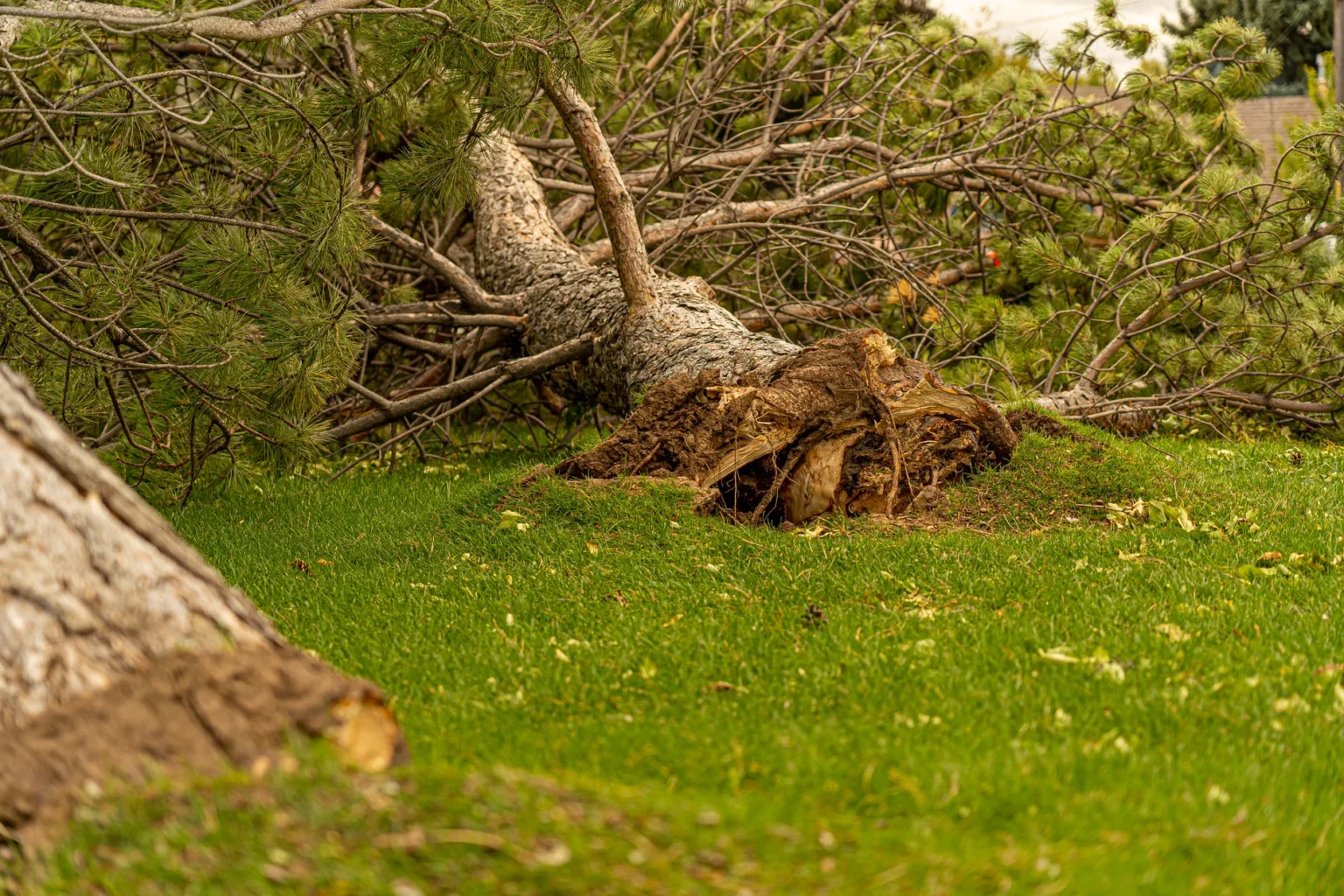
The brochure gives blunt advice on homeowner cleanup. It lists working at height, retrieving tree parts that rest on buildings or utility services and operating cutting machinery as inherently dangerous work, and it says debris cleanup should be carried out by a professional arborist. For a fallen tree with a root plate lifted out of the ground, our tree removal crews rig and lower the pieces in a planned order so nothing drops on the roof or the fence.
Signs a storm damaged tree needs a professional
- Limbs hanging loose in the crown
- A trunk or branch union with a fresh crack
- Soil lifted or split near the base
- Any branch resting on a roof or wire
Photograph the damage from a safe distance for insurance records, keep people and cars away from the area and then call. If a limb is pressing on the house or blocking the driveway, mention that when you phone, since it tells the crew how to plan the visit.
Checking Carlstadt Trees Before the Next Storm
Cleanup is easier when the tree was in good shape before the storm. The ISA brochure on recognizing tree risk offers a checklist for tree owners. It asks about large dead branches, hanging or fallen branches, loose bark, cracks or splits in the trunk or branch attachments, cavities or rotten wood, mushrooms at the base, recent construction or soil changes, and trees that have been topped or heavily pruned. A yes to any of them means the tree should be examined by an ISA Certified Arborist.
The brochure names failure points that matter on suburban and city lots. Codominant stems, which are two trunks of similar size splitting from one point, can be failure points. Cracks in the soil beside a leaning tree can mean the roots are moving. Dead branches in the canopy are probably the most obvious hazard, and their risk depends on the size of the branch and what stands beneath it.
Pruning is the usual first fix. The ISA brochure on pruning mature trees says no branch should be removed without a reason, that routine removal of weak, dead or diseased limbs can be done at any time of year and that generally no more than 25 percent of the crown should be removed at once, and less for mature trees. It also describes a correct cut just outside the branch collar, not flush to the trunk, and a three cut method for large limbs that keeps the bark from tearing. Our tree trimming and pruning crews follow those steps.
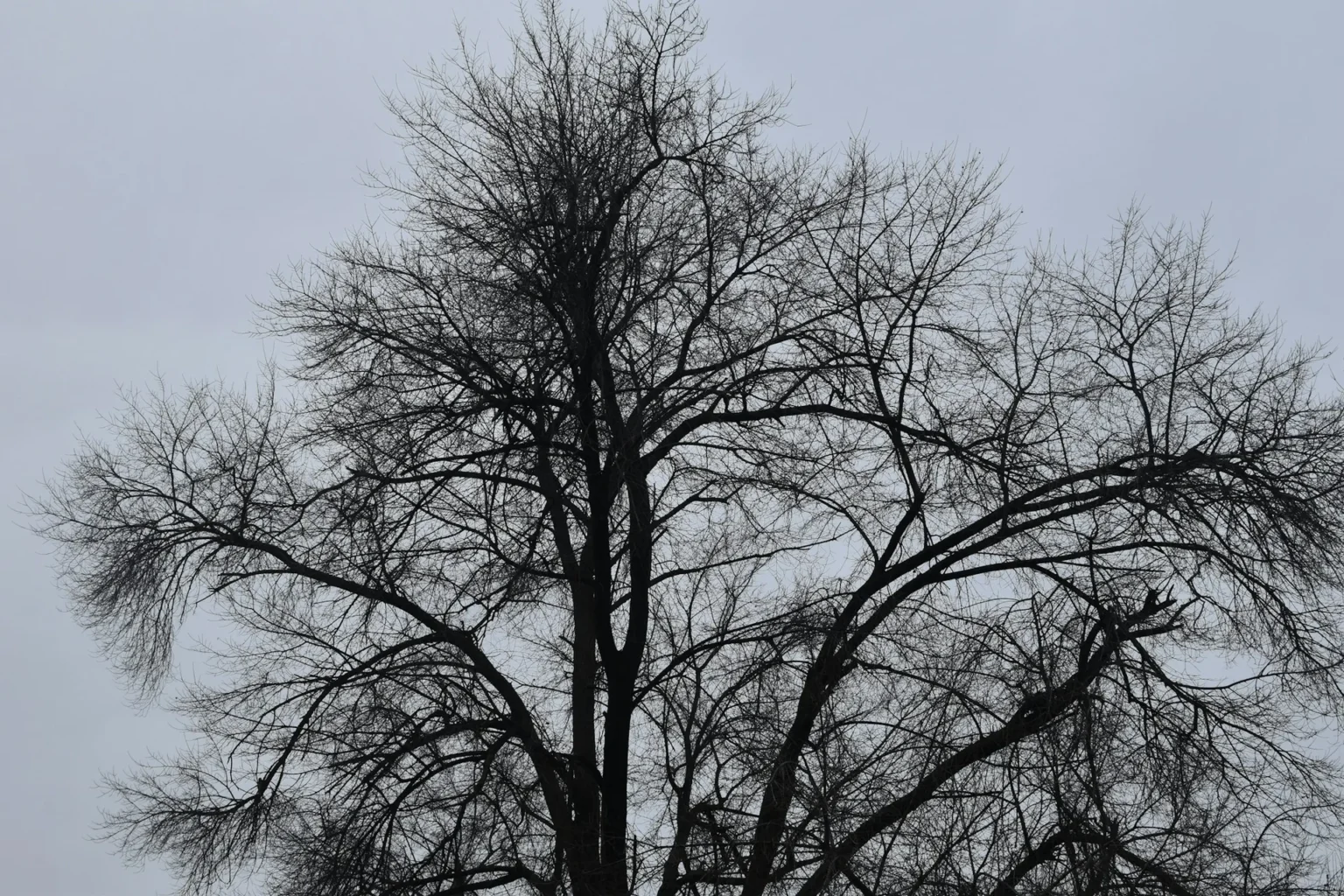
A bare crown in late fall shows these problems clearly, which makes winter a sensible time for a look. Planning ahead for tree storm cleanup in Carlstadt really means planning for fewer limbs to come down, and regular tree maintenance is how a crew catches the dead wood and weak unions while they are still small.
Defects to look for from the ground
- Two trunks of equal size joined in a tight V
- Cracks or splits in the trunk or unions
- Mushrooms or soft wood at the base
- Dead branches over the roof or driveway
The brochure also warns that a topped tree is a risk, because topping leaves weak regrowth, and that cabling and bracing supports a weak branch or stem but does not guarantee it will not fail. An arborist who knows tree risk can tell which option fits the tree.
Protecting Carlstadt Trees Through Winter
Carlstadt is a small borough, and one fallen limb on a block tends to be noticed by everyone on it. Good cleanup means the curb pile follows the Public Works rules and the damaged tree gets a proper look. Tree storm cleanup in Carlstadt is easier on a homeowner who has already sorted what stays, what goes and what needs a crew.
Reliable Tree Service is family owned since 1960, and our crews are ISA Certified Arborists and New Jersey Certified Tree Experts. Call us at (201) 943-4141 when a limb is hanging, a tree has shifted or a trunk needs to come down. Stumps left behind after a removal can be handled by our stump grinding service.
Related Articles

Tree Trimming in Garfield NJ: Late Fall Pruning for Tight City Lots and Shade Trees
Tree trimming in Garfield means working with small lots, wires and mature shade trees in a dense Bergen County city. This guide covers when to prune, how much to take and how to avoid topping.
Land Clearing in Haworth NJ: Permit Fees by Trunk Size and Replacement Trees
The Haworth tree removal application sets fees by trunk size and ties each removal to replacement trees. This guide covers land clearing in Haworth, from the ten business day filing rule to protecting the trees that stay.
Tree Removal in Harrington Park NJ: Borough Permits, Replacement and Hazard Trees
The Harrington Park tree ordinance asks owners to apply before removing a tree and to replace it by size. This guide covers tree removal in Harrington Park, from the application to hazard trees, stumps and replanting.
Tree Pest Management in Old Tappan NJ: Lanternfly Egg Masses and Borough Shade Trees
Old Tappan’s Shade Tree Advisory page asks owners to get Borough permission before spraying or pruning a shade tree. This guide covers tree pest management in Old Tappan, from spotted lanternfly egg masses to tree of heaven and who to call.
Tree Maintenance in Wallington NJ: Winter Prep Under the Borough Tree Rules
Wallington counts overmulching, excessive pruning and soil compaction as tree removal under its borough code. This guide covers tree maintenance in Wallington, from mulch and pruning cuts to winter inspections and hazard trees.
Stump Grinding in Norwood NJ: Borough Permits, 811 Calls and Replanting
A removed tree leaves a stump, and in Norwood the company that grinds it has to be registered with the borough. This guide covers stump grinding in Norwood, from permits and 811 marks to what to do with the hole afterward.