Table of Contents
Tree Care in River Edge, NJ
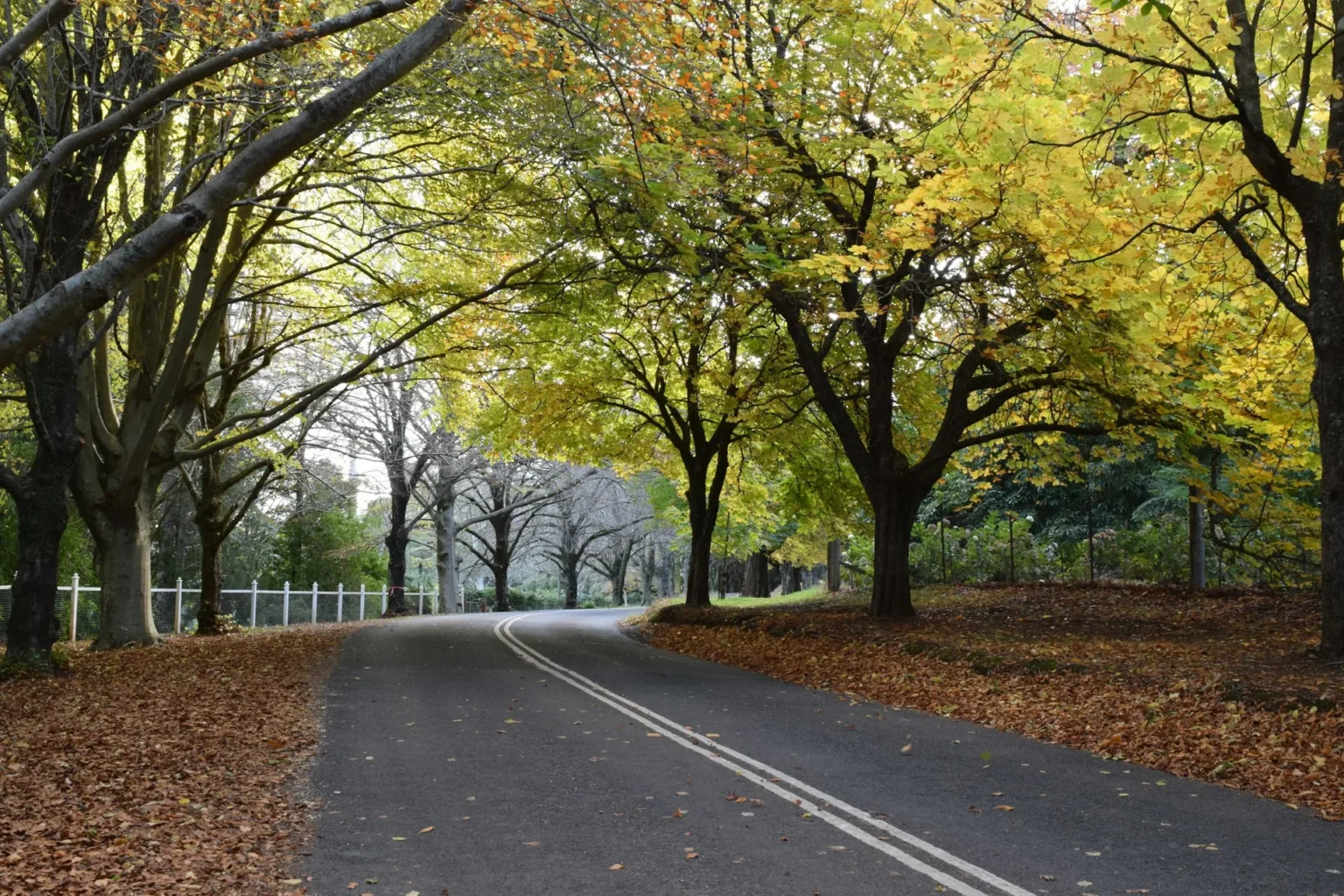
River Edge sits along the Hackensack River in Bergen County, and according to Wikipedia it was incorporated on June 30, 1894, as the borough of Riverside before taking its present name on December 1, 1930. The same page lists Van Saun County Park, shared with Paramus, and a River Edge Arboretum beside the public library. Trees are part of the character of the borough, which is why tree maintenance in River Edge deserves more thought than a quick fall raking.
The borough has a long record of looking after them. The Shade Tree Commission page says River Edge has been named a Tree City USA every year since 2000, has received Growth Awards since 2004, and won the New Jersey Shade Tree Federation Green Communities Award in 2005. The commission is a volunteer group that works with the Department of Public Works, and it runs a program called Leave the Leaves that encourages residents to mow and mulch leaves back into their lawns.
Reliable Tree Service has been family owned since 1960 and works across Hudson and Bergen counties out of Cliffside Park. This guide looks at what the soil, the leaf layer, and the mulch ring mean for the mature trees on River Edge lots, and at who handles what when a tree needs work.
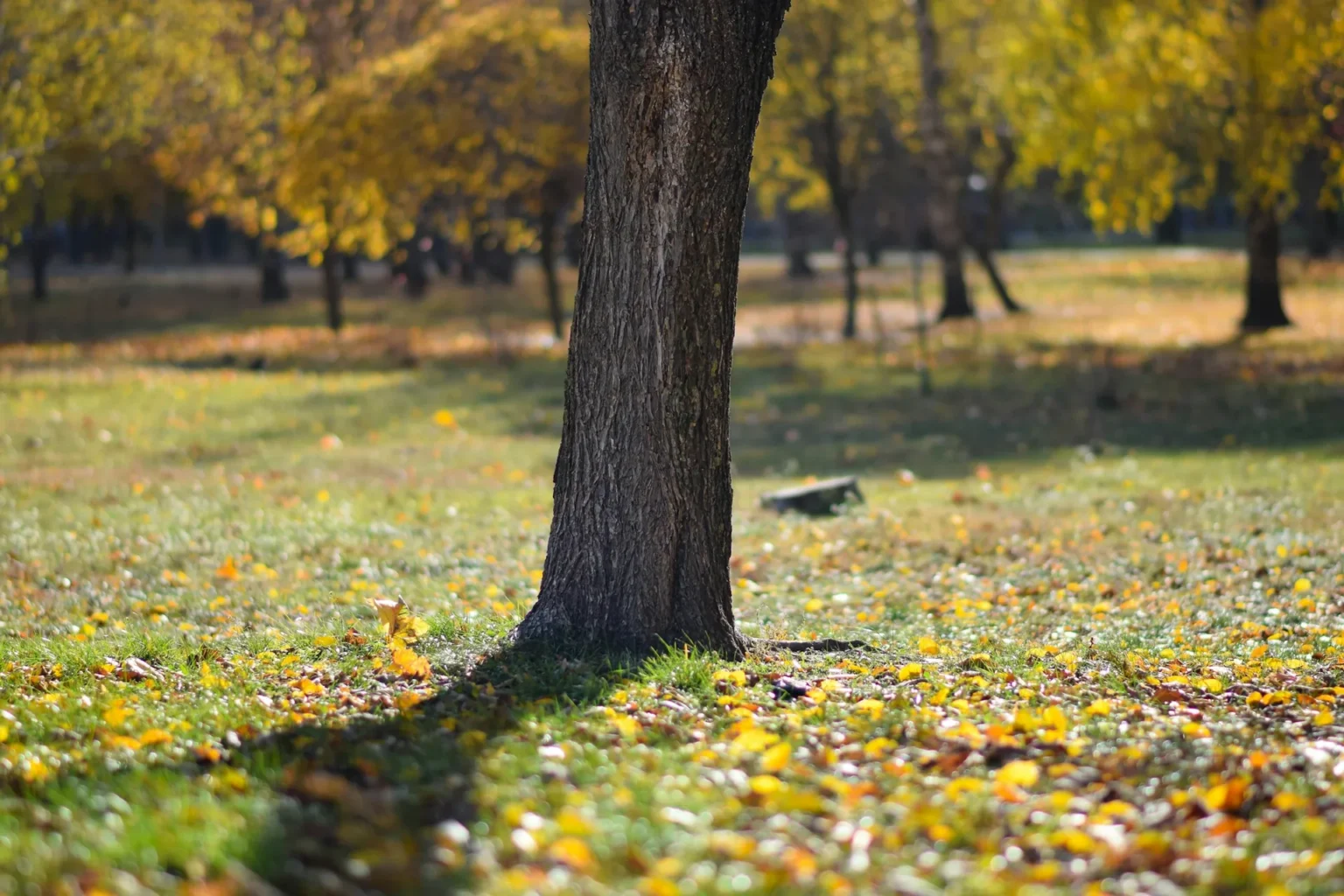
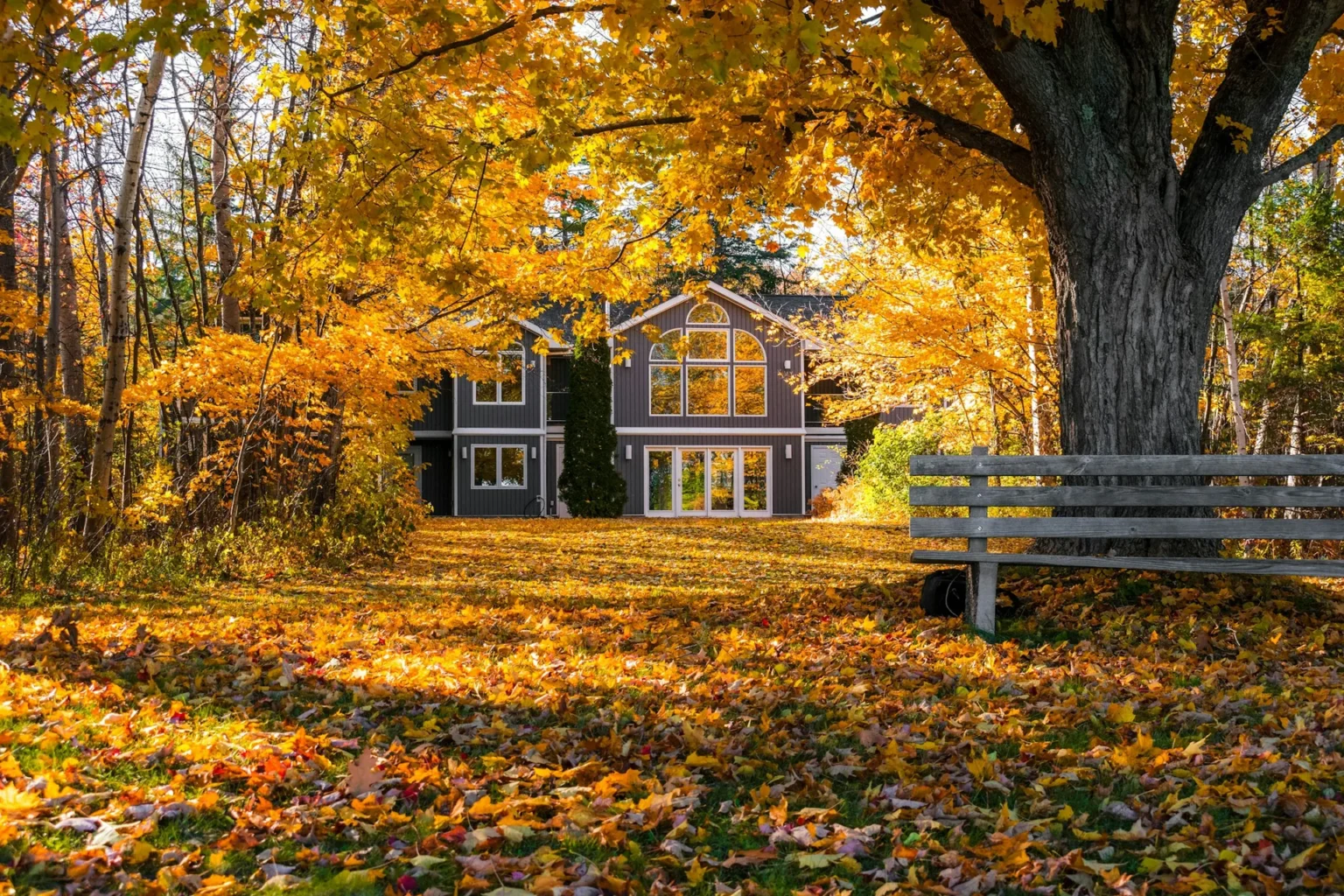
Most homeowners think of tree care as pruning, and pruning matters. But a tree spends most of its life working below the surface, and fall is when the ground around it changes the most. Leaves drop, soil cools, and roots keep growing while the canopy goes quiet. What happens on that patch of ground over the next few weeks affects how the tree comes through winter and how it leafs out in spring.
That is why we treat the base of a tree as part of the tree. A trunk that rises out of a thick pile of wet leaves, a mulch ring piled high against the bark, or a lawn mowed right up to the root flare each tell us something about how the tree has been treated. Our other River Edge tree care guides are collected on one page.
Why Fall Leaves Matter to Tree Maintenance in River Edge
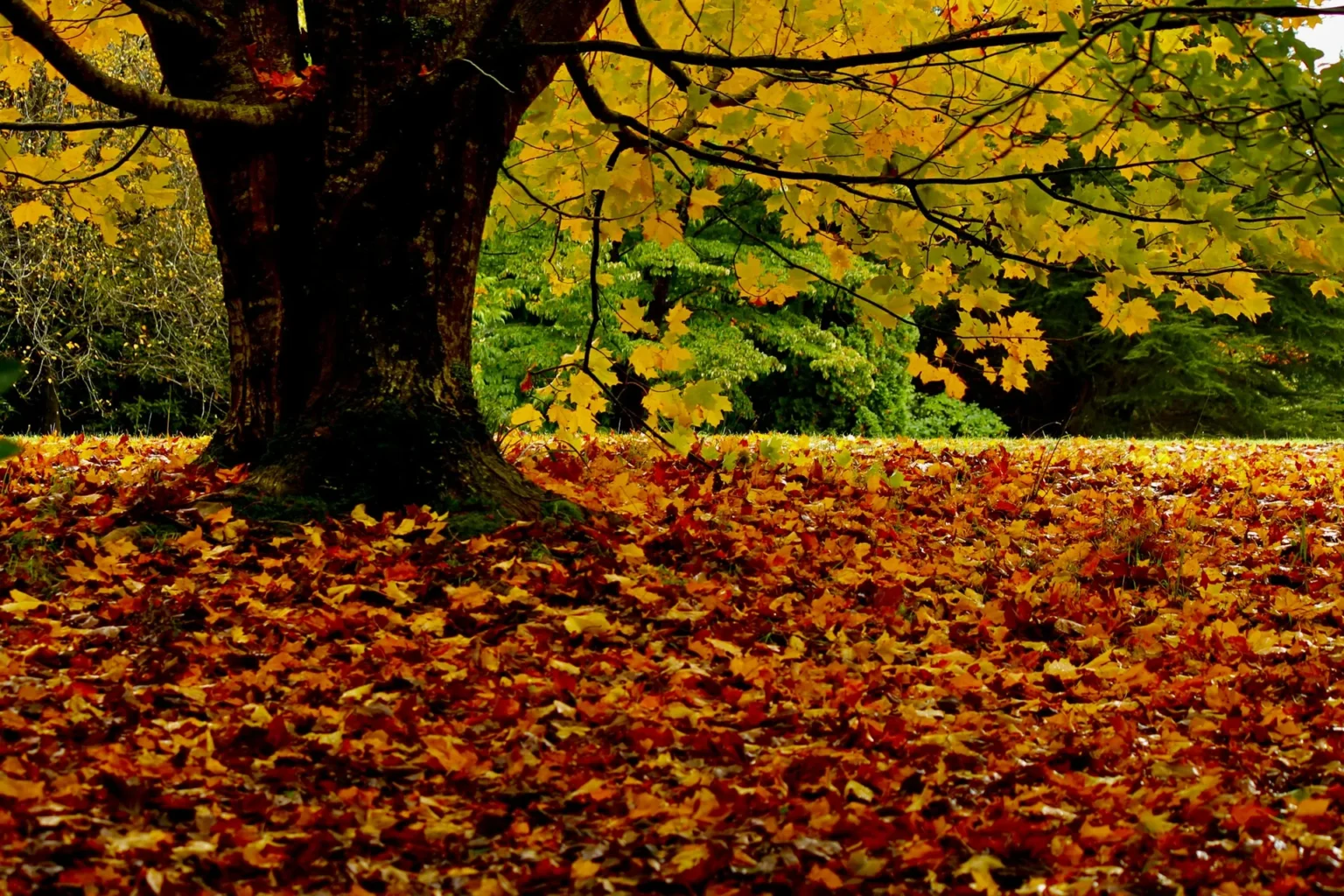
In a forest, fallen leaves are not wasted. The International Society of Arboriculture describes it in its Proper Mulching Techniques brochure: trees in a natural setting are rooted in rich, well aerated soil, and the ground is blanketed by fallen leaves and other organic material that organisms break down to release nutrients. Urban and suburban lots are a harsher setting, with poor quality soil, reduced organic matter, and large swings in soil temperature and moisture.
When leaves are bagged and carried away each year, that cycle is cut off. The Clemson Cooperative Extension fertilizing guide makes the same point from the other direction. It says mature trees and shrubs growing in favorable soil conditions need little or no fertilizer, and it notes that fertilizer can be useful for older trees whose leaves are removed, so little organic matter is recycled. A River Edge homeowner who mulches leaves into the lawn, as the commission suggests, is putting some of that material back.
This does not mean a tree should be buried in leaves. A thick, wet mat of whole leaves can smother the grass, and it holds moisture against the base of the trunk. Shredding leaves with a mower, spreading them in a thin layer, or adding them to a mulch ring in moderation works better than leaving a heap against the tree.
Before buying any fertilizer, test the soil. The Rutgers soil testing guide says to dig about 6 inches deep, take 10 to 15 samples along a random path across the area, and repeat the test every 2 to 3 years. Pale leaves or short twig growth can come from damaged roots, drought, or the wrong soil pH, so a soil test and an inspection come before a bag of fertilizer. Our tree feeding service starts with that kind of diagnosis.
Signs the ground under a tree needs attention
- Leaves piled thick and wet against the trunk
- Mulch heaped in a cone around the base
- Pale foliage or short twig growth on an older tree
- Bare, compacted soil under the canopy
Any one of these is easy to correct during fall tree maintenance in River Edge while the weather is mild. Left alone through winter, they tend to turn into slow problems at the base of the tree that nobody notices until a limb fails or the leaves come in thin.
Edward Hufnagel, who owns Reliable Tree Service, puts it this way: “Most of what goes wrong with a yard tree starts at the ground, not in the branches. Look at the soil, the mulch, and the base of the trunk first, because that is where the tree tells you how it is doing.”
Mulch Depth and the Mulch Volcano Problem
Mulch is one of the most useful things a homeowner can give a tree, and one of the easiest to get wrong. The ISA brochure lists the benefits: less soil moisture lost to evaporation, fewer weeds, roots insulated from summer and winter extremes, and better soil structure and drainage over time. It also warns that if mulch is misapplied it may have little, or even negative, impact on trees.
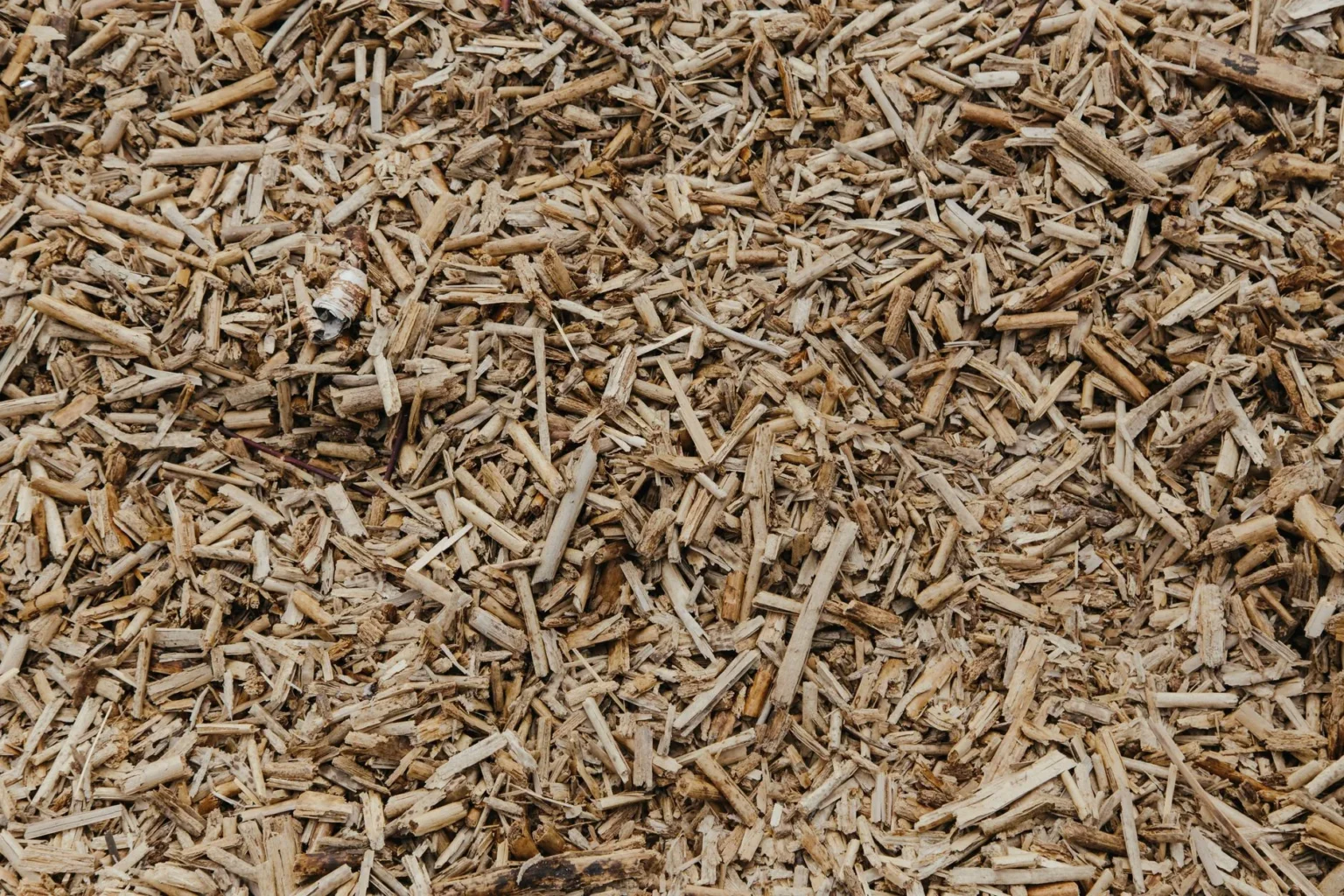
The warning that matters most is about depth. The brochure recommends a layer of 2 to 4 inches, with fine mulches such as compost kept to 2 or 3 inches and coarse arborist wood chips at 3 or 4 inches. It calls piles of mulch around the base of a tree mulch volcanoes and describes over mulching as a plague in many landscapes. Mulch applied against the trunk can soften the bark tissue and invite insects and disease, and it can encourage stem girdling roots that reduce growth or eventually kill the tree.
Wet ground adds a second limit. On wet soils the same brochure says more than 2 inches of organic mulch can keep the root zone too moist, which can stress the plant and cause root rot. Properties near the Hackensack River or on low ground in River Edge should keep the ring thin and check that water can drain away from the trunk.
The ring itself should be wide. The brochure says to apply mulch near, but not touching, the trunk and to extend it to the drip line if practical, with a ring of about 3 feet in radius as the minimum for most trees. A tree surrounded by a small circle of mulch inside a large lawn gets little of the benefit.
How to mulch a mature tree correctly
- Spread a layer 2 to 4 inches deep, no deeper
- Pull mulch back so the trunk base stays visible
- Widen the ring toward the drip line of the canopy
- Rake matted old mulch loose before adding more
A trunk base with a visible root flare is a good sign, and one buried under mulch is worth a second look. If the flare is hidden or the roots circle the trunk, an inspection by an ISA Certified Arborist can tell you whether the tree needs routine tree maintenance or something more.
Street Trees, Yard Trees, and Who Handles What
The first question on any River Edge property is whose tree it is. The Shade Tree Commission page describes the commission as the group that maintains the borough trees and works with the Department of Public Works, and it says requests for tree maintenance, removal, or planting can be made in writing, by phone, or by email. The commission receives over 300 requests yearly and makes every attempt to respond within 30 days, so a request for a street tree is worth making well before a problem becomes urgent.
The same page describes how the borough handles its own work. Street and park tree planting is typically done in October and November, with residents who receive a tree notified by mail. Stump removal for borough trees is done yearly by an outside contractor hired by the town, followed by topsoil and reseeding. Free seedlings are offered each year around Arbor Day, and a program called Trees Please helps residents choose and care for the right trees.
Trees on a private lot are a different matter. Pruning, removal, and stump work belong to the owner, which is where our tree trimming and pruning and tree removal pages apply. The commission page adds a rule worth knowing before you hire anyone. A company hired for tree work on a resident’s property must be registered with the New Jersey Board of Tree Experts and have at least one full time licensed tree expert or licensed tree care operator.
That is also a good moment to think about the next tree. If a tree does come out, the Rutherford tree feeding guide explains how soil tests and timing work, and the commission’s fall planting season is a useful cue for when to plant a replacement. Confirm current borough rules with the commission before you rely on this summary, because ordinances and programs change.
Questions to ask before tree work starts
- Is the tree on the street side or on my lot
- Is the company registered with the New Jersey Board of Tree Experts
- Does the crew include a licensed tree expert or operator
- What will the work leave behind at the base of the tree
Written answers to those four questions make tree maintenance in River Edge easier to plan, because they take the guesswork out of hiring and keep the property owner, the borough, and the tree on the same page.
Protecting River Edge Trees Through the Winter
Fall is a good time to walk your property and look down before you look up. Check the leaf layer, the depth of the mulch, the soil near the trunk, and the base of each older tree. A few minutes spent now makes tree maintenance in River Edge simpler in spring, because the problems that start at the ground are caught while they are still small.
Our crews are ISA Certified Arborists and New Jersey Certified Tree Experts, licensed, bonded, and insured. If a tree on your lot has a hidden root flare, a mulch volcano, or a lean that is new, ask for an inspection and we will walk the property with you. The visit ends with plain answers in order of urgency, and some trees need nothing at all.
Call Reliable Tree Service at (201) 943-4141 to schedule an inspection in River Edge. We are family owned since 1960, and our storm proofing and repair service is there when the weather turns.
Related Articles

Tree Removal in North Bergen NJ: Hillside Roots, Hazard Trees, and Replacement Rules
North Bergen sits on the Hudson Palisades, so trees grow on steep ground, close to walls and buildings. This guide covers tree removal in North Bergen, from what a slope does to roots to the paperwork worth gathering first.
Tree Trimming in Fairview NJ: Borough Tree Rules, Wires, and Small Lot Pruning
Fairview is a Bergen County borough with a written tree code, small lots and mature trees close to buildings and wires. This guide covers tree trimming in Fairview, from what the borough code regulates to when and how to prune.
Tree Pest Management in Oradell NJ: Ash Trees, Emerald Ash Borer, and Borough Rules
Oradell is a Bergen County borough with a written tree code and a lot of mature shade trees, and some of them are ash. This guide covers tree pest management in Oradell, from the signs of emerald ash borer to the borough approvals that apply before any cutting.
Tree Maintenance in Closter NJ: Street Tree Rules, Root Protection, and Fall Care
Closter has a Shade Tree Commission that controls street trees and a private property code that counts root damage as tree removal. This guide covers tree maintenance in Closter, from who may touch which tree to a fall walk around mature trees.
Tree Trimming in Glen Rock NJ: Pruning Before Removal Under the Borough Tree Permit
Glen Rock has held Tree City USA status since 1990 and now requires a permit to remove many private trees. This guide covers tree trimming in Glen Rock, from good pruning cuts to the rules that apply when a tree might come down.
Tree Storm Repair in Ridgefield Park NJ: Damaged Trees, Village Rules, and Next Steps
Ridgefield Park has looked after its public trees since 1979, the year Hurricane David destroyed 79 of them in less than a day. This guide covers storm repair in Ridgefield Park, from first safety steps to village permit rules.