Table of Contents
Tree Care in Demarest, NJ
Demarest is a borough in Bergen County, and according to Wikipedia it was formed by an act of the Legislature on April 8, 1903, from parts of Harrington Township and Palisades Township. It covers about 2.08 square miles, had 4,981 residents in the 2020 census, and the same article says the Duck Pond, a section of the Tenakill Brook, sits at the heart of the borough. Mature street trees and yard trees stand on generous lots here, and tree feeding in Demarest is a question homeowners ask most often right after planting a replacement tree.
Feeding is also the part of tree care that people get wrong most often. Healthy established trees rarely need fertilizer, and a new tree should not get any at planting time. This guide explains when feeding helps, when it does harm, and why watering and mulch come first. It ties the advice to Chapter 163 of the borough code, which can require replacement trees and a bond to see them through.
Since the Council amended Article 2 on June 26, 2023, a permit has been required to remove any tree on private property with a trunk diameter of 4 inches or more, as the borough notice about removing trees explains. We read that notice, the full text of Ordinance 1121-23, and the Shade Tree Commission page for this guide. Reliable Tree Service has been family owned since 1960 and works across Hudson and Bergen counties from Cliffside Park. Rules change, so confirm every detail with the Shade Tree Commission secretary at Borough Hall.
The ordinance explains why the borough cares. It finds that trees help prevent erosion, reduce storm water runoff, moderate temperature, and protect property values, and it says planting and preservation serve public health and safety. A replacement tree that dies undoes all of that, which is why the chapter keeps the owner responsible for it after planting.
That sets the order for the rest of this guide. We start with the replacement tree rule, then watering and mulch, then the narrow cases where tree feeding in Demarest is worth doing. Our tree feeding service follows the same order, and it starts with a look at the tree and the soil rather than a bag of product.
Replacement Trees and the 24 Month Rule in Demarest
Under Chapter 163, a Covered Tree is any tree in the borough with a diameter of four inches or more, measured at four and one half feet above the ground, not counting public plantings. Removing one takes a permit. The ordinance does not require mitigation for a dead, dying, or hazardous tree that has been in the ground at least five years, undamaged, with no soil moved within fifteen feet in that time. Otherwise mitigation is required, and the number of trees grows with the size of the tree removed.
Where mitigation is required, the owner plants new trees on the same property. Deciduous trees are replaced with Shade Trees, which the chapter defines as deciduous trees of at least two inches in diameter when planted that reach at least twenty five feet in height at maturity. Evergreens are replaced with trees two inches in diameter, deciduous or evergreen. A cash performance bond of $500 for each mitigation tree is posted first.
The care clause is the one that matters for this article. If a tree planted in mitigation dies within twenty four months after planting, the owner must replace it within six months after that. If the replacement does not happen, the Commission may plant it and claim against the bond. Eighty percent of the bond is returned once the initial planting is satisfactory, and the rest is returned on written request no sooner than twenty four months after planting, once the other requirements are met.
Planting has a deadline too. Mitigation trees must go in within six months of the permit when no building work is involved, and the Commission can extend that by up to three months for weather or other unforeseen circumstances. A tree planted in the cooler ground of fall, which the ISA planting brochure lists as an ideal time after leaf drop, fits inside that window, and that is when follow up care matters most.
Records worth keeping for a replacement tree
- Date each replacement tree went into the ground
- Species and trunk diameter written down with the permit
- Photographs of the tree, mulch, and watering routine
- Written request for return of the bond balance
Our tree maintenance visits can document the condition of a young tree at the six month mark and again before the bond is released. Edward Hufnagel, who owns Reliable Tree Service, puts it this way: “A new tree needs water and patience before it needs feeding. Get the roots and the moisture right first, then ask what else the tree is missing.”
Watering and Mulch for New Trees in Demarest
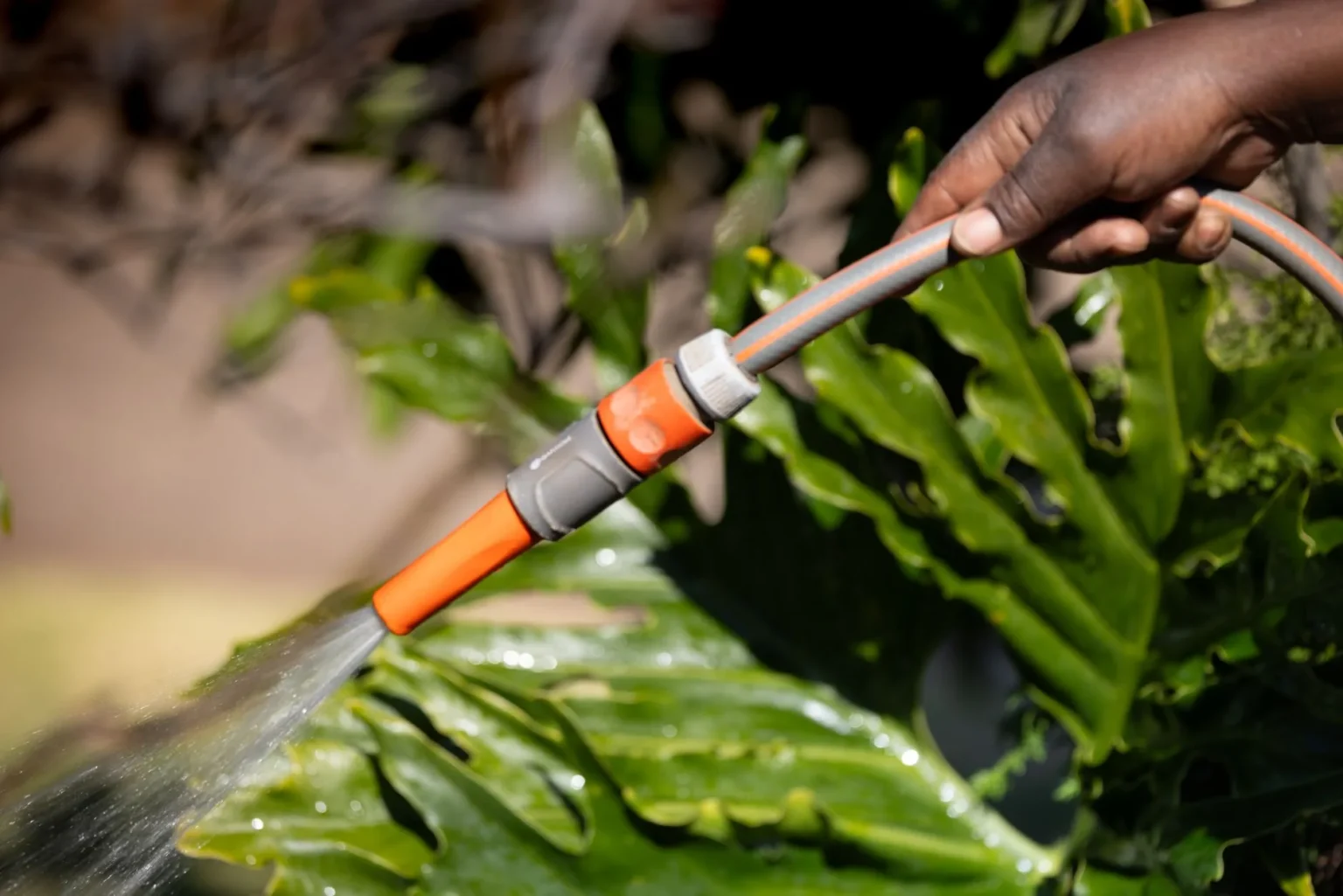
Proper watering of a newly planted tree is the most important maintenance practice, according to University of Maryland Extension, and the same page says it is not recommended to fertilize at planting time. It explains that most of a young plant’s energy goes into root growth during establishment, and that nitrogen applied then seems to suppress root growth rather than help it.
The ISA brochure on new tree planting says to keep the soil moist by watering at least once a week, barring rain, and more often in hot, windy weather, continuing until mid fall and tapering off as temperatures drop. The Missouri Department of Conservation advises routine watering for the first two years and checking the soil weekly in dry spells, with enough water to keep the soil around the roots moist but not wet.
Mulch is the second job. The ISA mulching brochure recommends a depth of two to four inches and warns against mulch volcanoes, the piles heaped against the trunk. Mulch against the bark can soften the tissue and invite insects and disease, and it can lead to stem girdling roots. The planting brochure adds that a mulch free ring one to two inches wide at the base of the tree keeps the bark from staying wet and prevents decay.
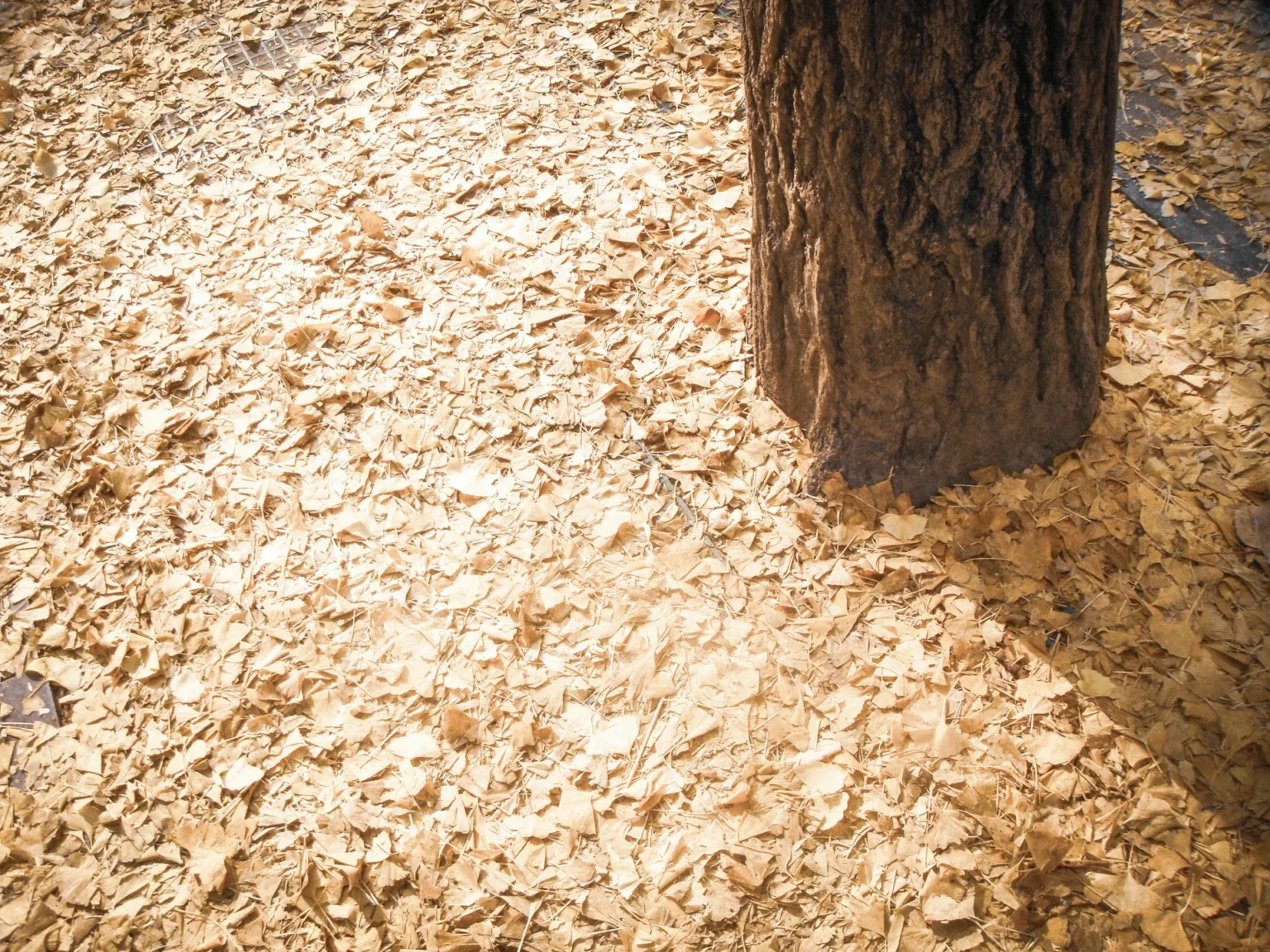
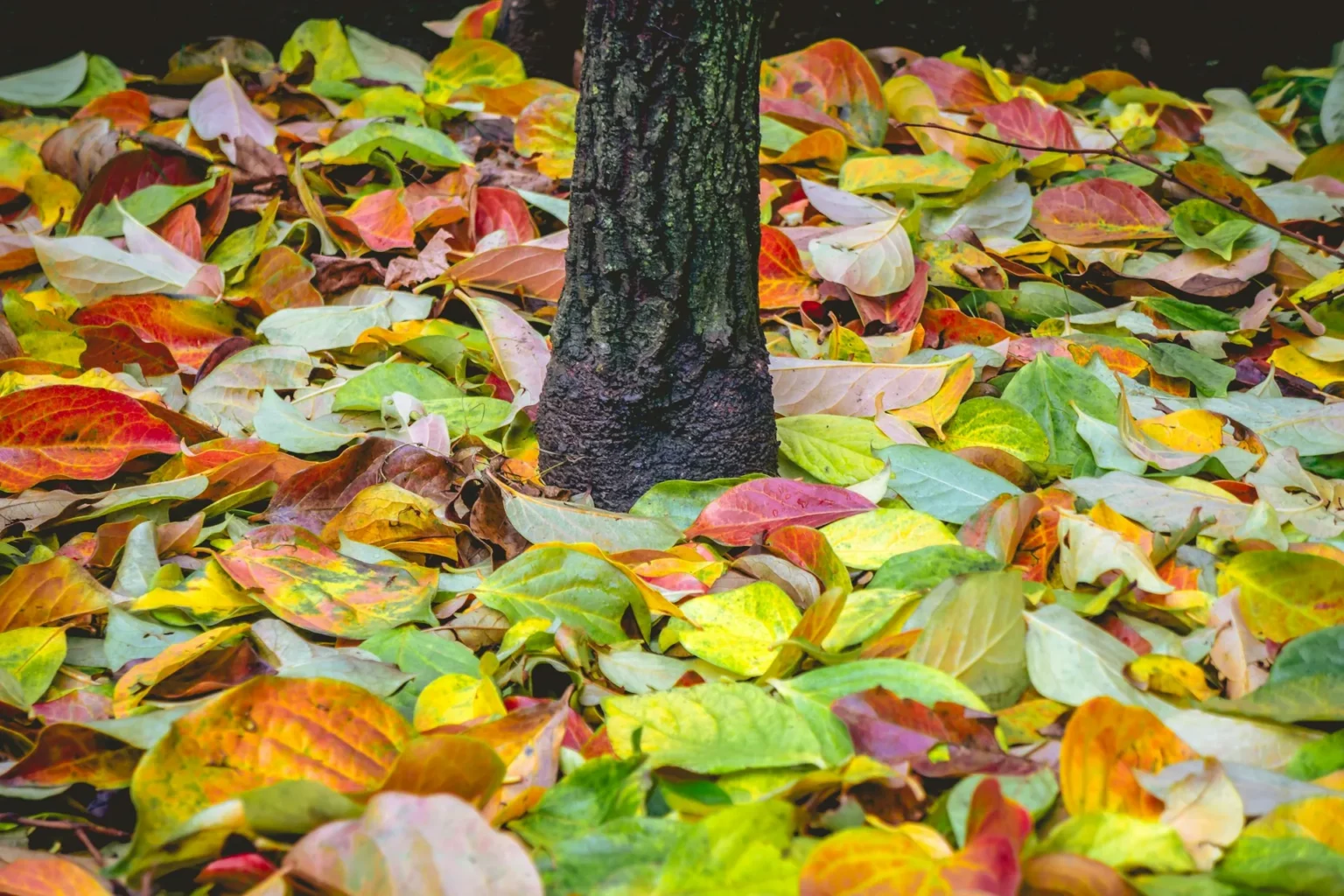
Fallen leaves can do part of the work. University of Maryland Extension notes that shredded leaves used as mulch release nutrients slowly as they break down, and that they remove the need to buy mulch. The Shade Tree Commission page lists acceptable trees for mitigation planting, and a fresh planting in fall usually has leaves close by to shred. Run a mower over them, spread a thin layer, and keep it off the trunk.
Mulch checks for a young tree
- Pull mulch back until the trunk flare shows
- Keep the layer between two and four inches deep
- Leave a bare ring around the base of the trunk
- Replace only what has broken down, not for color
If the mulch around a tree has grown into a volcano, our tree maintenance crews can pull it back and reset the ring by hand. It is a small fix that removes a known source of stress for a young tree.
When Tree Feeding in Demarest Makes Sense
Healthy trees in most landscapes do not need fertilizer, especially once they reach mature size, according to University of Maryland Extension. The page says fertilizer is not a remedy for landscape problems and advises a soil test when a nutrient shortage is suspected. That advice shapes how we approach tree feeding in Demarest. We look for a reason first, such as slow growth over several seasons or a soil test that shows a gap, and we feed only when the evidence supports it.
The same page says never to fertilize a drought stressed plant, and it notes that trees and shrubs absorb nutrients applied to nearby turfgrass, so a lawn program counts as feeding too. Most trees and shrubs prefer a soil pH between 5.5 and 7.0, and a test reports that number as well, which tells you whether feeding can work at all.
Timing matters. If you do fertilize, the page says to do it in the fall between late October and early December, or in late winter or early spring between late February and early April. It warns against late summer or early fall feeding because the nutrients stimulate new growth just as trees prepare for dormancy. It also advises against fertilizing before a heavy rainstorm, on frozen ground, or within 10 to 15 feet of waterways, so a yard near the Tenakill Brook or the Duck Pond needs extra care.
Method counts as much as timing. For a large tree, the easiest approach the page describes is to broadcast granular fertilizer on the soil from near the trunk out to the drip line, and it describes liquid deep root feeding as a popular method among commercial tree companies. It also prefers slow release nitrogen, which is less likely to add to nutrient pollution of water. Our tree feeding team chooses the method after reading the soil test, and we sweep product off sidewalks and driveways.
Questions to settle before feeding a tree
- Has a soil test shown a real nutrient gap
- Is the tree free of drought stress right now
- Is the date inside late October to early December
- Will product stay clear of water and pavement
The Missouri guidance agrees that fertilizer is rarely needed for a new tree and is not a substitute for good growing conditions. If a tree still looks poor after watering, mulch, and a soil test, the cause may be pests or decay rather than hunger. Our tree pest management service looks at that possibility, and our tree trimming and pruning crews can remove dead wood once the cause is known.
Protecting Demarest Trees With Patient Care
A replacement tree in Demarest has to get through at least two winters and two summers, and the ordinance gives the owner twenty four months of responsibility for it. Water on a schedule, keep mulch off the trunk, and skip fertilizer at planting. Feed only when a soil test, the season, and the tree all agree.
Our other local guides are collected on the Demarest tree care articles page, and our guide to tree maintenance in Closter covers the rules in the neighboring borough. A seasonal checklist is in our spring tree care article, and our storm proofing and repair work looks at the structure of newly planted and older trees before winter weather arrives.
Our crews are ISA Certified Arborists and New Jersey Certified Tree Experts. Call Reliable Tree Service at (201) 943-4141 to schedule tree feeding in Demarest or to have a replacement tree checked. We are family owned since 1960, and we will tell you what the tree needs and what the borough requires before any work begins.
Related Articles

Tree Trimming in Waldwick NJ: Pruning Rules, Qualified Trees, and Right of Way Care
Waldwick regulates tree removal and replacement under a chapter adopted in 2024, and it sets firm rules for trees in the public right of way. This guide covers tree trimming in Waldwick, from qualified trees and roots to clean cuts and topping.
Tree Maintenance in Cresskill NJ: Willows, Poplars, Street Trees, and Borough Rules
Cresskill bans new poplars and willows in its shade tree chapter, and a 2025 ordinance treats excessive pruning as tree removal. This guide covers tree maintenance in Cresskill, from street tree ownership to roots, pipes, and permits.
Land Clearing in Englewood NJ: Tree Permits, Root Zones, and Replacement Rules
Englewood regulates tree removal under Chapter 425 of its city code, and clearing a lot can trigger a permit before the first tree comes down. This guide covers land clearing in Englewood, from permits to root protection.
Stump Grinding in Hackensack NJ: City Removal Rules, Grinding Depth, and Replanting
Hackensack regulates most tree removals under a 2024 ordinance, and the stump is what remains when the paperwork is done. This guide covers stump grinding in Hackensack, from the city form to grinding depth, wood chips, and replanting.
Tree Removal in Park Ridge NJ: Hazard Trees, Replacement Rules, and Root Zones
Park Ridge adopted a tree removal and replacement ordinance in 2024, and it reaches further than most owners expect. This guide covers tree removal in Park Ridge, from hazard trees to replacement planting and the root zone.
Tree Storm Proofing in Ramsey NJ: Thunderstorm Wind, Borough Rules, and Fall Checks
Ramsey has plenty of mature trees, and a June thunderstorm showed what wind can do to them. This guide covers tree storm proofing in Ramsey, from common defects to the borough’s rules on who handles which tree.