Table of Contents
Tree Care in North Bergen, NJ
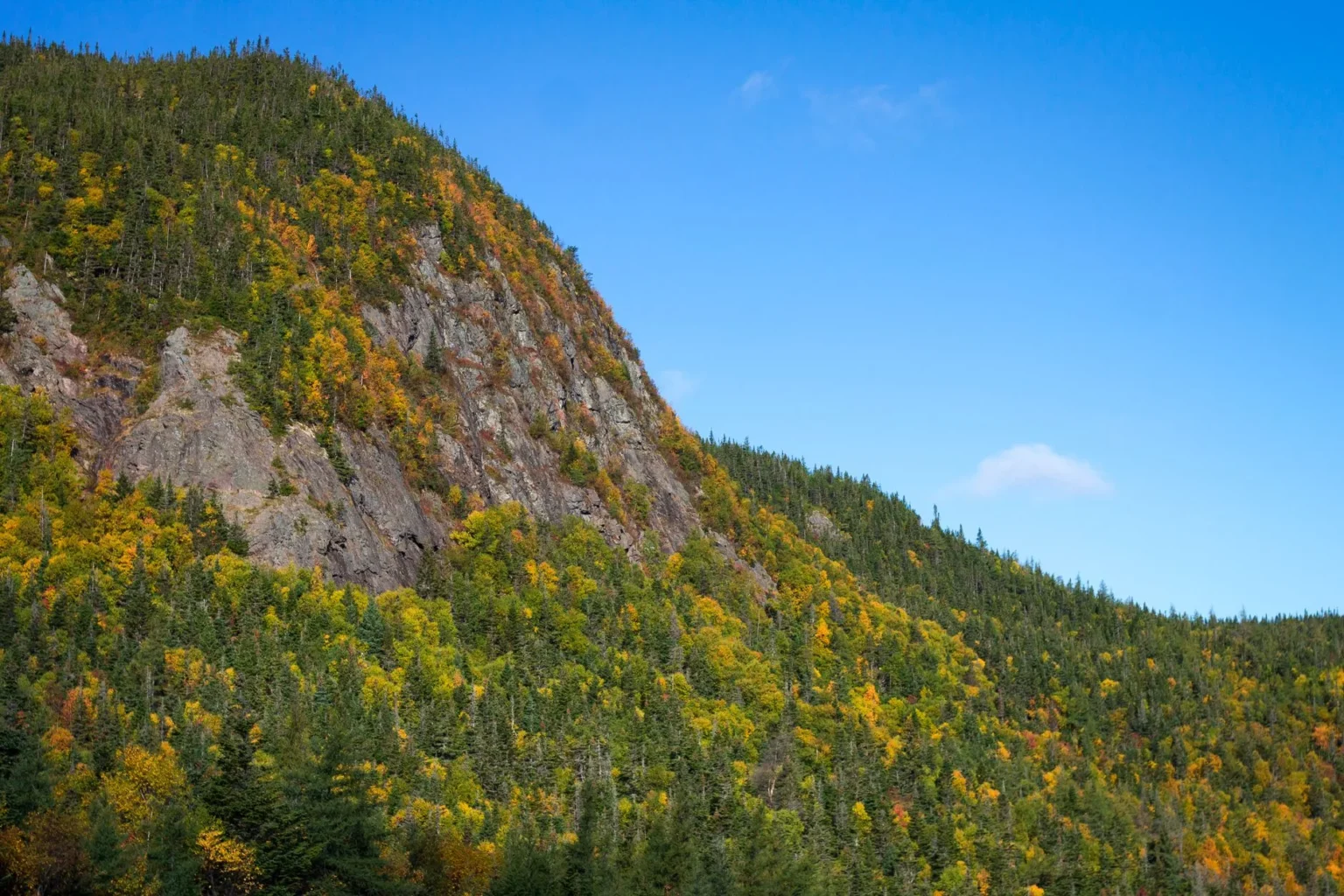
Tree removal in North Bergen starts with the ground the tree stands on. North Bergen is a Hudson County township, and according to its Wikipedia entry it was incorporated on April 10, 1843. The same page says the township is situated on the Hudson Palisades and calls it one of the hilliest municipalities in the United States, with a total area of 5.57 square miles and low lying land along its western side that belongs to the New Jersey Meadowlands.
That mix of steep rock slopes above and wet flat ground below shapes how trees grow and how they fail. The entry also notes that the area was heavily forested in the colonial era and was known as Bergen Woods, a name still recalled in the Bergenwood neighborhood. Many trees in town today grow on a grade, beside a retaining wall or a stairway, or close to a building that was cut into the hill.
This guide looks at tree removal in North Bergen from three angles: what a slope does to roots, how to tell a hazard tree from a tree that only looks rough, and what a municipal tree ordinance usually asks before a removal. It is written for homeowners in North Bergen and the Hudson County towns around it.
Reliable Tree Service is family owned since 1960 and works across Hudson and Bergen counties from Cliffside Park. Our tree removal crews plan every job around the tree, the slope, the structures and the wires, because on a hillside the way a tree comes down matters as much as the decision to take it down.
Rules and conditions change, so confirm the current requirements with the township before any work begins. We keep our North Bergen tree care guides in one place, and for a nearby example of the same questions see our guide to tree removal and the town permit in Secaucus.
Palisades Slopes, Roots, and Soil Under North Bergen Trees
The Palisades give North Bergen its character. The entry on the New Jersey Palisades says the cliffs stretch north from Jersey City for about 20 miles and stand about 300 feet high at Weehawken, and that they mark the margin of a diabase sill formed about 200 million years ago. For a tree owner the geology matters less than the result: a steep grade, and in many places soil that sits in a thin layer over rock and fill.
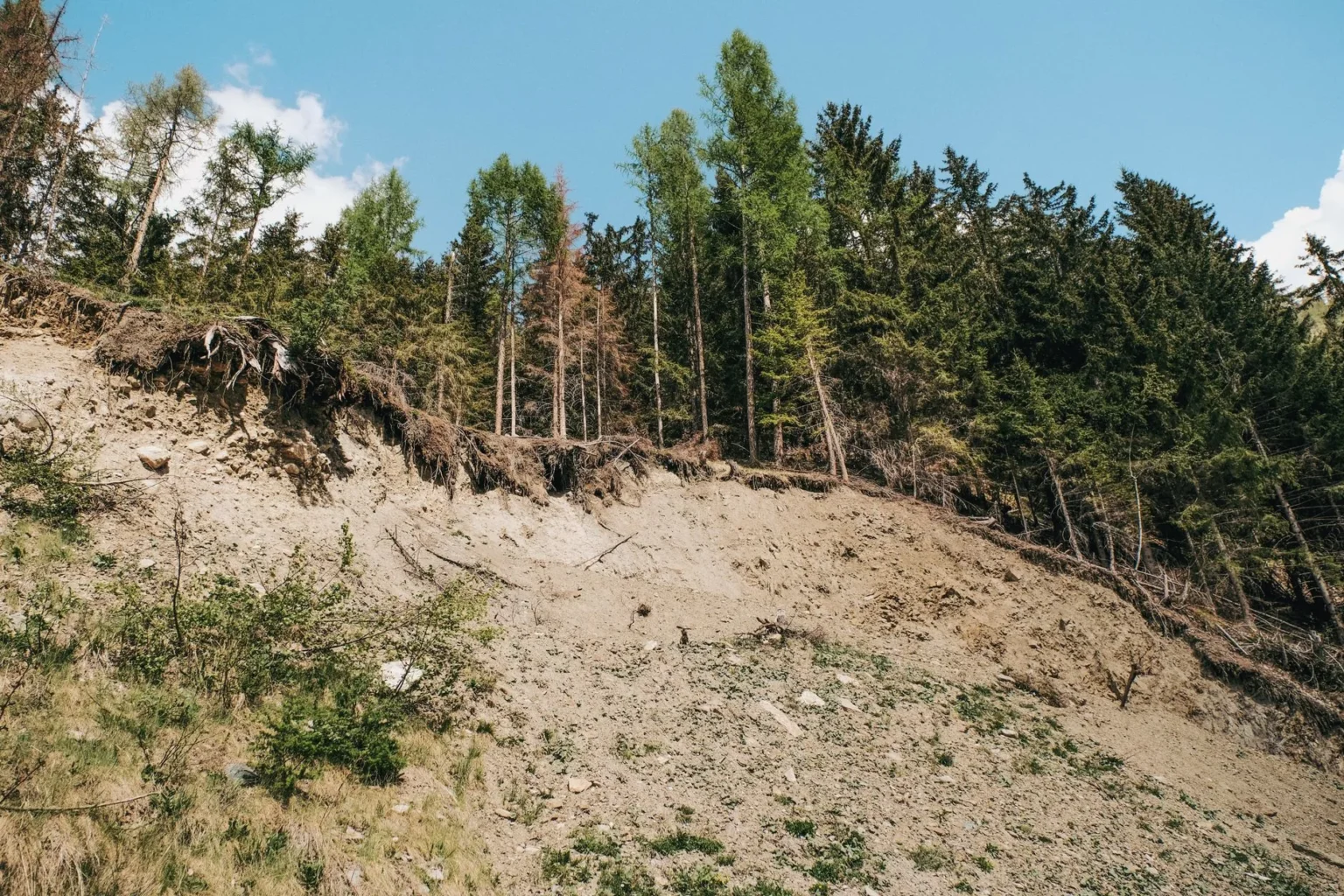
Tree removal in North Bergen often comes down to what the roots are holding. On a slope, roots do two jobs, feeding the tree and anchoring the soil around it. When a tree leans downhill, or the ground uphill of the trunk has pulled away, the anchor is losing. The International Society of Arboriculture says in its Recognizing Tree Risk brochure that cracks or separations in the soil may indicate soil heaving from excessive movement of the roots, which is a warning sign for failure, especially if the tree is leaning.
The same brochure lists codominant stems, which are two trunks of similar size competing from one point, as common failure points, and it warns that wounds, root loss and decay may result from construction, grade changes and soil compaction. Hillside lots collect all of these. A new patio, a regraded driveway or fill pushed behind a wall can bury or cut the roots that a mature oak or maple depends on, and the damage often shows up in the crown seasons later.
The wet end of town has a different problem. Where the ground is saturated, roots sit in soft soil and a tree with a heavy crown can tip in a gust. We look at how the soil feels underfoot, whether the root flare is visible at the base and whether the trunk has moved, because these tell us more than the leaves do.
Tree removal in North Bergen: slope signs to check first
- Soil cracks or bulges on the uphill side
- A trunk leaning more than it did last season
- Roots lifted or exposed along a wall or step
- Fill or paving added within reach of the roots
Any one of these is a reason to have a certified arborist look at the tree before the next storm. Our storm proofing and repair work often begins with exactly this kind of walk around a leaning tree.
Edward Hufnagel, who owns Reliable Tree Service, puts it this way: “A hillside tree and the soil under it are a single problem. We read the slope and the roots together before anyone decides what has to come down.”
Hazard Trees and Hidden Decay in North Bergen
Not every ugly tree has to go. The ISA brochure is plain that there is no such thing as a completely safe tree, that all trees have the potential to fall, and that only a small number actually hit something or someone. It adds that evaluating how serious a defect is is best done by a professional arborist. That is why we start with the tree and its targets, meaning the house, the car, the stairway or the neighbor’s fence below it, before we talk about a saw.
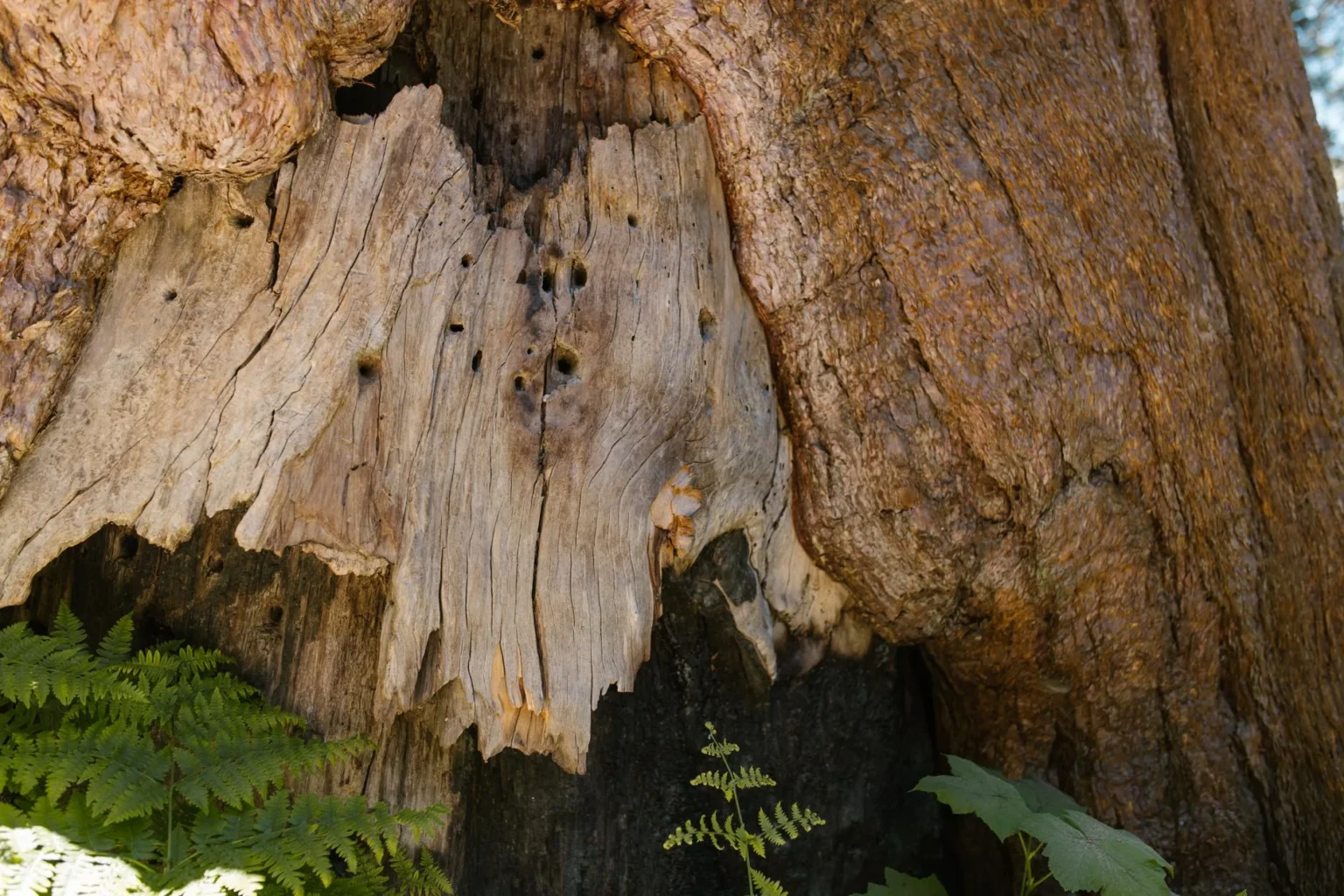
The brochure’s checklist is a good place for a homeowner to begin. It asks about large dead branches, detached or hanging branches, loose bark, cracks or splits in the trunk or where branches attach, cavities or rotten wood, mushrooms at the base, and whether the area has recently been altered by construction or changes in soil level. It also asks whether the tree has been topped or heavily pruned. A yes to several of these means the tree should be examined, not that it must come down.
The New Jersey Department of Environmental Protection uses similar language in its model tree removal and replacement ordinance. It defines a hazard tree as one that has an infectious disease or insect infestation, is dead or dying, obstructs the view of traffic signs or free passage where pruning has not worked, is causing obvious damage to structures such as foundations and sidewalks, or is determined to be a threat by a certified arborist or Licensed Tree Expert. That list is a useful way to think about a tree whether or not your town has adopted the model.
Removal is one answer among several. The ISA brochure lists pruning out defective branches, cable and brace support, routine care and removal, and says some trees with unacceptable levels of risk are best removed, with a new tree planted if possible. A tree with a hollow trunk beside a bedroom wall is a different case from a tree with one dead limb, and our tree maintenance visits are how we tell the two apart before anyone commits to a removal.
Signs a North Bergen tree may be a hazard
- Large dead branches over a roof or walkway
- Cavities, cracks or splits in the trunk
- Mushrooms or soft wood at the base
- Leaning growth with lifted soil on one side
When removal is the right call near a house or a wire, we take the tree down in sections and rig the pieces to the ground. The ISA brochure warns never to attempt to remove branches or any tree part from or near power lines, and we agree: if a limb is touching a line, call the electric provider first and keep clear.
Who Owns the Tree and What an Ordinance Asks
Not every tree in North Bergen belongs to the person standing under it. James J. Braddock North Hudson County Park is a county park, and the Hudson tourism page for the park describes 167 acres with the 16 acre Woodcliff Lake and 8 miles of walkways. Trees in a park or on a public right of way are not a homeowner’s to cut, and a street tree in front of a house may fall under the township. Before booking tree removal in North Bergen, find out who owns the tree.
For trees on private land, the state has pushed towns to adopt written rules. The NJDEP model ordinance explains that the 2023 Tier A stormwater permit renewal requires permittees to adopt and enforce a community wide ordinance controlling tree removal and replacement. It is a model, and a township may modify it, so North Bergen’s own wording is what counts. We have not read the township code and do not describe it here, so please confirm with the township before work starts.
Several details in the model matter on a slope. It measures diameter at breast height at four and a half feet above ground from the uphill side of the tree, which is a real difference on a grade. It defines the critical root radius as the diameter times one and a half feet, so a tree eight inches across has a root zone of about twelve feet. And it defines tree removal broadly, to include killing a tree through excessive pruning, over mulching or soil compaction and grade changes within that root zone. Cutting the roots for a wall can count as removing the tree.
The model exempts hazard trees from fees and replacement, and it asks for written justification such as photographs or a statement from a licensed tree expert or arborist. For ordinary removals it sets replacement by size, from one new tree for a smaller trunk to more for larger ones, planted within twelve months and monitored for two years, or a payment into a tree fund where planting is not possible. A written assessment from our certified arborists helps document why a tree is a hazard.
Paperwork to gather before a removal
- Proof of who owns the tree and the land
- Dated photographs of the defects
- A written arborist assessment of the risk
- The township’s current permit and replacement rules
Once the tree is down, the stump is the next question. Our stump grinding team can take it below grade so the spot can be replanted, and we have written about what to know in our guide to stump grinding in Kearny after a tree comes down.
Protecting North Bergen Trees on Every Slope
North Bergen trees live on steep ground, tight lots and wet low edges, and each of those asks for a different decision. Look at the roots and the soil first, read the defects honestly, find out who owns the tree and what the township requires, and keep photographs with dates. Removal is sometimes the right answer, and when it is we plan it around the slope, the structures and the wires.
Our crews are ISA Certified Arborists and New Jersey Certified Tree Experts, and Reliable Tree Service is family owned since 1960. Call us at (201) 943-4141 and we will look at the tree with you, explain the options and recommend only the work the tree needs. If a tree has already come down or split, our tree removal services page explains how we work around a house, a wall and a wire.
Related Articles

Stump Grinding in Norwood NJ: Borough Permits, 811 Calls and Replanting
A removed tree leaves a stump, and in Norwood the company that grinds it has to be registered with the borough. This guide covers stump grinding in Norwood, from permits and 811 marks to what to do with the hole afterward.
Tree Risk Evaluation in Maywood NJ: Shade Tree Commission, Hazard Trees and Fines
A tree does not need to be leaning to be a risk, and the borough has its own rules for trees along the street. This guide covers tree risk evaluation in Maywood, from the defects an arborist checks to Chapter 94 of the borough code.
Tree Feeding in Northvale NJ: Soil Tests, Mulch Depth and the Borough Tree Ordinance
A tree that looks tired is not always hungry, and the cause is often in the soil or the mulch. This guide covers tree feeding in Northvale, from the soil test to the borough tree removal ordinance.
Tree Trimming in Bogota NJ: Commission Permits, Excessive Pruning and Fines
Bogota requires the written permit of its environmental commission before anyone cuts or climbs a street tree. This guide covers tree trimming in Bogota, from that permit and the open ground rule to the code that counts excessive pruning as removal.
Tree Pruning in Midland Park NJ: Street Tree Permits, Notices and Winter Timing
Midland Park requires a written permit before anyone prunes a tree on a public street or in a park. This guide covers tree pruning in Midland Park, from that permit and the dangerous tree notice to clean cuts and winter timing.
Tree Removal in Lyndhurst NJ: Permit Rules, Replacement Trees and Hazard Trees
Lyndhurst now asks for an application before most trees on private property come down. This guide covers tree removal in Lyndhurst: replacement rules, fees and the hazard tree exemption.