Table of Contents
Tree Care in Oradell, NJ
Good tree pest management in Oradell begins with knowing what is attacking which tree and who has to approve the response. The borough sits in Bergen County, and according to its Wikipedia entry it was incorporated on March 8, 1894 as the borough of Delford, then renamed Oradell on November 12, 1920. The Oradell Reservoir on the Hackensack River, formed by a dam built between 1921 and 1923, shapes the eastern side of town.
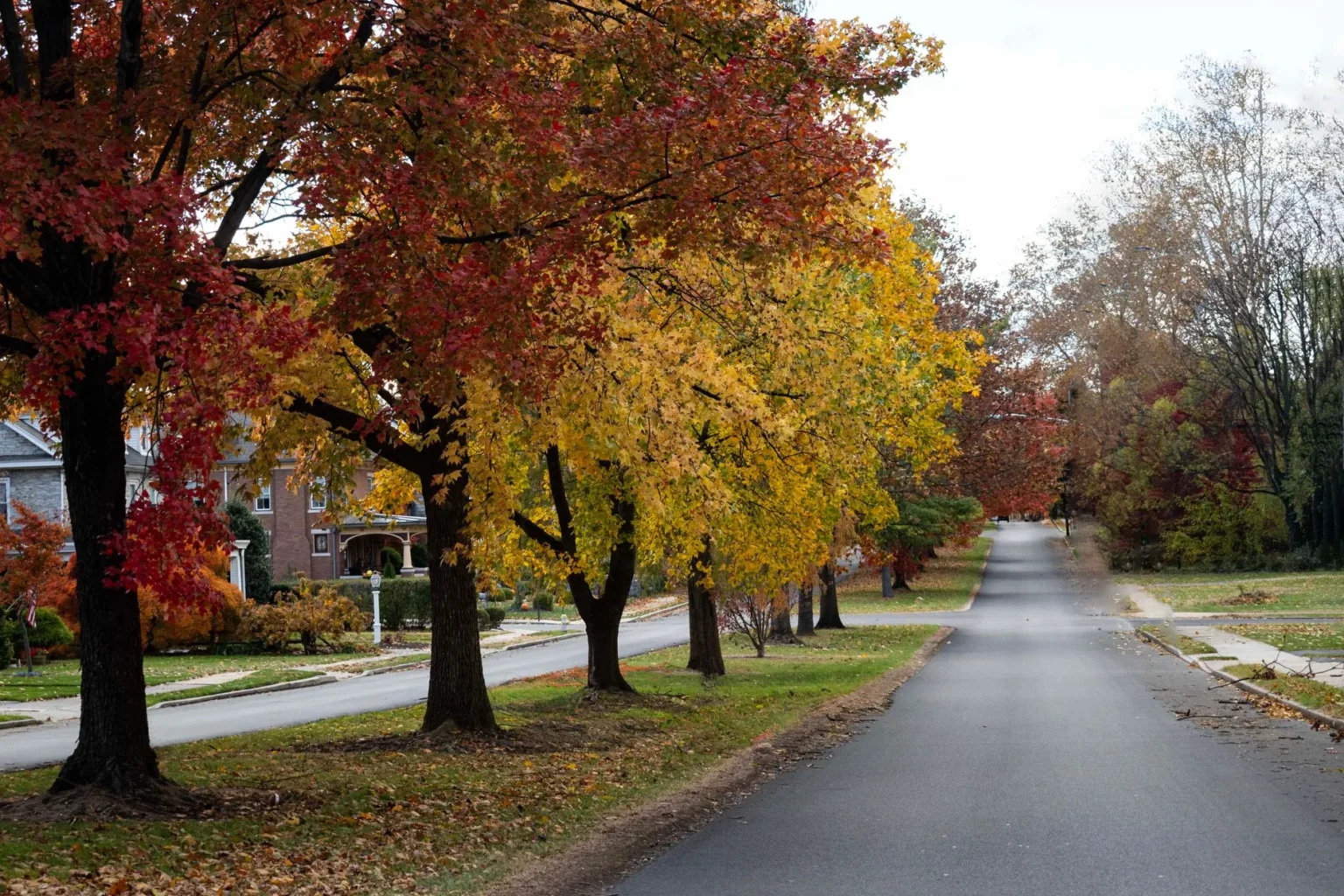
The trees here are mostly mature shade trees on small lots and along narrow streets, and many of the species planted a generation ago were chosen for toughness, including ash. That is the trouble. The emerald ash borer, a beetle from Asia, kills ash trees, and the New Jersey Department of Agriculture says ash is commonly planted as a street tree and on private property in many cities and towns.
This guide is written for owners in Oradell and nearby Bergen County boroughs. It explains what the beetle does, how the borough handles tree work on public and private land, and what a careful fall walk around your trees should include.
Reliable Tree Service is family owned since 1960 and works across Hudson and Bergen counties from Cliffside Park. Our tree pest management work starts with a plain look at the crown, the trunk and the ground under a tree, because most pest problems show up in those three places before they show up in a bill.
Rules and fees change, and some of what follows comes from ordinance text that the borough has amended, so confirm the current wording with Oradell before any work begins. We keep our Oradell tree care guides in one place, and for a different pest in a nearby county see our piece on spotted lanternfly and tree of heaven in Harrison.
Emerald Ash Borer and the Ash Trees of Northern New Jersey
The state agriculture department describes the emerald ash borer as a non native insect that infests and kills all species of ash trees in North America. Its emerald ash borer page puts the number of ash trees in New Jersey at 24.7 million, most of them in the north. An adult beetle is about half an inch long and metallic green, which makes it easy to miss.
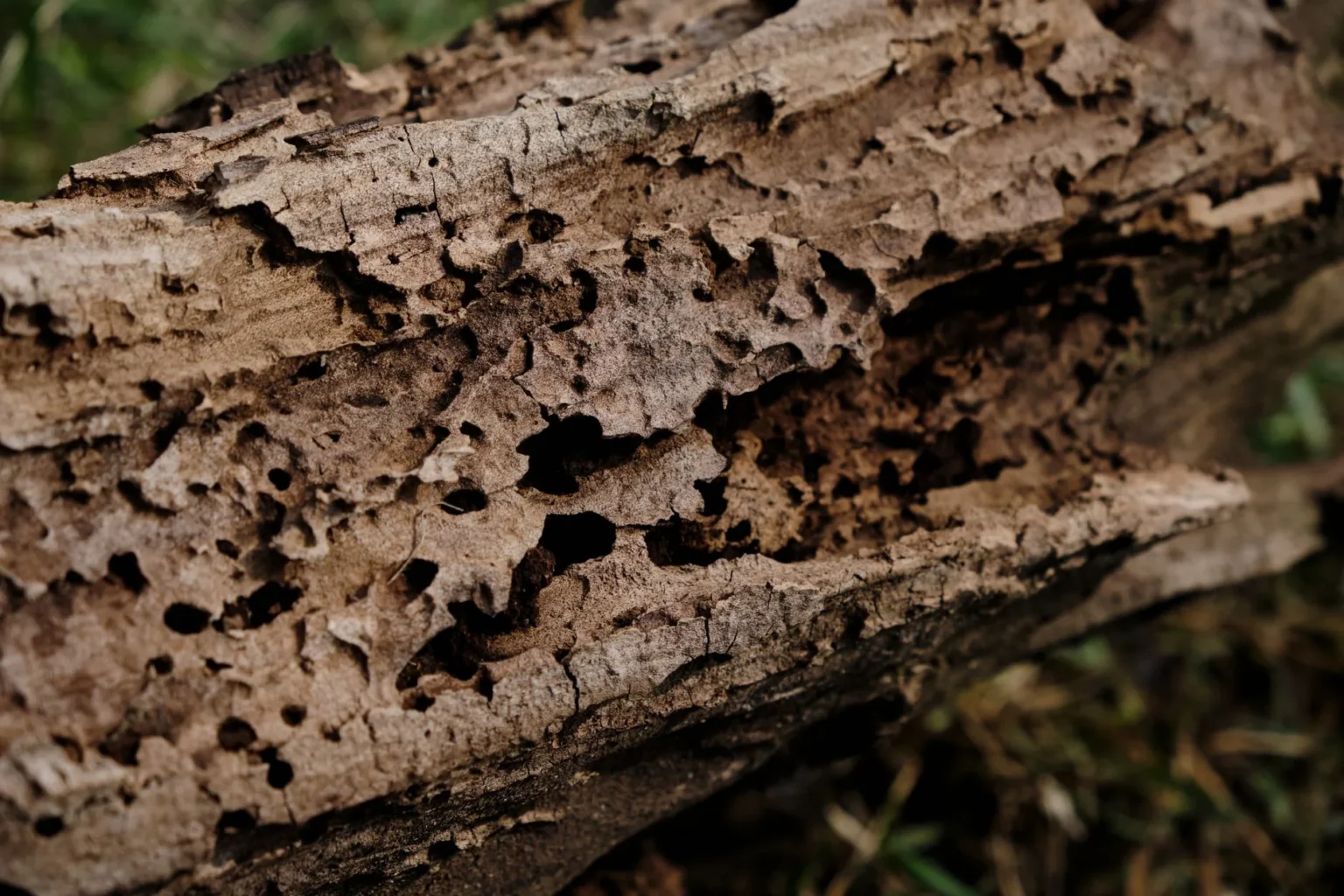
The damage is done by the larvae. After the adults emerge in May or early June, the females lay eggs in bark crevices, and the larvae tunnel under the bark and feed on the cambium, the layer that carries water and nutrients. The department says the larvae effectively girdle the tree. The adults leave behind small exit holes shaped like the letter D, about three to four millimeters across, on the branches and trunk.
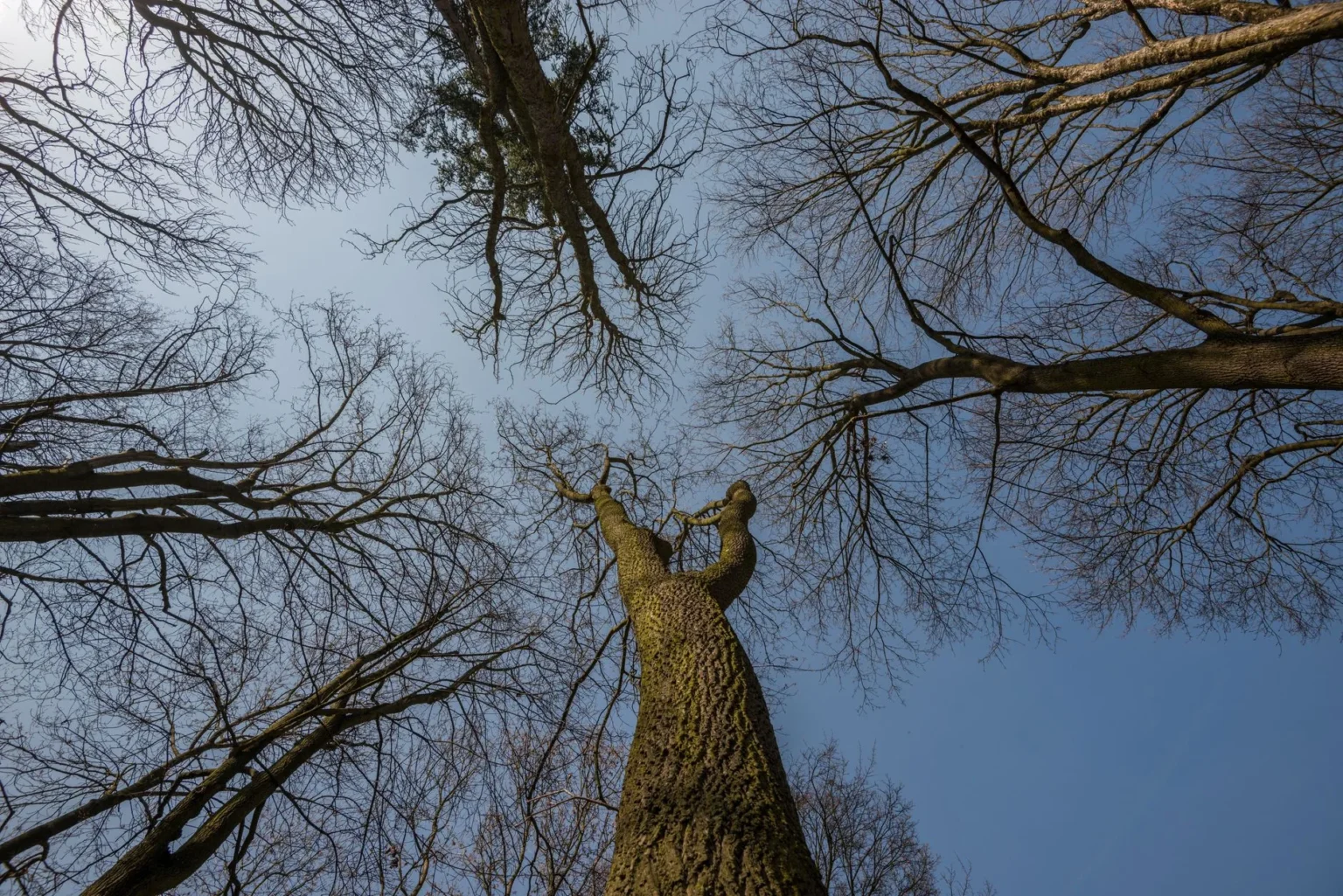
The symptoms start high. The department notes that the beetles first infest the top of the crown, so adults and exit holes are close to impossible to spot from the ground. Woodpecker activity is often the first clue, and as the population grows the crown thins and dies back, shoots sprout from the trunk, the bark splits, and exit holes appear lower on the trunk. An infested ash lives only three to four years on average.
The department also warns that infested trees in urban areas pose the greatest danger where falling branches can hit people, structures or cars. A dead ash behind a house on a small Oradell lot is that case. Dead wood turns brittle, and the limbs that fail first are often the large ones over a roof or driveway.
Tree pest management in Oradell: signs on an ash tree
- Dead branches at the top of the crown
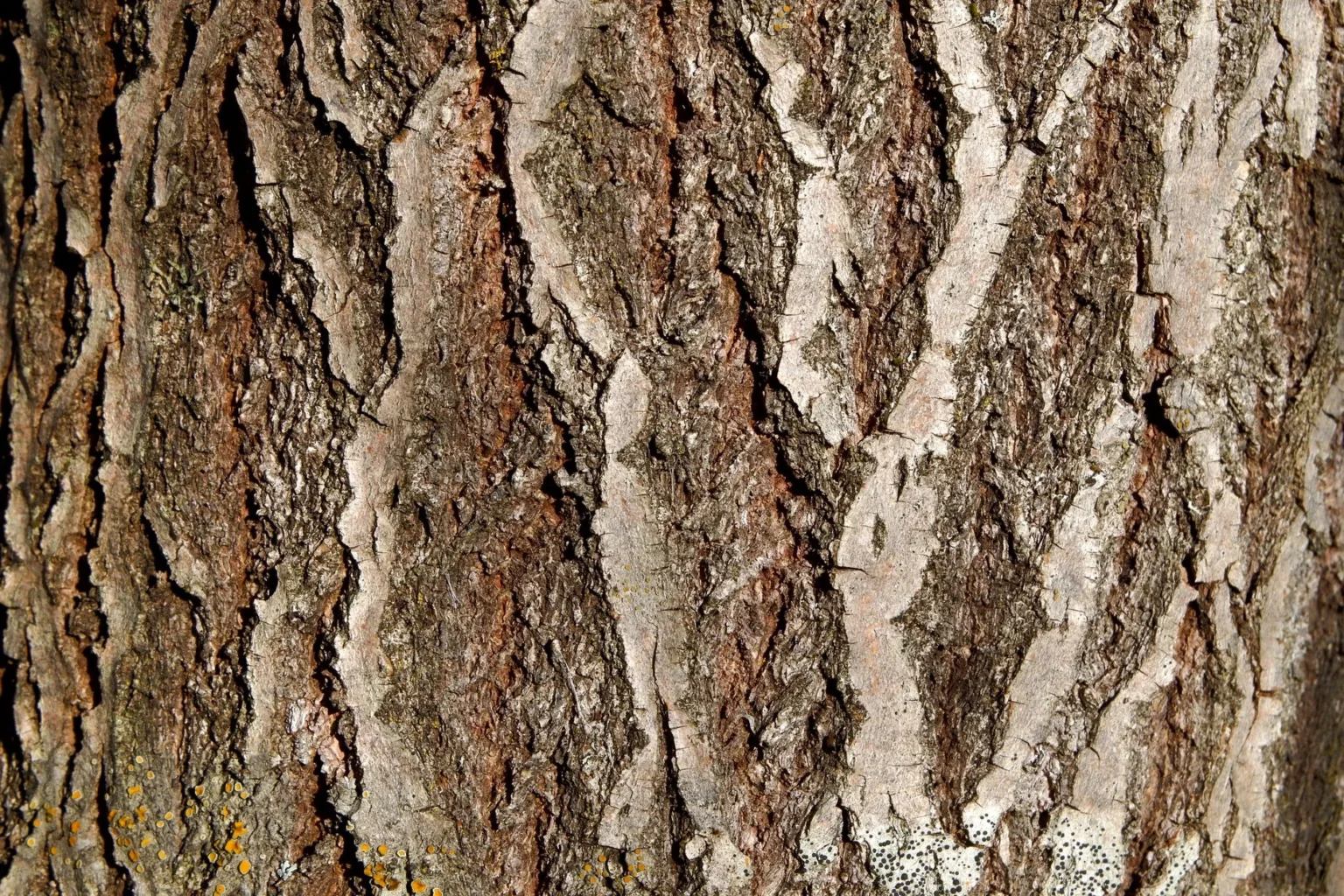
- Woodpecker flecking on the trunk and larger limbs
- Leafy shoots sprouting low on the trunk
- Bark splits and holes shaped like the letter D
None of these signs proves the beetle by itself, since other stresses cause dieback and woodpeckers feed on other insects. Taken together they justify a closer look from an ISA Certified Arborist, and our pest management visits start with exactly that look before any treatment is discussed.
Edward Hufnagel, who owns Reliable Tree Service, puts it this way: “A tree under pressure from a pest shows it in the crown first, and by the time you can see it from the ground the insect has been working for a good while. Looking up early is most of the job.”
What the Borough Asks of Oradell Tree Owners
Oradell regulates tree work through Chapter 270 of its borough code, titled Trees. The borough posted Ordinance 22-8, which amended that chapter and was adopted on September 28, 2022. It says a person may request in writing the approval of the Public Officer to undertake an activity that is otherwise prohibited, and that the officer has ten business days to approve or deny. Silence past that point counts as approval.
The same ordinance says the officer may require a tree removal permit depending on the project, and it rewrites the rule for owners who clear trees ahead of a development application. If a property owner removes trees before applying to the Building Department, Planning Board or Zoning Board, a permit is required for up to two years before that application, for complete demolition of the structure above the foundation and for vacant land development.
For the list of regulated acts we read a separate draft amendment to Chapter 270 that the borough posted in October 2021. It is a draft, so treat it as a guide to what the borough was weighing and not as the current text. On public streets and borough land it lists cutting, climbing with spikes, disturbing roots, planting, and putting chemicals or paving within the dripline among the acts that need the Public Officer’s written approval.
On private land the draft would require a permit to remove a tree five inches or wider at breast height, or one whose canopy reaches over a public right of way. It also lists exceptions that matter to ash owners, among them a dead or substantially diseased standing tree, where the owner notifies the officer and the officer verifies the condition in writing with a licensed tree expert, and management of ash trees against the emerald ash borer, with the officer’s consent.
Before any tree work in Oradell
- Find out whether the tree stands on public or private land
- Ask the borough for written approval before touching a street tree
- Check whether a permit applies to trees five inches or wider
- Photograph the tree and date the pictures before work starts
Those four steps keep a pest problem from turning into a code problem. Our tree removal crews will not schedule a removal until ownership and approvals are clear, and our tree trimming and pruning work follows the same rule. For a nearby borough with a similar rulebook, see our guide to street tree rules in Closter.
A Fall Plan for Ash and Other Mature Trees in Oradell
Fall is a good season to read a tree, because leaf drop opens the crown and shows structure that summer foliage hides. The International Society of Arboriculture publishes a plain checklist in its Recognizing Tree Risk brochure. It asks whether there are large dead branches, hanging branches, loose bark, cracks or splits in the trunk or where branches attach, cavities or rotten wood, or mushrooms at the base.
The brochure is careful about who judges what is found. It says evaluating how serious a defect is is best done by a professional arborist, and that regular care by an ISA Certified Arborist gives the chance to find defects and unacceptable risk. For an ash, the walk is the first step in deciding whether the tree is a candidate for protection or a candidate for removal.
The state department lists the protection options as soil treatment, trunk injection and bark spray. Those are decisions for a trained person who has looked at the crown, because a tree already far gone is not worth treating, and because the borough draft would have an owner get the officer’s consent first. When a dying ash stands near a house, the department’s own precaution applies, which is that dying ash endangers people and property.
One warning from the ISA brochure deserves repeating. It says never to attempt to remove branches or any tree part from or near power lines, and never to go near downed power lines, because they may still be conducting electricity. A damaged street tree that touches a line is a call to the utility and to the borough, not a job for a ladder.
Fall tree walk in Oradell: what to look for
- Dead or hanging branches over roofs and driveways
- Cracks or splits where limbs join the trunk
- Loose bark and soft or rotten wood
- Mushrooms or soil cracks at the trunk base
Write down what you see and keep dated photographs, since a record helps when a tree is later discussed with the borough or with us. A finding on a private tree can lead to treatment, a pruning cut, a support system or removal, and our storm proofing and repair team explains the options before anything is scheduled.
Protecting Oradell Trees Through Careful Watching
Oradell has a written tree code, a river valley full of mature trees and a pest that targets one of its common species. Tree pest management in Oradell works best when an owner looks up in the fall, keeps a record, and checks with the borough before any cutting.
Our crews are ISA Certified Arborists and New Jersey Certified Tree Experts, and Reliable Tree Service is family owned since 1960. Call us at (201) 943-4141 and we will walk the yard, explain the choices and recommend only the work the tree needs.
A tree that gets a yearly look and steady care costs less to keep than one that is only noticed after a limb drops, and our pest and disease care for trees exists to make that look routine. If an ash has already died, the tree removal team can take it down in sections so that brittle limbs do not drop on the house, the yard or the wires.
Related Articles

Tree Maintenance in Closter NJ: Street Tree Rules, Root Protection, and Fall Care
Closter has a Shade Tree Commission that controls street trees and a private property code that counts root damage as tree removal. This guide covers tree maintenance in Closter, from who may touch which tree to a fall walk around mature trees.
Tree Trimming in Glen Rock NJ: Pruning Before Removal Under the Borough Tree Permit
Glen Rock has held Tree City USA status since 1990 and now requires a permit to remove many private trees. This guide covers tree trimming in Glen Rock, from good pruning cuts to the rules that apply when a tree might come down.
Tree Storm Repair in Ridgefield Park NJ: Damaged Trees, Village Rules, and Next Steps
Ridgefield Park has looked after its public trees since 1979, the year Hurricane David destroyed 79 of them in less than a day. This guide covers storm repair in Ridgefield Park, from first safety steps to village permit rules.
Tree Removal in Edgewater NJ: Permits, Hazard Trees, and Replacement Planting
Edgewater asks for a borough application before many trees come down, and its ordinance treats hazard trees differently. This guide covers the permit steps, warning signs of a failing tree, and what replacement planting requires.
Land Clearing in Oakland NJ: Tree Permits, Root Zones, and Fall Planning
Oakland’s tree ordinance treats clearing a wooded lot differently from removing a single tree, and the roots left behind decide how the lot ages. This guide covers borough permits, root protection, and fall planning for wooded properties.
Tree Pest Management in Harrison NJ: Spotted Lanternfly and Tree of Heaven in Fall
Spotted lanternflies lay eggs in October and tree of heaven draws them in, so fall is the time to look closely. This guide covers tree pest management in Harrison from the first signs to what to do about egg masses.