Table of Contents
Tree Care in Guttenberg, NJ
Guttenberg is a town in Hudson County, and according to Wikipedia it was formed on March 9, 1859, from portions of North Bergen Township and became fully independent on April 1, 1878. It covers about 0.24 square miles atop the Hudson Palisades, with the Hudson River along its eastern edge and Kennedy Boulevard along its western edge, and it counted 12,017 residents in the 2020 census. With that many people on that little ground, every street tree, planter tree and yard tree carries a heavy load, and tree pest management in Guttenberg begins with keeping the few trees the town has in good health.
Insects and diseases are the part of tree care that homeowners notice last. A leaf spot or a sticky film on a car looks like a nuisance, and the real question is whether the tree behind it is declining. This guide explains what to look for on a Guttenberg tree, how spotted lanternfly egg masses are found and destroyed in the cold months, and how the town tree rules treat a tree that has an insect infestation.
The rules come from Chapter 13 of the Town code on eCode360, where Section 13-10 covers the maintenance, removal and replacement of trees, as amended on May 22, 2024. We also read the Town’s landscaping services notice, which was posted on November 27, 2018 and sets out how its own contractor handles tree work. Reliable Tree Service has been family owned since 1960 and works across Hudson and Bergen counties from Cliffside Park. Rules change, so confirm every detail with the Town before any tree is treated or removed.
Pest problems and legal questions tend to arrive together. A tree with an infestation may qualify as a hazard tree under the Town definition, and a hazard tree that comes down brings replacement duties with it. A tree that only carries a few insects may need nothing more than watching and a clean scraping of egg masses.
That is why we treat tree pest management in Guttenberg as a sequence. First we identify the pest, then we judge what it is doing to the tree, then we decide whether treatment, pruning or removal fits, and only then do we talk about permits and replacement. Our tree pest management service follows the same order.
Pest Warning Signs on Guttenberg Street and Yard Trees
Most of the damage from sap feeding insects shows up on the ground and on nearby surfaces before it shows up on the tree. Adult spotted lanternflies excrete extra plant sugar as honeydew, and according to a Rutgers entomology specialist writing in September 2021, the honeydew can attract bees, wasps and ants. Fungal mats, called sooty mold, can form at the base of a tree or on understory plants. In a town with narrow lots, that usually means a sticky patch on a sidewalk, a stair rail or a parked car under a tree.
The same Rutgers writer says sturdy hardwoods can tolerate a fair amount of feeding, and that it takes large, sustained populations over multiple years before trees show signs of decline. That is useful because it keeps a homeowner from panicking over the first insects. A healthy maple or oak that sees a few lanternflies for one season is rarely in danger, and we say so plainly when we inspect.
Other pests give clearer warnings. The 2014 state release on the emerald ash borer lists canopy dieback that starts at the top of the tree and spreads until the tree is bare, sprouts growing from the roots and trunk, split bark with winding tunnels under it, exit holes shaped like the letter D, and more woodpecker activity, with large holes where birds pull out larvae. Those signs apply to ash trees. We cannot tell from the street whether a Guttenberg tree is an ash, so we check the leaves and bark before anything else is said.
An inspection of this kind is quiet work. We look at the crown from the ground, then at the bark and the base, then at what has collected around the tree. Where a tree sits close to a building or a sidewalk, we also look at where a failed limb would land, because the Town code counts a tree that is causing obvious damage to structures or sidewalks as a hazard tree. Our tree maintenance visits record those findings so that the next visit can compare them.
What tree pest management in Guttenberg should record at each visit
- Sticky residue or black mold on bark and leaves
- Dieback at the top of the crown
- Holes, split bark or fresh woodpecker damage
- Dated photographs of the same branches each season
Records matter because pests change from year to year and memory is unreliable. Edward Hufnagel, who owns Reliable Tree Service, puts it this way: “A bug on a tree is a question, not a verdict. Look at the leaves, the bark and the top of the crown before anyone reaches for a spray or a saw.”
Spotted Lanternfly and Tree of Heaven in Guttenberg
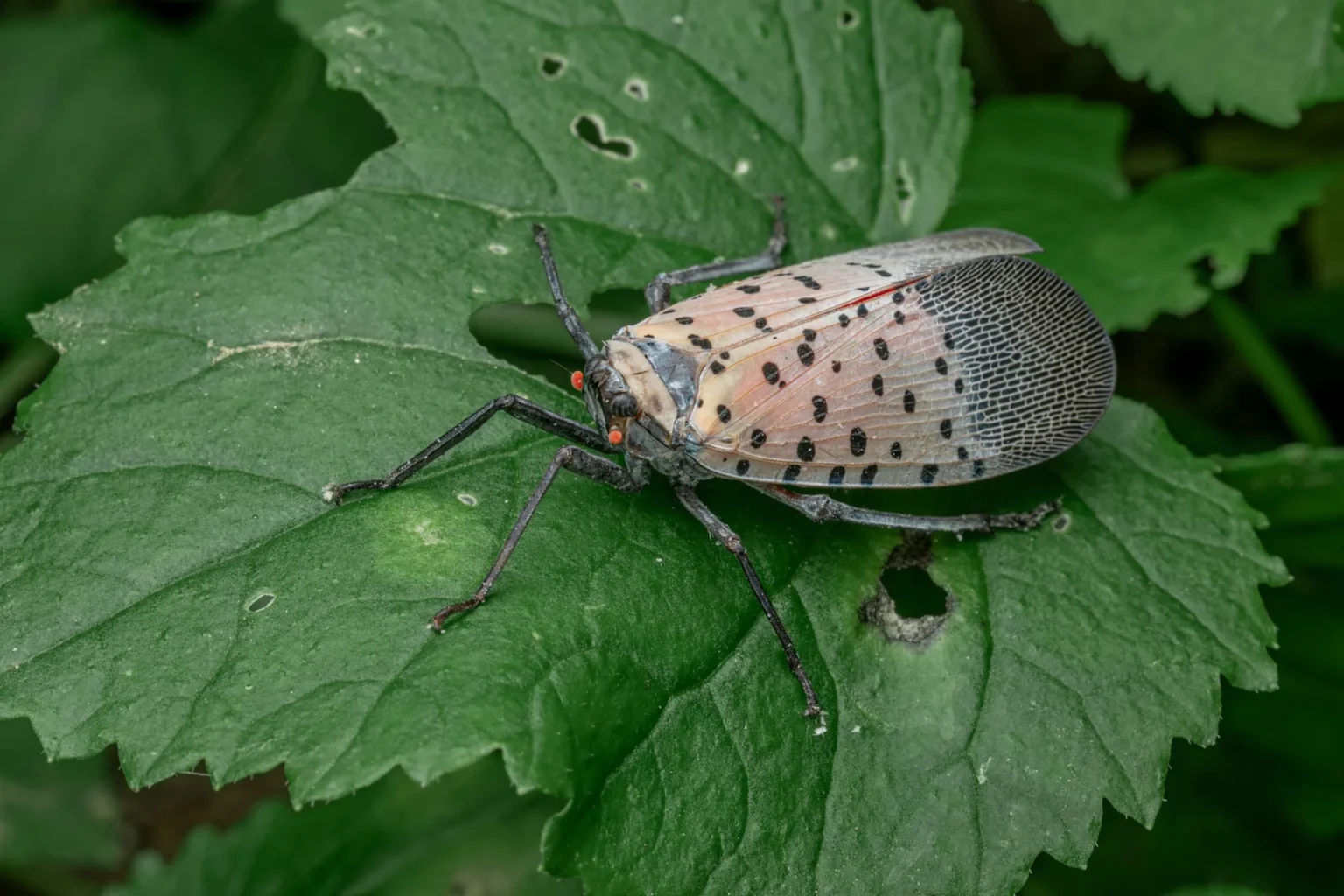
Spotted lanternfly is the pest most Hudson County homeowners have already met. The New Jersey Department of Agriculture says in a November 14, 2022 release that adult lanternflies cannot survive freezing temperatures, but their egg masses do survive the winter. Each mass holds 30 to 50 eggs, and the eggs hatch in late April or early May. Destroying masses before spring therefore reduces the number of insects the following summer, which is a good use of a cold afternoon.
The same release says egg masses can be found on almost any surface, including vehicles, park benches, steps or outdoor stairways, and the sides of buildings. In a dense town like Guttenberg, that matters more than trees alone. Check the stair rails, the railings, the planter edges and the wall beside a tree, and do not stop at the trunk. Rutgers Cooperative Extension adds that females lay from September through December, up to two masses each, and that fresh masses look flat, gray and mud like.
To destroy a mass, the department advises pressing a credit card or similar scraper firmly against it. A popping sound means the eggs are being crushed. Penn State Extension advises scraping the eggs into a bag that holds hand sanitizer or alcohol, sealing it, placing it inside a second bag, and putting it in the trash. It also warns against climbing ladders to reach hard to get masses, which is good advice. If the masses are high in a street tree, call a crew rather than a ladder.
Timing matters for treatment too. The Rutgers specialist says to act in early fall, before egg laying in October, and names garden store products with carbaryl or dinotefuran as effective for adults, with the label checked for approval on the host tree. That window has closed for this season, so the work now is scraping and scouting. We plan next season’s tree pest management visits for early fall, with a different approach for any tree of heaven on the property.
Scraping checks for lanternfly egg masses
- Check stair rails, benches, walls and vehicles
- Press the scraper firmly until the eggs pop
- Bag the scrapings with sanitizer or alcohol
- Call a crew for masses above reach
Tree of heaven is the insect’s preferred host, according to both Rutgers and the state, and the state names black sooty mold on a tree as one sign of infestation. The Rutgers specialist notes that removing tree of heaven may help, but that the insect can complete its life cycle without it, only more slowly. Because Section 13-10 defines a hazard tree to include one with an insect infestation and also sets replacement rules, ask the Town before removing any tree, even an unwanted one. Our tree removal crews can take a tree of heaven down once the paperwork is settled.
Hazard Tree Rules and Redbud Replacement in Guttenberg
Section 13-10 is the part of the code that decides what happens when a pest problem ends with a saw. It defines a hazard tree as one that meets one or more of these tests: it has an infectious disease or insect infestation, it is dead or dying, it blocks the view of traffic signs or the passage of pedestrians and vehicles after pruning has failed, it is causing obvious damage to structures such as foundations and sidewalks, or a certified arborist or Licensed Tree Expert finds it a threat.
The definition of tree removal is broader than cutting. It covers any act that uproots, kills or causes irreparable damage that leads to the decline or death of a tree, including excessive pruning, applying substances toxic to the tree, over mulching or improper mulching, and improper grading or soil compaction within the critical root radius. Responsible pruning and maintenance are not removal, and neither are treatments intended to manage invasive species. That carve out is why a careful lanternfly program can go forward without being counted as removal, while a heavy handed one can cause trouble.
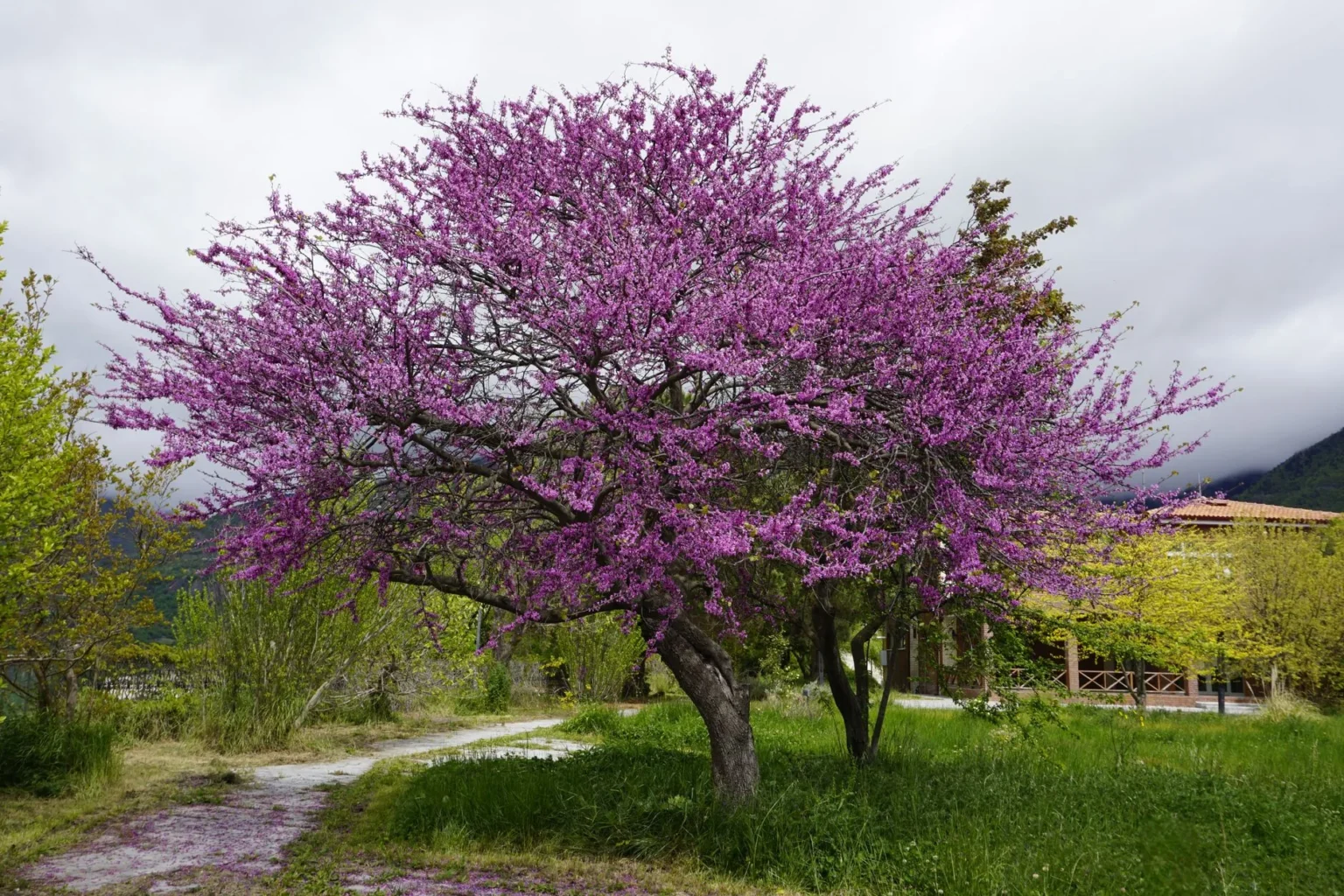
When a tree does come down, the replacement tree must be an Eastern Redbud. It must be planted within 60 days of the removal, or on a different date the Town specifies, and it cannot be left in a temporary container or pot. The owner must monitor the new tree for two years and replace it as needed within 12 months. A person who does not replace a removed or hazard tree within 60 days of receiving the tree removal permit pays a fee of $850 to the Town.
Town practice is also visible in the landscaping services notice. It requires the contractor to hold a current tree trimming license, to send a written estimate before any removal, to grind stumps to 12 inches below grade, and to report each removal with its location, date and species, and it says tree topping is not allowed. That notice covers work for the Town in 2019 and is not a homeowner rule, but it shows what the Town expects of a tree crew. Our tree trimming and pruning work follows the same standard, and our stump grinding crews fill the hole the same day.
Steps before a pest damaged tree comes down
- Have the species and the pest identified first
- Ask the Town about the permit and replacement terms
- Photograph the tree and the damage beforehand
- Plan the redbud and its two years of care
A permit conversation goes faster when the pest is documented. A written assessment from a certified arborist is one of the listed ways a tree becomes a hazard tree. Our North Bergen hillside hazard tree guide shows how the same idea works in a hillside town next door.
Protecting Guttenberg Trees With Early Attention
Guttenberg has little room to lose trees, and a pest problem caught early is easier on the tree, the sidewalk and the budget than one caught late. Scrape the masses, watch for the warning signs, and bring in an arborist before cutting anything. Tree pest management in Guttenberg is steady, repeated attention, not a single dramatic visit.
Our other local guides are collected on the Guttenberg tree care articles page, and the tree pest guide for Harrison covers the same insect in another Hudson County town. The Union City tree trimming and pest article adds detail on trimming around buildings, and our storm proofing and repair work checks the structure of an infested tree before winter weather tests it.
Our crews are ISA Certified Arborists and New Jersey Certified Tree Experts. Call Reliable Tree Service at (201) 943-4141 to schedule tree pest management in Guttenberg or to have a suspect tree looked at. We are family owned since 1960, and we will tell you what the tree needs and what the Town requires before any work begins.
Related Articles

Tree Feeding in Demarest NJ: Caring for Replacement Trees Under Borough Rules
Demarest can require a replacement tree and a cash bond when a tree comes down, and the owner stays responsible if that tree dies within twenty four months. This guide covers tree feeding in Demarest, from watering and mulch to soil tests and timing.
Tree Trimming in Waldwick NJ: Pruning Rules, Qualified Trees, and Right of Way Care
Waldwick regulates tree removal and replacement under a chapter adopted in 2024, and it sets firm rules for trees in the public right of way. This guide covers tree trimming in Waldwick, from qualified trees and roots to clean cuts and topping.
Tree Maintenance in Cresskill NJ: Willows, Poplars, Street Trees, and Borough Rules
Cresskill bans new poplars and willows in its shade tree chapter, and a 2025 ordinance treats excessive pruning as tree removal. This guide covers tree maintenance in Cresskill, from street tree ownership to roots, pipes, and permits.
Land Clearing in Englewood NJ: Tree Permits, Root Zones, and Replacement Rules
Englewood regulates tree removal under Chapter 425 of its city code, and clearing a lot can trigger a permit before the first tree comes down. This guide covers land clearing in Englewood, from permits to root protection.
Stump Grinding in Hackensack NJ: City Removal Rules, Grinding Depth, and Replanting
Hackensack regulates most tree removals under a 2024 ordinance, and the stump is what remains when the paperwork is done. This guide covers stump grinding in Hackensack, from the city form to grinding depth, wood chips, and replanting.
Tree Removal in Park Ridge NJ: Hazard Trees, Replacement Rules, and Root Zones
Park Ridge adopted a tree removal and replacement ordinance in 2024, and it reaches further than most owners expect. This guide covers tree removal in Park Ridge, from hazard trees to replacement planting and the root zone.